If you’ve ever opened a bag of “chili powder” from a grocery store shelf and wondered why your scratch chili still tastes flat — this article is for you. Dried chiles (whole chile peppers that have been harvested and air- or smoke-dried, concentrating their flavor) are the backbone of every great red chili. They’re not interchangeable with the blended spice powder in a tin, and they’re not all the same as each other. Three chiles in particular do the most work in American scratch red chili: ancho, guajillo, and arbol. Ancho brings sweetness and body. Guajillo brings brightness and structure. Arbol brings heat. Learn what each one does in the pot, and you’ll stop guessing at ratios and start making deliberate decisions — the kind that produce a bowl you can actually reproduce.
This guide assumes you already know a toasted dried chile smells different from a raw one, and that you’ve looked at a recipe calling for “3 anchos and 2 guajillos” and wondered what you’d lose if you swapped them. Good. That’s exactly the right question. Let’s answer it properly.
Ancho: The Foundation Chile
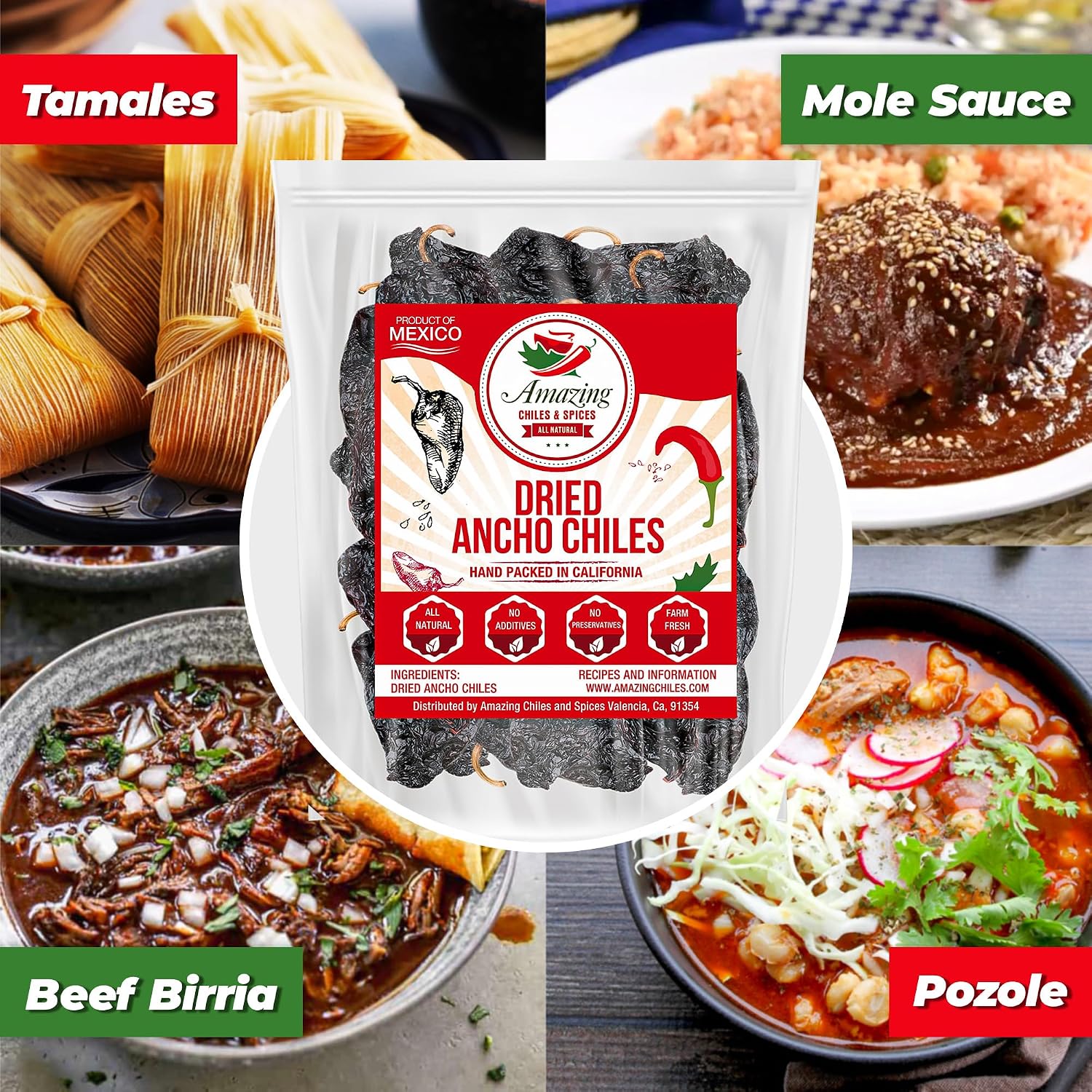
Ancho is the dried form of the poblano pepper — the same broad, dark green chile used in chiles rellenos. When a poblano is allowed to ripen to red and then dried, it becomes an ancho. The name means “wide” in Spanish, which tracks: these are broad, flat, wrinkled chiles, almost the size of your palm, ranging from deep burgundy to near-black.
What it tastes like: Ancho’s flavor is often described as raisin-like or chocolatey, with tobacco, dried fruit, and mild earthiness underneath. Chile Pepper Madness’s ancho pepper guide puts its Scoville heat rating at roughly 1,000–1,500 SHU (Scoville Heat Units — a standardized scale where a bell pepper is 0 and a jalapeño is around 5,000). In practical terms, that means ancho is nearly heatless. Its job in the pot is flavor, not fire.
What it does in a chili: Ancho is the workhorse of most traditional red chili pastes and sauces precisely because it provides body and color without competing with your heat sources. The natural sugars in the dried fruit concentrate during toasting and then rehydrate into a paste that thickens the braising liquid and rounds out harsh edges. Serious Eats’ chili recipe by J. Kenji López-Alt relies on ancho as the primary volume chile in its dried chile paste — it’s the base layer that everything else builds on.
Where it can go wrong: Old-crop anchos (chiles from a harvest more than 18 months prior, which haven’t been properly stored) lose their fruit notes first and turn dusty and one-dimensional. Saveur’s field guide to dried chiles emphasizes that the best anchos should still feel slightly pliable — if yours snap like dry leaves, the volatile aromatic compounds have already degraded. For sourcing, Rancho Gordo’s dried chile selection and Penzeys whole ancho chiles are commonly cited by home cooks as reliably fresh stock, but always ask the supplier about harvest date when you can.
Practical ratio guidance: In a 4–6 serving batch of scratch chili, most practitioner-level recipes land between 3 and 5 whole anchos in a blended paste. Think of ancho as occupying roughly 50–60% of your total dried chile volume.
Guajillo: The Bright, Structural Chile
Guajillo is one of the most widely used dried chiles in Mexican cooking, and it’s the chile that beginners most often under-use because its role isn’t immediately obvious. Where ancho is round and deep, guajillo is bright and defined — it’s the chile that gives a red chili sauce its clarity of flavor rather than muddy richness.
What it looks like: Long, narrow, smooth-skinned, and a glossy brick red. Where anchos are wrinkled and dark, guajillos are almost lacquered-looking. They’re typically 4–6 inches long and narrower than your thumb.
What it tastes like: Bon Appétit’s dried chile guide describes guajillo as having “cranberry, tart cherry, and a slightly tannic finish” — which sounds fussy but is actually useful to hold onto when you’re building a blend. That tartness is what cuts through fat in a long-braise and keeps the sauce from collapsing into sweetness. There’s also a mild green-tea-like herbaceous note in freshly toasted guajillo that ancho doesn’t have. Heat level is moderate: roughly 2,500–5,000 SHU, meaning guajillo contributes a background warmth but not significant heat.
What it does in a chili: Guajillo is the structure chile. It adds the slightly acidic, tannic backbone that keeps a rich chili sauce from tasting like it’s all going the same direction. If you’ve ever made a chili that tasted one-dimensional — all depth, no lift — the likely fix is more guajillo (or a better-quality, fresher batch of it). Splendid Table’s dried chile primer emphasizes that guajillo’s skin is notably tougher than ancho’s, which matters during blending: you’ll want to soak guajillos longer (20–30 minutes in hot water vs. 15 for ancho) and consider straining your blended paste through a fine-mesh sieve to catch any remaining skin fragments.
Where it can go wrong: Guajillo’s tannins can tip into bitterness if the chiles are over-toasted. Because the skin is thinner than it looks, it burns faster than ancho in a dry skillet. Toast over medium heat, pressing the chile flat with a spatula, just until you smell the volatiles release — usually 30–45 seconds per side. Pull them as soon as the skin starts to change color and smoke appears.
Practical ratio guidance: A typical practitioner blend uses roughly 2–3 guajillos for every 3–4 anchos. Guajillo should represent about 25–35% of your total dried chile volume.
Arbol: The Heat Chile (and Why You Need Less Than You Think)
Chile de árbol (“chile from a tree” — they grow on tall, upright plants, unlike most chiles) is the smallest of the three and the only one where heat is the point. These are slender, finger-length red chiles with thin walls and very little flesh — which means the heat-producing compounds (capsaicinoids) are proportionally concentrated.
What it tastes like: Arbol delivers a bright, sharp, almost grassy heat — closer to a hot sauce heat than a slow, building warmth. Food52’s guide to scratch chili spice blends notes that arbol’s flavor profile is “clean and direct,” which means it won’t muddy your base flavors but will land fast. Scoville range: 15,000–30,000 SHU. That’s meaningfully hot — roughly 5–10 times hotter than guajillo.
What it does in a chili: Arbol’s job is to calibrate heat without adding sweetness or body. Because it doesn’t contribute significant volume or flavor complexity (beyond heat and a faint nuttiness from toasting), it functions more like a spice than a base ingredient. Most competition-style Texas red chili recipes use arbol in restrained quantities — often 1–2 chiles per batch — to add heat that reads as fresh and clean rather than deep and building.
Where cooks go wrong: Over-using arbol to compensate for flat flavor elsewhere. If your chili tastes dull, more arbol makes it spicy-and-dull. The fix for flat flavor is almost always more ancho, better ancho, or more guajillo — not more heat. Use arbol last, adjust incrementally, and remember that capsaicin (the compound responsible for heat) continues to release during a long braise.
A practical calibration note: Start with 1 arbol for a 4–6 serving batch if you’re feeding a mixed crowd, 2 if the table skews heat-tolerant, 3+ only if everyone’s on board and you know your other chiles aren’t contributing much heat on their own.
Building the Blend: Decision Rules for Your Batch
Here’s the honest tradeoff map for a scratch red chili using all three chiles:
By the numbers — baseline blend for a 2 lb. meat batch:
| Chile | Quantity | Role | Scoville (approx.) |
|---|---|---|---|
| Ancho | 4 whole | Base / body / sweetness | 1,000–1,500 SHU |
| Guajillo | 2–3 whole | Brightness / structure / acid | 2,500–5,000 SHU |
| Arbol | 1–2 whole | Heat calibration | 15,000–30,000 SHU |
From here, the decision rules are:
If your chili tastes flat and one-dimensional: Add more ancho or swap in a higher-quality, fresher batch. Staleness in anchos reads as flatness more than any other defect.
If your chili tastes rich but muddy: You likely need more guajillo, or a better-toasted guajillo. Add one guajillo to the paste and consider straining more aggressively.
If the heat isn’t building where you want it: Check arbol quantity, but also check whether you’re adding the chile paste early enough (add it before your liquid so it fries briefly in the fat — this blooms the heat compounds and integrates them into the sauce rather than layering them on top).
If everything tastes bright but hollow: This is the ancho gap. Brightness without body means your guajillo-to-ancho ratio is inverted. Pull back on guajillo by one chile and add an ancho.
On sourcing and freshness: Across practitioner-level chili communities, the consistent pattern is that sourcing matters more than technique once you understand the basics. Old-crop chiles — those sitting in a warehouse or retail bin for 18+ months — will underperform no matter how carefully you toast and blend them. Rancho Gordo publishes harvest information for their dried chile offerings, and specialty spice retailers like Burlap & Barrel and Diaspora Co. apply similar sourcing transparency to their dried and ground chile products. For whole dried chiles specifically, buying from a supplier who can tell you the harvest season is worth a meaningful price premium over grocery store alternatives.
A final word on format: buying pre-ground chile powders made from single varietals (pure ancho powder, pure guajillo powder) is a legitimate shortcut, and Penzeys single-varietal chili powders have a strong reputation among home cooks for consistent quality. But working with whole dried chiles — toasting them yourself, soaking them, blending your own paste — gives you control over texture, intensity, and freshness at every step. Once you’ve built the muscle memory for that process, you’ll start tasting the difference between a chili that has layered dried chile character and one that tastes like seasoned ground meat. That gap is exactly why this matters.