If you’ve ever stared at the cast iron section of a cookware aisle — or scrolled through a product listing at midnight trying to decide which Dutch oven to buy — you’ve run into the central question: bare cast iron (raw, seasoned iron with no coating) or enameled cast iron (bare iron fused with a layer of vitrified, glass-like enamel on the inside and outside)? A Dutch oven is simply a heavy, thick-walled pot with a tight-fitting lid, designed for slow, even cooking. For chili — which can simmer for two, three, sometimes five hours and involves acidic tomatoes, dried chiles, and rich rendered fat — the vessel you choose has real consequences for flavor, cleanup, and how you work in the kitchen. This article breaks down exactly what each surface does well, where each one falls short, and why the Lodge Double Dutch Oven’s two-in-one lid-skillet design solves a specific problem that neither bare iron nor enamel alone can fully address.
The Surface Difference Is Not Just About Cleanup
Let’s be precise: bare cast iron and enameled cast iron are the same material underneath. The difference is entirely in the cooking surface. Bare iron is porous and reactive. The seasoning — layers of polymerized oil baked into the surface — protects the iron and creates a moderately nonstick finish, but that protection is built up over time and can be stripped by acidic ingredients or harsh cleaning. Enamel is chemically inert: it doesn’t react with acids, doesn’t require seasoning, and doesn’t transfer any metallic flavor to food.
For chili, this matters in two specific moments:
During the simmer. A tomato-forward chili or one built on tomatillos is mildly acidic. According to Serious Eats’ guide “The Best Dutch Ovens for Every Cook,” long exposure to acidic ingredients in bare iron can leach small amounts of iron into the food, affecting flavor subtly — particularly in batches that simmer for three or more hours. The effect isn’t dangerous, but experienced cooks who dial in flavor carefully will notice a slight metallic edge in long-simmered bare-iron batches, especially in a new or lightly seasoned pan.
After the simmer. Chili leaves a high-tannin, chile-pigment stain that sets hard on bare iron. Enameled interiors — particularly light-colored enamel — do stain over time, but the stain is purely cosmetic and wipes off with a sponge and hot water. Bare iron requires more deliberate care: no soaking, prompt drying, and a light re-oil after every wash.
Food52’s feature “Everything You Need to Know About Cast Iron” puts it plainly: bare cast iron rewards cooks who maintain it consistently; enamel rewards cooks who want great results with less procedural overhead.
Where Bare Cast Iron Still Has the Advantage: The Sear
Here’s where bare iron earns its place in a chili cook’s arsenal: dry, screaming-hot browning. Searing meat — whether beef chuck, venison, or brisket trimmings — requires a surface that can go ripping hot without thermal shock risk and hold that heat when cold meat hits the pan. Bare cast iron handles this better than enamel for one structural reason: the enamel coating on most entry-to-mid-range enameled Dutch ovens is not rated for the kind of sustained high-heat, dry searing that produces the best Maillard crust on meat.
Cook’s Illustrated’s Dutch oven testing consistently flags this point: enameled pots are designed for braising, not open searing. Running an enameled interior at very high, dry heat — especially on a gas burner — risks crazing the enamel over time, particularly on lighter interior finishes. Wirecutter’s review “The Best Dutch Oven” echoes this concern, noting that most manufacturers explicitly recommend against dry high-heat use in enameled vessels.
Bare cast iron has no such restriction. You can get a bare iron skillet or pot ripping hot, let it stabilize, and sear meat without worrying about surface damage.
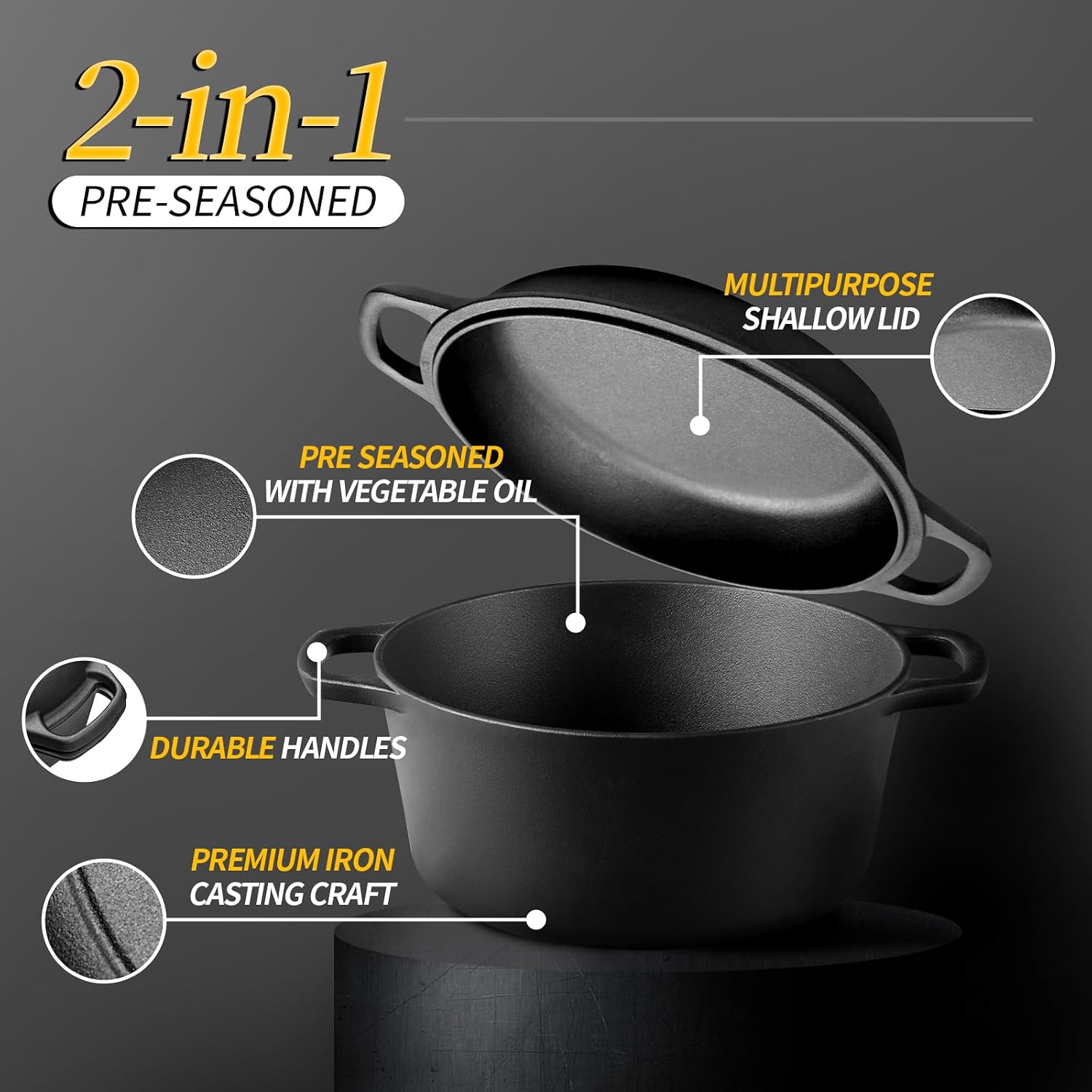
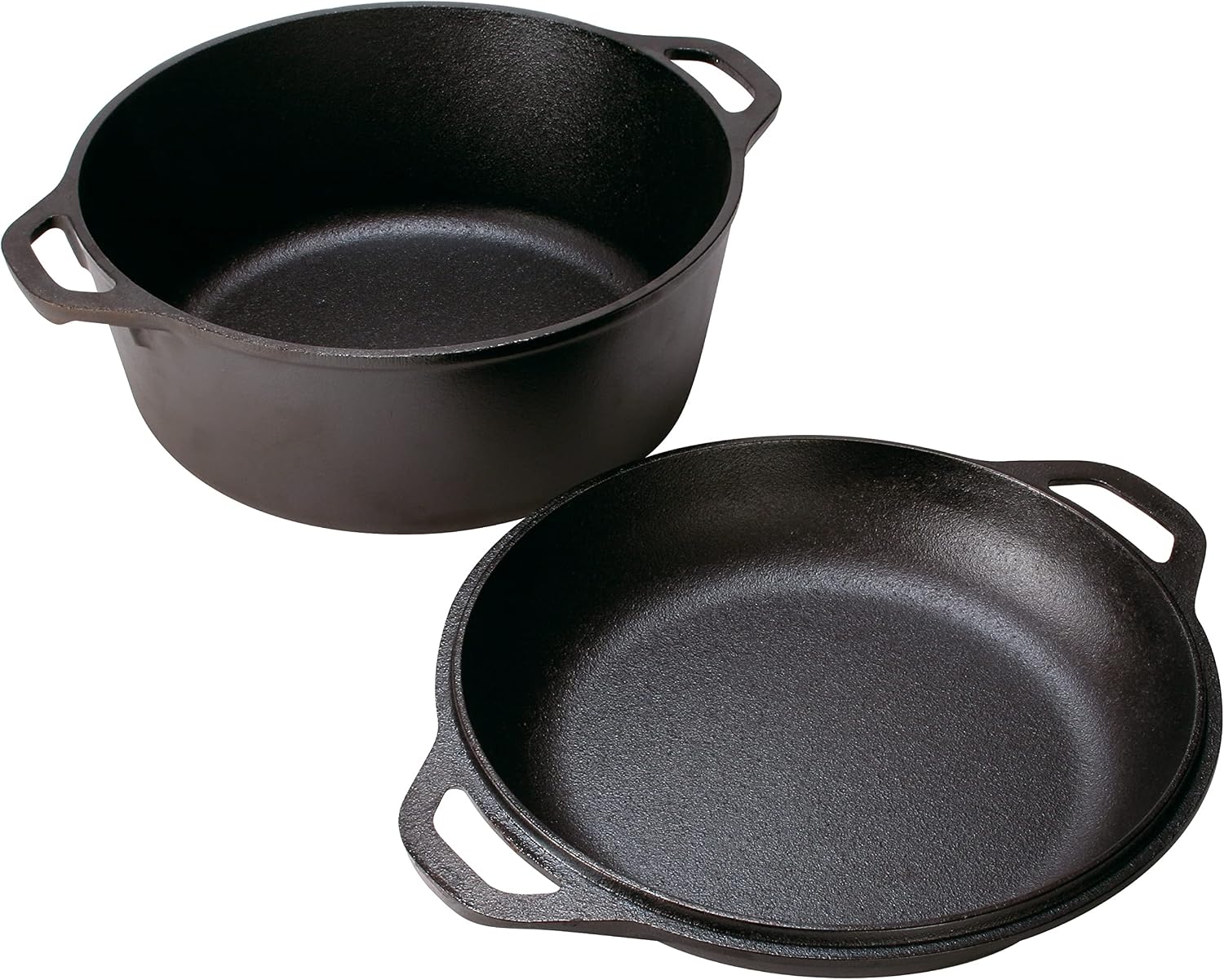
This is exactly the problem the Lodge Double Dutch Oven is designed to solve. The combo consists of a bare iron pot and a bare iron lid that doubles as a skillet. You sear in the lid-skillet — flat, wide, high-heat capable — then build and simmer in the pot. One setup, one surface category, zero compromise between searing performance and simmer practicality.
EDGING
$33.99
In stock on Amazon
Check price on AmazonThe Three-Way Comparison: Picking Your Vessel
Understanding the tradeoffs requires looking at three distinct options side by side. Each one serves a different type of chili cook.
Lodge Double Dutch Oven (Bare Cast Iron)
The Lodge Double Dutch Oven is the choice for cooks whose chili technique centers on a hard sear. The lid-skillet is approximately 10.25 inches across — comparable to a standard cast iron skillet — and handles unrestricted high-heat dry searing without any risk of surface damage. For a full batch of chili using 3–4 lbs of cubed chuck, you’ll sear in two or three passes regardless of which pan you use, but the integrated workflow is the real advantage: sear in the lid-skillet, deglaze it directly, transfer everything into the pot, and build the chili base without managing a separate pan or washing extra dishes between steps.
Both the lid-skillet and the pot are bare cast iron with no enamel restrictions on oven temperature. Owners consistently report moving the assembled pot from a gas burner into a 325–375°F oven mid-cook without surface or structural issues — standard practice for competition-style and low-and-slow chili finishing. The tradeoff is maintenance: after a three-hour chili simmer, bare iron requires prompt scrubbing while warm, hot rinsing, burner-drying, and a light oil pass. For acid-heavy batches — lots of tomato, tomatillo, or wine — check the seasoning surface afterward and re-oil if the surface looks dull or patchy.
EDGING
$33.99
In stock on Amazon
Check price on AmazonAmazon Basics Enameled Dutch Oven (Entry-Level Enamel)
The Amazon Basics enameled Dutch oven is the entry point for cooks who prioritize cleanup ease and acid tolerance over high-heat searing flexibility. Owners consistently highlight even bottom heating and effortless cleanup after long soups and stews — exactly the use case for a chile-forward chili heavy on guajillos, anchos, and pasillas where tomato is a supporting player rather than the base. After a three-hour simmer, the cleanup protocol is a brief soak, a wipe with a sponge, and done. No re-seasoning, no burner-drying, no oil pass.
The interior enamel on Amazon Basics is lighter in color than Lodge’s standard black enamel, which means visible staining over time from chile pigments and tomato. Reviewers across multiple sources consistently note this is a cosmetic issue, not a functional one — a paste of baking soda and water addresses stubborn staining. The main gaps between Amazon Basics and mid-range Lodge enamel, according to aggregated owner experience, are lid fit precision and long-term enamel durability under heavy weekly use. For a home cook building their first chili setup or cooking once or twice a month, Amazon Basics enameled is a legitimate and well-priced entry point.
EDGING
$33.99
In stock on Amazon
Check price on AmazonLodge Enameled Cast Iron Dutch Oven (Mid-Tier Enamel)
The Lodge enameled Dutch oven (6 qt) is the step up for cooks who want enamel’s acid tolerance and cleanup ease but plan to run the pot hard — multiple heavy sessions per month, year after year. Lodge’s enamel formulation and lid fit quality are tighter than the Amazon Basics entry point, and the black enamel interior shows less cosmetic staining over time. Wirecutter’s “The Best Dutch Oven” review identifies lower maintenance overhead across hundreds of acidic cooks as one of the two primary reasons enameled Dutch ovens dominate their recommendation list — and Lodge enamel at the 6-qt size hits the sweet spot for a full chili batch without the weight penalty of a larger vessel.
The tradeoff versus the Double Dutch is the same as any enameled pot: dry high-heat searing is limited by the enamel surface. Cook’s Illustrated’s Dutch oven testing notes that enameled interiors used repeatedly at very high dry heat risk crazing over time. If your chili technique requires a serious sear before the simmer, you’ll still want a separate bare iron skillet in the workflow — eliminating the integration advantage the Double Dutch provides.
Lodge
$59.90
In stock on Amazon
Check price on AmazonSide-by-Side Reference
| Feature | Lodge Double Dutch (bare iron) | Amazon Basics Enameled | Lodge Enameled 6 qt |
|---|---|---|---|
| Interior surface | Bare seasoned iron | Light enamel | Black enamel |
| High-heat dry sear | Unrestricted | Use with caution | Use with caution |
| Acid reactivity | Yes — long simmers can affect flavor | None | None |
| Cleanup after 3-hr simmer | Scrub warm, dry, oil — 5–8 min | Soak-safe, sponge clean — 3–5 min | Soak-safe, sponge clean — 3–5 min |
| Oven-safe temp | 500°F+ (no coating restrictions) | Per manufacturer rating | 500°F |
| Best for | Sear-forward, oven-finish chili cooks | Entry-level, acid-heavy recipes | High-frequency acid-heavy or gift use |
Lodge
$59.90
In stock on Amazon
Check price on AmazonCleanup After a 3-Hour Chili Simmer: The Honest Numbers
After a long chili cook, the two surface categories diverge meaningfully in what you actually have to do.
Bare cast iron will have rendered fat and chile residue baked into the seasoning. The protocol: while still warm, scrub with a stiff brush or chain scrubber — the small-amount-of-mild-soap debate is real but modest, and a drop of dish soap on well-seasoned iron is not catastrophic — rinse with hot water, dry immediately on a burner at low heat, wipe with a thin layer of neutral oil. If you skip the burner-dry step or let water sit, you risk surface rust. Total active time: 5–8 minutes, but it requires intentional sequencing. Serious Eats’ “The Best Dutch Ovens for Every Cook” notes that repeated long-acid exposures in bare iron will gradually degrade seasoning, requiring periodic full re-seasoning passes for cooks who run tomato-heavy recipes frequently.
Enameled cast iron after the same simmer: fill with warm water and a drop of dish soap, soak ten minutes, wipe with a sponge. Stubborn bits release without scrubbing. Light enamel staining from chile pigments — a consistent note in Amazon Basics owner reviews — responds to a baking soda paste. Total active time: 3–5 minutes, no process discipline required, no re-seasoning ever. Food52’s “Everything You Need to Know About Cast Iron” frames this tradeoff clearly: the maintenance gap between bare iron and enamel is small per session but compounds meaningfully over a season of weekly cooks.
Lodge
$89.90
In stock on Amazon
Check price on AmazonThe Decision Rule
If your chili technique centers on a hard sear — cubed chuck, venison, brisket — and you want a single integrated cook setup with oven-finish capability and minimal dish count: the Lodge Double Dutch Oven is the move. The lid-skillet solves the sear-then-simmer workflow problem that no enameled pot can match without introducing a separate bare iron skillet into the lineup.
If your chili is tomato-forward or highly acidic, you prioritize cleanup ease over technique flexibility, or you’re building a setup for someone who doesn’t yet have an established bare-iron maintenance habit: go enameled. Amazon Basics enameled is the sound value entry point; Lodge enamel is the step up for cooks running the pot hard week after week.
If you cook both styles — some batches seared and oven-finished, others long-simmered and tomato-heavy — and your budget allows: the Double Dutch for bare-iron technique work, plus an enameled Dutch oven for acid-heavy or low-maintenance cooks. Experienced chili cooks across the bare iron and enamel categories consistently land in this two-pot configuration. The tools serve different constraints, and owning both eliminates the compromise entirely.
Frequently Asked Questions
Can you use bare cast iron for a tomato-heavy chili without affecting flavor or the seasoning? Yes, with caveats. A well-seasoned bare iron pot handles short tomato exposure without significant flavor transfer. For chili that simmers three or more hours with substantial tomato content, Serious Eats’ “The Best Dutch Ovens for Every Cook” notes the potential for subtle metallic notes and slow seasoning degradation with repeated long-acid exposures. It’s manageable, not disqualifying — but it requires consistent re-seasoning and is the main reason enameled is preferred for highly acidic recipes.
Does the Double Dutch lid-skillet actually hold enough meat to sear a full batch at once? For a standard 3–4 lb chili batch, no — you’ll sear in two or three rounds regardless. The lid-skillet is approximately 10 inches of usable searing surface, comparable to a standard skillet. The workflow advantage isn’t batch size; it’s eliminating the separate pan and the transfer step between sear and simmer.
How does cleanup compare between bare cast iron and enamel after a 3-hour chili simmer? Bare iron requires prompt action: scrub warm, rinse hot, dry on the burner, oil lightly. Enamel tolerates a soak, wipes clean with a sponge, and requires no re-seasoning. For acid-heavy chili, enameled cleanup is meaningfully easier — both in time and in surface maintenance overhead.
Is the Amazon Basics enameled pot truly comparable to Lodge at a lower price? For most home chili cooks, owners report comparable performance on heating evenness and cleanup ease. The gap shows in long-term enamel durability and lid fit quality under heavy use. Cooking chili once or twice a month, Amazon Basics enameled is a legitimate choice. Running it hard week after week, Lodge or a mid-range enameled pot is worth the price step.
Can the Double Dutch combo go from stovetop sear to oven finish without issues? Yes. Both pieces are bare cast iron with no enamel restrictions on oven temperature. Owners consistently report moving the assembled pot from burner to a 325–375°F oven mid-cook without any surface or structural issues — standard practice for competition-style and low-and-slow chili finishing.