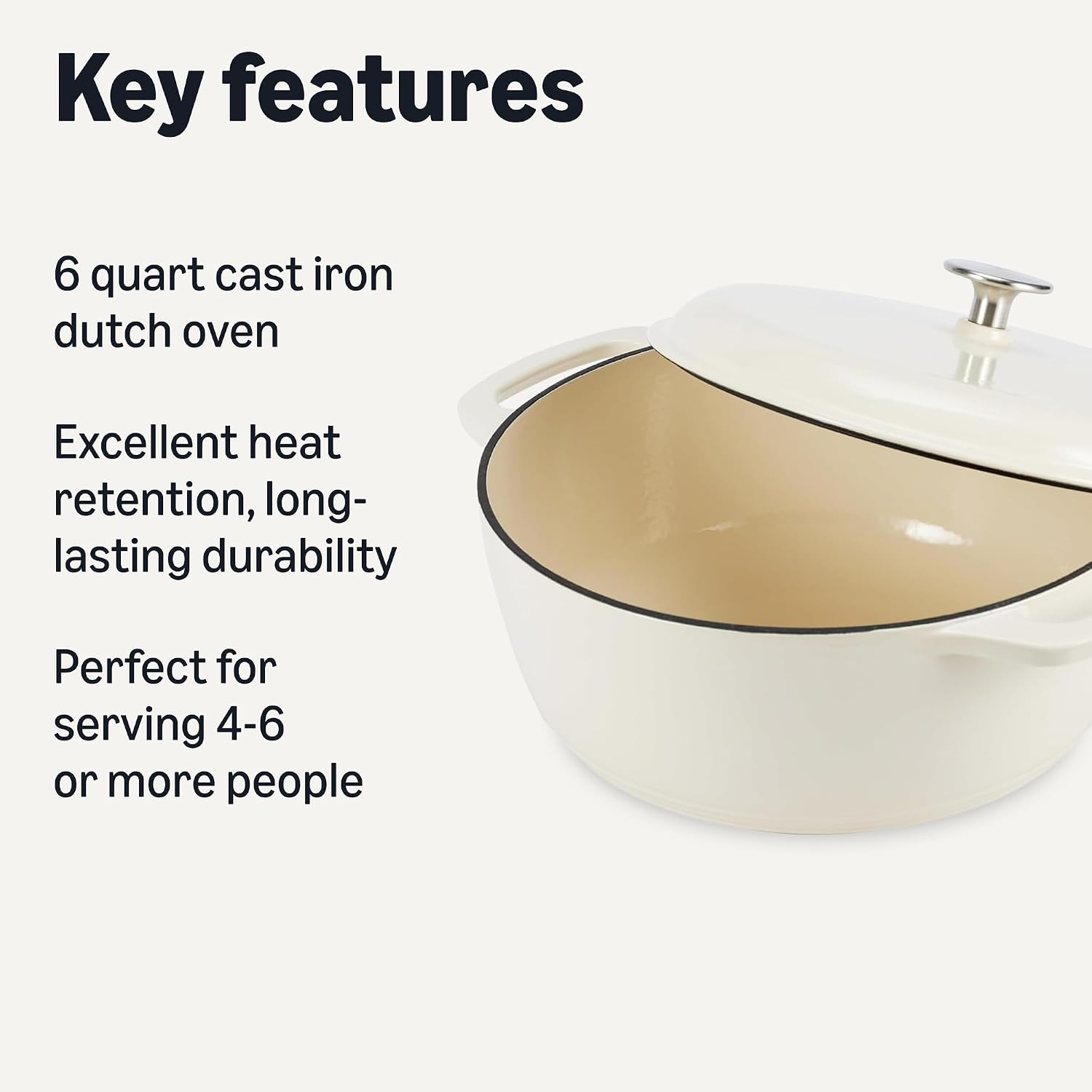
If you’ve ever stood in front of a shelf of Dutch ovens and wondered whether the $65 version is basically the same as the $400 one for making a pot of chili, you’re asking exactly the right question. An enameled Dutch oven is a cast-iron pot coated on the inside — and usually the outside — with a smooth glass-like finish called enamel. That coating lets you cook acidic ingredients like tomatoes without seasoning the pot, makes cleanup easier, and looks good on the stove. For chili — which simmers for one to three hours, involves tomatoes, dried chiles, and sometimes beer — it’s arguably the single most useful piece of cookware you can own. This article digs into three budget-tier contenders (Amazon Basics, Lodge, and Overmont), plus two others worth knowing about (Mueller DuraCast and Crock-Pot Artisan), to help you figure out which one actually earns a place in your kitchen.
The honest answer is: the gap between a $65 enameled Dutch oven and a $400 one is smaller than the price suggests — and larger than some influencers admit. Let’s map where it actually falls.
| EDITOR'S PICKCuisinart Chef's Classic Enamel… | Mid-tierMueller DuraCast 6 Quart Enamel… | Budget pickCrock-Pot Artisan 7-Quart Round… | |
|---|---|---|---|
| Capacity | 7-Quart | 6-Quart | 7-Quart |
| Oven Safe Temp | — | 500°F | — |
| PFOA-Free | — | ✓ | — |
| Induction Compat | ✓ | ✓ | — |
| Color | Cardinal Red | Emerald Green | Slate Gray |
| Price | $111.19 | $54.97 | $49.73 |
| See on Amazon → | See on Amazon → | See on Amazon → |
What You’re Really Buying at This Price Point
At the $50–$100 price tier, all three primary contenders share the same basic construction: gray or off-white enameled cast-iron bodies, tight-fitting lids with a loop or knob handle, and oven-safe ratings typically in the 400–500°F range. The variables that matter for chili are: how evenly the bottom heats, how snugly the lid fits (which controls moisture loss during a long simmer), how durable the enamel is against acidic ingredients, and — practically — how easy it is to clean after two hours of bubbling chili paste has worked itself into every corner.
Owner reviews and independent testing from Serious Eats (“The Best Dutch Ovens, Tested and Reviewed”) and Wirecutter’s New York Times guide (“The Best Dutch Oven”) confirm that all three primary options clear a minimum functional bar. The question is where each one excels and where it quietly cuts corners.
Approximate pricing at time of writing:
- Amazon Basics 6-qt enameled Dutch oven: ~$65
- Lodge 6-qt enameled Dutch oven: ~$70–$90 depending on color and retailer timing
- Overmont 5.5-qt enameled Dutch oven: ~$55–$75
- Crock-Pot Artisan 5-qt: ~$50–$60
- Mueller DuraCast 6-qt: ~$60–$80
Head-to-Head: The Three Main Contenders
Amazon Basics Enameled Dutch Oven
Crock-Pot
$49.73
In stock on Amazon
Check price on AmazonThe Amazon Basics enameled Dutch oven has developed a reputation slightly disproportionate to the fanfare that accompanied its launch — which is a good sign. Owners consistently report that the lid fits snugly and stays seated during a long simmer, which matters more than it sounds. A loose lid on a two-hour chili cook forces you to check and add liquid more often, and risks scorching at the bottom before fat and spices have had time to meld. Owners of the Amazon Basics pot report that this isn’t a problem.
The real differentiator that surfaces repeatedly in owner feedback is even bottom heating. Chili is uniquely punishing on this front: you’re often building a fond — the browned bits on the pot’s bottom — during a sauté phase, then adding liquid and expecting it to simmer without scorching. Owners consistently report that the bottom heats evenly at low settings and that nothing burns during a low, slow chili simmer.
Serious Eats’ Dutch oven testing has found diminishing functional returns above roughly the $120–$150 price band for most home applications, which puts the Amazon Basics pot in interesting territory: it costs less than half what Serious Eats identifies as the inflection point, but owners describe performance that tracks with that finding.
The caveat worth naming: Amazon’s supply chain for this product has shown some batch-to-batch variation in exterior finish quality, a pattern that surfaces in aggregated reviews on the product listing. The enamel interior appears durable in long-term reports, but exterior cosmetic imperfections show up occasionally. Inspect your unit when it arrives (the FAQ section below explains exactly how).
Crock-Pot
$49.73
In stock on Amazon
Check price on AmazonLodge Enameled Dutch Oven
Crock-Pot
$49.73
In stock on Amazon
Check price on AmazonLodge’s plain cast-iron skillets and Dutch ovens have a loyal following that borders on evangelical, and the enameled line earns nearly the same devotion. Owners use the word “lifer” with notable frequency across long-run reviews — a word that implies not just satisfaction but a decision to stop shopping. That’s a specific and meaningful signal.
Wirecutter’s New York Times guide to Dutch ovens (“The Best Dutch Oven”) has historically placed Lodge enameled among the strongest value performers in its price bracket, noting that its enamel quality tracks closely with more expensive options in real-world cooking use. That finding is consistent with what Lodge owners report: easy cleanup after heavy cooking, durable finish over years of use, and no complaints about performance degradation.
The Lodge enameled interior is off-white (cream/sand colored), which has one practical implication for chili cooks: you can watch the fond develop and monitor browning more accurately than in a dark-bottomed pot. That’s a genuine workflow advantage if you’re building a Texas-style chili that starts with searing bone-in beef short ribs before any liquid goes in. Apartment Therapy’s coverage of budget Dutch ovens has specifically called out this fond-visibility advantage as underrated at the budget tier.
Lodge is an American brand with domestic manufacturing for some lines. The enameled line is manufactured overseas, consistent with the rest of the budget enameled market, but the brand’s quality-control track record at this price point holds up better than most. That consistency is the most practically important thing about Lodge: you’re less likely to open the box and find a problem.
Crock-Pot
$49.73
In stock on Amazon
Check price on AmazonOvermont Enameled Dutch Oven
Crock-Pot
$49.73
In stock on Amazon
Check price on AmazonOvermont has built its brand almost entirely around the long-simmer use case, and the Dutch oven reflects that positioning. Owners specifically cite extended simmering of beans and stew as the pot’s sweet spot — directly relevant for anyone making dried-bean chili from scratch, which requires a 90-minute to three-hour bean simmer before you even start building flavor layers. The consistent note in owner feedback is that heat stays even across a long cook, with no hot spots and no scorching at low settings.
The comparison owners reach for most often is cookware costing many times more — typically a reference to the Le Creuset or Staub aesthetic, which the Overmont’s exterior colorways deliberately echo. Whether that comparison flatters Overmont or merely reflects how overpriced some premium enamelware is, the underlying point is that owners feel they’re getting significantly more than the price suggests.
Published spec comparisons between the Overmont and Lodge show near-identical wall thickness and lid weight — the structural proxies for heat retention. The Overmont interior tends toward a lighter cream, similar to Lodge, which carries the same fond-monitoring advantage noted above.
The one consistent area where Overmont owners express less enthusiasm is the knob handle on the lid — not a safety issue, but several reviewers note it feels lighter and less substantial than the pot body implies. For chili purposes, this is essentially cosmetic. The pot seals, holds heat, and cleans up without drama.
Crock-Pot
$49.73
In stock on Amazon
Check price on AmazonThe Also-Rans: Mueller DuraCast and Crock-Pot Artisan
Mueller DuraCast: Mueller’s enameled line doesn’t have the review depth of Lodge or Amazon Basics, but functional owner reports are positive for basic chili applications. If it’s available at a lower price than the top three at a given moment, it appears to perform acceptably for slow simmering. The brand doesn’t have the same long-run durability evidence base, so treat it as a reasonable backup option rather than a first choice.
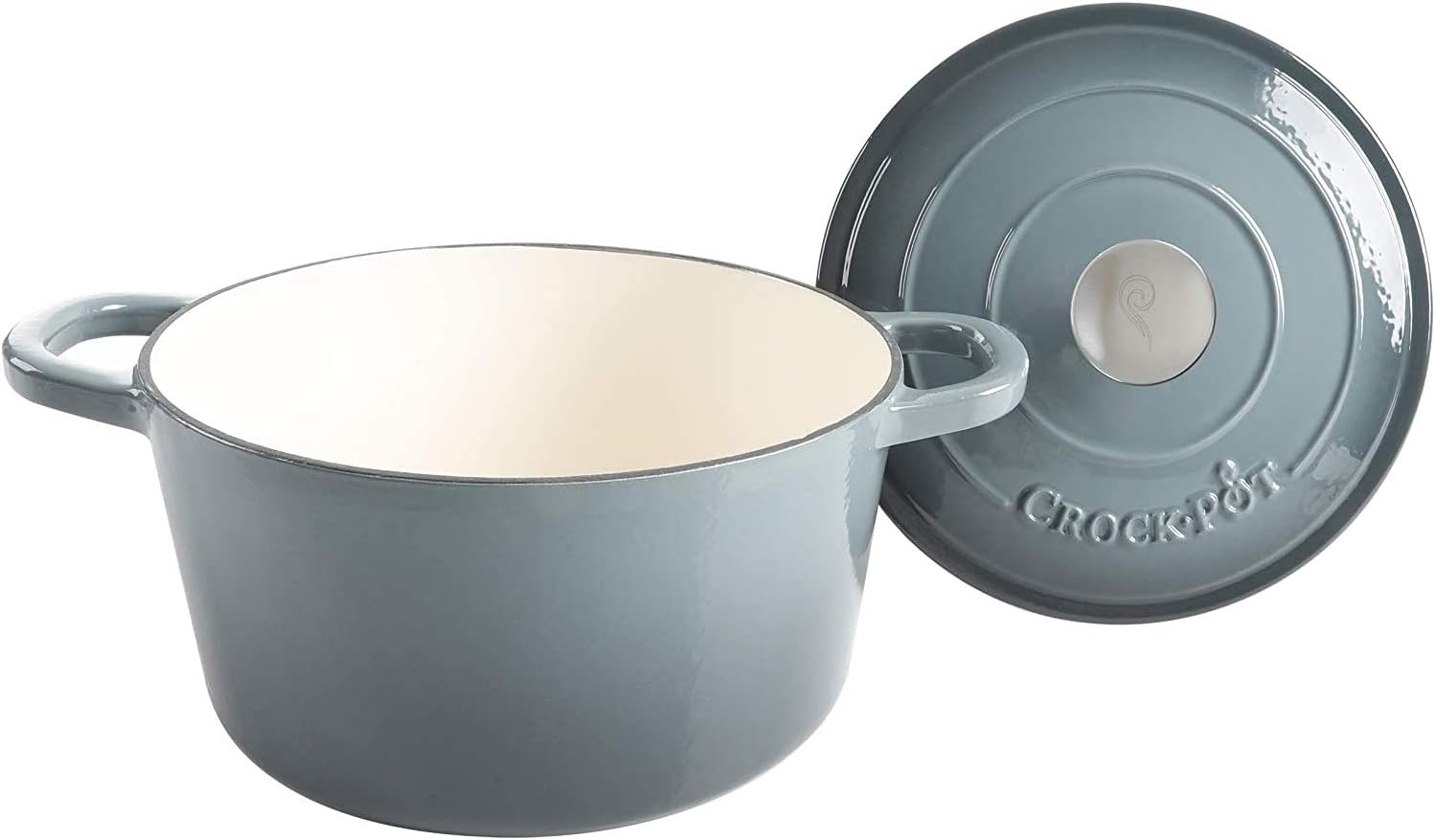
Crock-Pot Artisan: This one has a documented pattern of problems worth naming directly. Across aggregated reviews, two specific issues recur: the lid knob loosens during normal use and can’t be re-tightened reliably, and at least some units arrive with chipped enamel still in the original sealed box. A loosening lid knob during a long chili simmer is an annoyance; chipped enamel arriving in the box is a reason to return the pot before cooking in it — exposed cast iron in contact with acidic tomatoes and chiles is a real problem, not a cosmetic one. Apartment Therapy’s budget Dutch oven coverage has flagged QC consistency as the most variable factor at this price tier, and the Crock-Pot Artisan is the clearest example of that variance working against the buyer. For chili duty, we’d pass.
Frequently Asked Questions
Does a snug lid fit actually matter for chili, or can I just crack it? It matters more for long cooks than short ones. Chili simmered for two-plus hours loses significant liquid through a loose lid, which over-concentrates flavors and can cause scorching at the bottom before fat and spices meld correctly. A snug lid lets you set a low simmer and walk away. A loose lid means checking and adding liquid every 30–40 minutes — manageable, but not ideal for a hands-off cook.
How do I inspect enamel for chips before I cook in it? Unbox the pot in good light, ideally near a window. Run your fingers along the entire interior surface — chips create a rough or sharp texture immediately obvious to the touch. Visually, look for white or gray spots breaking the enamel color, or areas where the underlying dark cast iron shows through. Check the rim and the interior base corners, where shipping impacts concentrate. If you find a chip, return it; exposed cast iron in an acidic chili cook is a real problem, not a cosmetic one.
Will acidic tomatoes damage the enamel interior on a budget pot? Not as long as the enamel is intact. Enamel is chemically inert against food acids. The caveat: damaged or chipped enamel exposes cast iron beneath, which can react with acids and impart metallic flavor. Cook’s Illustrated’s coverage of enameled cast iron (published in their equipment review series) confirms that an intact enamel surface — even a budget one — handles tomatoes, wine, and vinegar without issue across normal home cooking use.
Is the Amazon Basics pot actually comparable to Le Creuset for chili purposes? For the specific task of making chili on a home stove, closer than the price gap implies. Serious Eats’ Dutch oven testing (“The Best Dutch Ovens, Tested and Reviewed”) has found that for most home applications, functional performance differences above the $120–$150 band are marginal. Le Creuset’s advantages — thicker enamel, tighter material tolerances, more consistent finish — show up most over decades of hard use, not in any single chili session.
Can I use these on induction? Cast iron is inherently induction-compatible, and all four pots reviewed here work on induction cooktops. The caveat: induction heats cast iron aggressively at high settings, and the drop from high to low is faster than gas. Start lower than you think you need to and adjust up — this prevents scorching in the sauté phase before you add liquid.
How do I clean enamel after a long chili simmer without scratching it? Let the pot cool completely before adding water — thermal shock can crack enamel. Fill it with warm (not boiling) water, add a drop of dish soap, and let it soak for 15–20 minutes. Food52’s guide to enameled cast iron (“Everything You Need to Know About Enameled Cast Iron”) recommends a soft sponge or nylon brush for scrubbing — never steel wool or abrasive pads. For stubborn staining, a paste of baking soda and water left for 30 minutes handles most chili residue without scratching. Bar Keepers Friend powder at low concentration is widely recommended for enamel stain removal; rinse thoroughly after use.
The Decision Rule
Here’s how to read this:
- If you want the strongest long-run track record and plan to use this pot for a decade of serious cooking: Lodge enameled is the call. The “lifer” reputation in owner reviews is consistent and credible, and Wirecutter’s testing backs it up.
- If you want the best value at the lowest price point and the “comparable to a French pot at five times the cost” owner reports resonate: Amazon Basics earns that reputation. Even-heat reports are consistent, and Serious Eats’ finding about diminishing returns above $120–$150 puts it in a favorable position.
- If all-day bean-inclusive chili cooks are your primary use case: Overmont’s even-heat reports are consistent enough to trust, and the price is typically at or below the other two.
- If you’re looking at Crock-Pot Artisan because the price is right: The lid-knob loosening and chipped-enamel-on-arrival complaints are a pattern across reviews, not isolated incidents. Pass.
At this price tier, any of the top three gets you into the game. The gap between them and a $400 pot is real at the margins — finish consistency, enamel thickness, lid seal precision — and nearly invisible in the bowl.