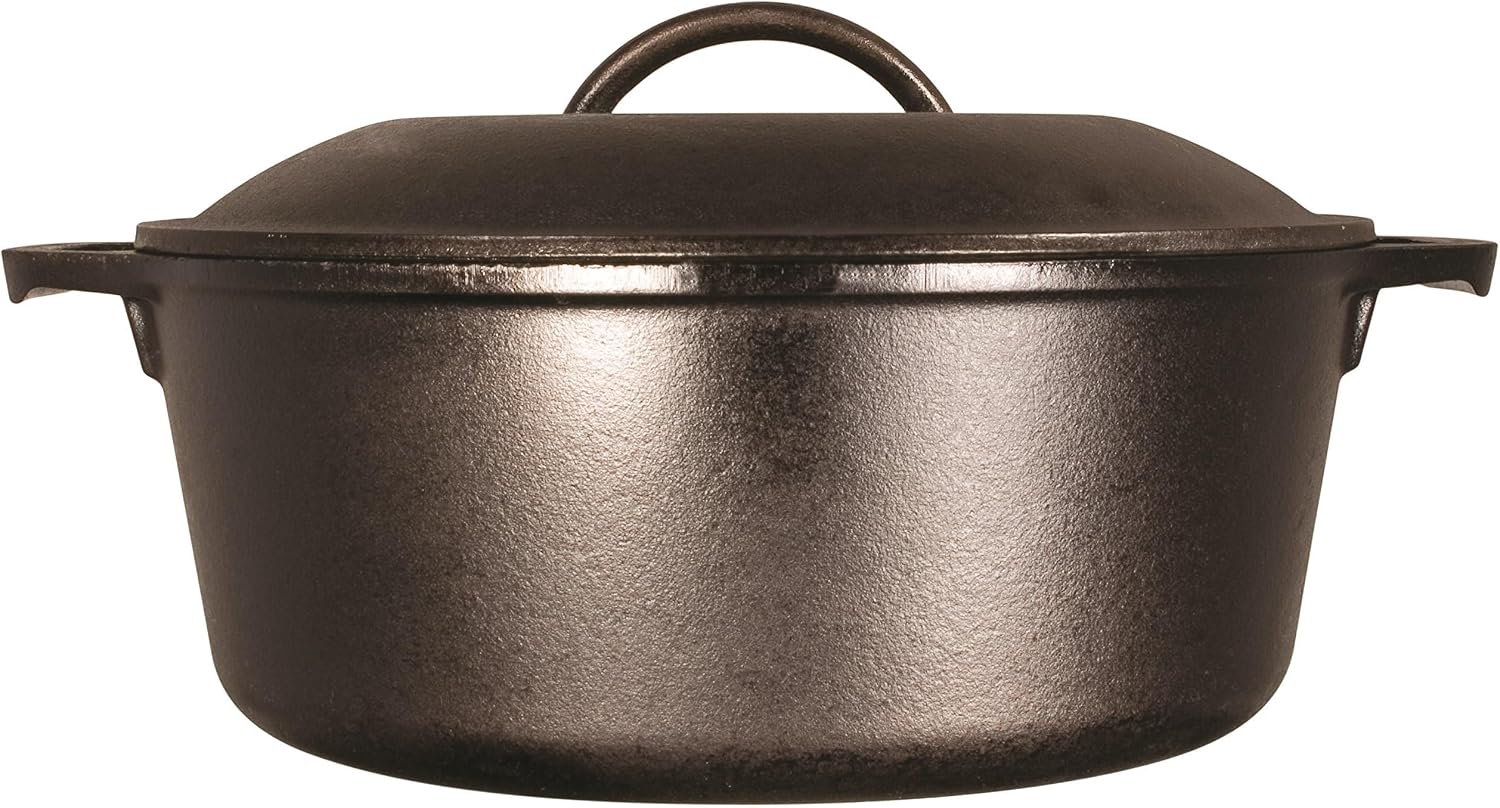
If you’ve ever cooked a pot of chili on your kitchen stove and thought, what would this taste like over an actual fire, you’re not alone — and the answer is more nuanced than “smokier and better.” A camp Dutch oven is a thick-walled cast iron pot (cast iron meaning raw, uncoated iron that you season with oil rather than coat with enamel) designed to sit directly over coals or an open flame. Unlike the enameled Dutch ovens most home cooks know — the Le Creuset or Staub pots with their colorful glass-fused coating — a bare cast iron camp model has no protective layer between the iron and the heat source. That matters a lot when the heat source is a charcoal ring doing 400°F from the bottom and another ring sitting on the lid doing the same from the top. This article is your decision framework: when bare cast iron is the right call, what the tradeoffs look like against your kitchen pot, and which camp Dutch oven specs actually change the outcome for a full chili batch.
Bare Cast Iron vs. Enameled: This Is Not Just a Budget Question
The conventional framing is that enameled cast iron is the upgrade and bare cast iron is the entry point. For chili, that framing falls apart quickly when you move outside.
Enamel coatings — even the thick, quality coatings on Staub and Le Creuset — carry manufacturer warnings against open-flame and direct charcoal use. The concern is thermal shock: uneven, intense radiant heat from coals can micro-crack enamel over time, and a cracked interior coating compromises both performance and food safety. Serious Eats’ equipment guide on Dutch ovens notes that enameled cast iron is designed for controlled stovetop and oven environments, not the fluctuating, often-extreme heat profiles of outdoor cooking. This is not a knock on those pots — they are purpose-built for what they do — it just means they are the wrong tool for a coal bed.
Bare cast iron, by contrast, handles direct flame, coal contact, and wide temperature swings as a matter of design. There is nothing on the surface to crack or chip. Owners across aggregated reviews consistently describe treating camp ovens like workhorses: dropped onto coals, buried in fire pits, used at temperatures that would never be safe for enamel. One segment of buyers — documented in Lodge’s own review corpus — specifically purchases the Lodge 7 Qt bare cast iron Dutch oven not for camping at all, but for high-heat sourdough baking, where they want to push oven temperatures past the 500°F threshold that most enamel manufacturers caution against. The reasoning is identical: bare iron has no failure mode that a coating introduces.
The tradeoff you accept: Bare cast iron requires active seasoning maintenance. Enamel is inert — you can deglaze with acidic wine or tomato all day. Bare iron reacts with acids, and chili is an acidic cook. A long tomato-and-chile simmer in a poorly seasoned bare iron pot can strip seasoning and impart a metallic edge to the flavor. The solution is not to avoid camp Dutch ovens for chili; it’s to ensure the seasoning is solid before you cook and to not let the finished chili sit in the pot for hours post-fire. Cook’s Illustrated’s cast iron maintenance overview recommends a minimum of two to three seasoning layers before any acidic recipe, and experienced cast iron owners in reviews note that they re-season pre-seasoned camp ovens before first use regardless of what the manufacturer claims — the factory seasoning is a starting point, not a finish line.
How Camp Dutch Oven Design Changes Chili Cooking
The Lid Is a Heat Source, Not Just a Lid
The defining feature of a traditional camp Dutch oven — as opposed to a bare cast iron pot you might use indoors — is the flanged, lipped lid. That lip is designed to hold a ring of charcoal briquettes on top of the pot, turning the lid into a radiant heat source. You are not just heating from the bottom; you are creating a surrogate oven. For chili, this means you can achieve the kind of even, all-around heat that produces gentle, even simmering across the whole pot — similar to what a kitchen oven does for a braised dish.
The depth of the pot matters here more than most buyers expect. A shallow camp Dutch oven — and some models run noticeably shallower than others — will produce a chili that evaporates faster, requires more frequent liquid additions, and risks scorching on the bottom before the top has finished melding. Uno Casa’s camp Dutch oven earns solid marks from reviewers, but a recurring note in aggregated reviews flags the interior depth as shallower than buyers anticipated based on the listed quart capacity. Quart capacity is a volume measurement that includes the curve of the walls; the usable depth for a tall liquid-and-bean batch is what you actually need to compare. When you’re sourcing a pot, look at the stated interior depth in inches, not just the quart number.
The Legs Change Your Surface Options
Traditional camp Dutch ovens have three short legs cast into the base. These legs serve a real function: they elevate the pot off a flat coal bed, letting you regulate temperature by adjusting coal count rather than moving the pot. On a campfire grate or flat rock, legs keep the bottom from sitting directly in the hottest zone of live flame. Inside a home kitchen, however, those same legs mean the pot won’t sit flat on a glass or ceramic cooktop — and even on a gas burner, the contact area is reduced to three small points, which creates uneven heating that a camp model isn’t designed to compensate for. If you want a pot that transitions genuinely between outdoor coal cooking and your kitchen stove, a legless bare cast iron Dutch oven is the more versatile call. If the camp-fire use is the primary mission, legs are a feature, not a liability.
By the Numbers: Camp Dutch Oven Sizing for Chili
| Pot Size | Approximate Chili Yield | Serves (as a main) |
|---|---|---|
| 5 qt | ~4 quarts finished | 6–8 people |
| 8 qt | ~6–7 quarts finished | 10–14 people |
| 12 qt | ~9–10 quarts finished | 16–20 people |
Yields assume a standard chili recipe with 2–2.5 lbs. of meat, dried chiles rehydrated, and beans. Finished volume is less than rated capacity after evaporation and ingredient volume.
For a group of 8 to 12 on a single camp cook, an 8 qt camp Dutch oven is the practical minimum. Texas Monthly’s field reporting on chili cook-offs documents multi-oven setups where competition cooks run two 8 qt pots rather than one large vessel — not just for batch size, but for separate red and green cooks. At the backyard or campsite scale, one 8 qt pot comfortably feeds 10 with standard chili portions.
The Lodge Camp Dutch Oven and the Sentimental Case for Cast Iron
Lodge’s camp Dutch oven draws a category of buyer that almost no other cookware does: people who describe it as a piece of American food history, who request it as a gift specifically because they already own a full kitchen, who talk about the object itself — not just the function — in reviews. One pattern across aggregated owner reviews describes a buyer in their 50s requesting the Lodge camp oven as a Father’s Day gift, framing the acquisition as closing a gap in their cooking life rather than solving a utilitarian problem. Another describes building a Dutch oven tower — stacking multiple camp ovens with offset coals — to cook a group breakfast for a crowd, which illustrates both the communal scale the format enables and the fact that experienced users treat multiple pots as a system, not a single unit.
This is relevant buying context because it tells you something about the product’s actual use pattern: people who own it tend to use it repeatedly, invest in the skill of coal management, and expand the format. The Lodge 7 Qt bare cast iron Dutch oven (the flat-bottomed indoor/outdoor version without legs) serves the buyer who wants that same bare-iron durability without committing to a legs-only camp format — it crosses over to a standard oven for the high-heat baking use case mentioned earlier. Food52’s cast iron care guide notes that a well-maintained seasoned bare iron surface, built up over years of cooking, becomes nearly as release-friendly as a factory non-stick — a payoff that compounds over time in a way enamel simply doesn’t.
Frequently Asked Questions
Can you use a regular enameled Dutch oven over a campfire, or do you need a bare cast iron camp model?
You should not use an enameled Dutch oven over direct coals or open flame if you want to preserve the pot. Enamel manufacturers — including Le Creuset and Staub — explicitly caution against this in their care guidelines. The thermal cycling of outdoor fire cooking stresses the enamel-to-iron bond. For occasional, very controlled use over a stable gas camp stove (not open coals), the risk is lower — but for a traditional coal-bed camp cook, a bare cast iron model is the right tool.
How many charcoal briquettes do you need on top and bottom of a camp Dutch oven to simmer chili?
The standard field reference, documented by camp cooking educators and reflected across practitioner reviews, is the “rule of threes” and diameter-based counting: for a 12-inch camp oven, roughly 25 briquettes total — about 16 on top and 9 on the bottom — produces an oven-like 350°F. For a lower simmer (275–300°F), reduce by 4–5 briquettes total. Bottom heat drives boiling; top heat drives ambient baking. For chili, you want more top than bottom to simulate a low oven environment rather than a stovetop boil.
How do you clean a bare cast iron camp Dutch oven after a chili cook without running water?
The protocol documented in Food52’s cast iron care guide and consistent with Cook’s Illustrated’s maintenance recommendations: while the pot is still warm (not screaming hot), scrape residue with a wooden or silicone scraper. Add a small amount of water if needed and use a stiff brush or chain mail scrubber. Dry immediately and thoroughly — use residual fire heat if available. Apply a very thin layer of neutral oil while still warm. Do not soak, do not use soap on a lightly seasoned pot, and never leave moisture in contact with bare iron. At camp without running water, a sealed container of boiled water and a dedicated scrub brush accomplishes the same job.
What size camp Dutch oven do you need to feed 8 to 12 people a full chili meal?
See the sizing table above. An 8 qt is the practical floor for 10 to 12 people eating chili as a main. If you’re adding cornbread, sides, or want leftovers, run two 8 qt pots or step up to a 10–12 qt where the model supports it.
Is a legged camp Dutch oven usable on a regular home stovetop or only over coals?
Legged camp Dutch ovens do not sit flat on glass, ceramic, or induction cooktops — and the three-point contact on a gas burner produces uneven heating. They are functionally outdoor-only pots. If you want one pot for both uses, choose a flat-bottomed bare cast iron Dutch oven (like the Lodge 7 Qt bare iron model) rather than a traditional legged camp design. If the camp use is your primary mission, the legs are an intentional feature and you’ll want a separate indoor pot regardless.
The Decision Rule
Here’s the clean if/then for this choice:
-
If your primary goal is campfire or coal-bed chili and you will cook outdoors regularly: get a legged bare cast iron camp Dutch oven sized to your group (8 qt for 10–12 people). Plan to re-season before first use regardless of factory seasoning claims.
-
If you want bare iron for high-heat indoor use (high-temp baking, no enamel risk) and occasional outdoor use on a camp stove: the flat-bottomed Lodge 7 Qt bare cast iron is the right call — it crosses both contexts.
-
If you already own a quality enameled Dutch oven and want to take it camping: don’t. Buy a dedicated bare iron camp model and protect your enameled investment for the kitchen.
The real gap between a camp cook and a kitchen cook isn’t technique — it’s heat management. Once you understand that a legged camp oven with a flanged lid is a surrogate oven, not a pot sitting on fire, the coal counts and depth specifications stop feeling like trivia and start feeling like dials you actually control.