If you’ve ever made a chili that tasted flat despite the right base — the ancho (a dried poblano, mild and earthy), the guajillo (a bright, leathery workhorse), maybe a pasilla (dark, raisin-y) — you’ve already met the primary layer of dried-chile flavor. But experienced chili builders know there’s a second layer: a supporting cast of chiles that add smoke, high-register heat, and the kind of fruity-funky depth that makes people ask what your secret is. This article is about three of them: chipotle morita, cascabel, and puya. None of them are the loudest voice in the pot. All three are finishing chiles — modifiers that dial in the character of a bowl that’s already structurally sound. By the end, you’ll know what each one does, how they compare, and which ones belong in your rotation.
Chipotle Morita: The Smoky, Fruity Workhorse
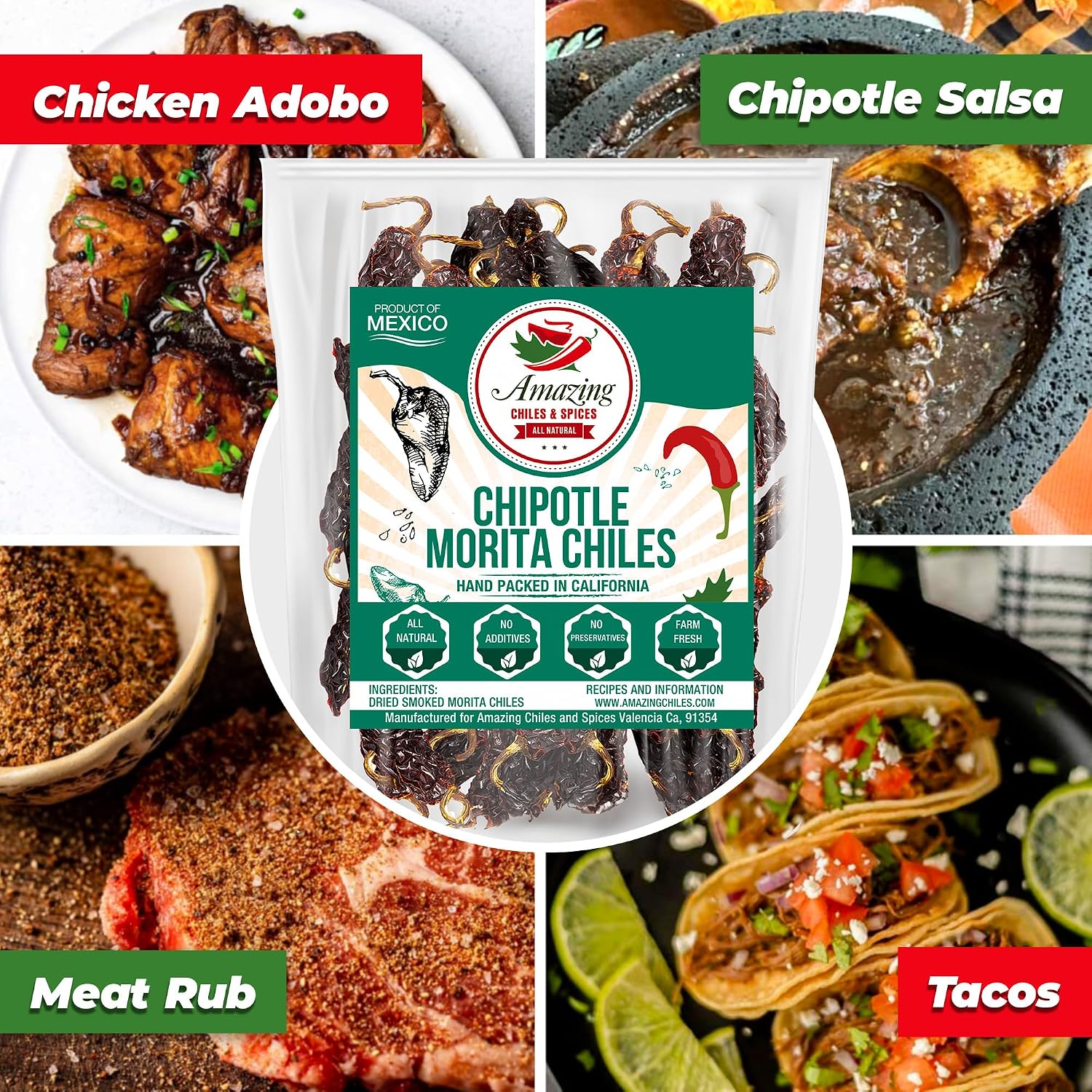
Let’s start with the most versatile of the three. A chipotle is simply a jalapeño that has been smoke-dried — the word comes from Nahuatl roots meaning roughly “smoked chile.” The morita variation (sometimes called “chipotle morita” to distinguish it) is a smaller, purplish-red chipotle that is dried for a shorter period than the more common chipotle meco. The result: more residual moisture, a fruitier profile, and a more flexible pod.
One reviewer describing their morita purchase used language worth quoting directly: they called it a “deep smoky, fruity taste — almost like dried figs and apricots behind the deep smoky pepper flavor” and gave it the highest possible rating. That’s not hyperbole — it’s a technically accurate read of the morita’s aromatic profile. The fruit notes come from the red-ripe jalapeño base; the smoke comes from the drying process; and the combination is more complex than a simple “smoky hot pepper.”
How it performs in chili: Chipotle morita is the most immediately legible of these three chiles. Drop two or three rehydrated moritas into a blended chile paste and you get a clear, clean smoke note without the heaviness of liquid smoke or the one-dimensionality of chipotle powder. It also brings moderate heat — generally rated around 2,500–8,000 Scoville heat units (SHU), where Scoville units measure pungency on a calibrated scale — which means it adds presence without bulldozing the other flavors.
Practical technique note: Owners consistently report that morita pods should be kept slightly pliable rather than fully dried out. One experienced buyer specifically noted that a slightly flexible pod is ideal for slicing (useful for adding strips directly to a braise), while a fully brittle, dried-down morita crumbles more easily for incorporating into a spice blend. Both uses are valid — you’re choosing a texture state, not a different chile.
The math on smoke: Per Serious Eats’ guide to dried chiles, a reconstituted chipotle morita contributes smoke in a way that interacts differently with fat than liquid smoke does — it disperses into the cooking fat and integrates, rather than sitting on top of the dish. This matters in chili because the fat cap you’re building during the sauté phase is your flavor-distribution system.
Cascabel: The Exploratory Buy
The cascabel (kah-skah-BEL, Spanish for “rattle” — the seeds rattle inside the dried pod, which is how you know it’s well-dried) is a round, deep-burgundy chile with a mild, nutty, slightly earthy flavor. SHU range sits roughly between 1,000 and 3,000 — below the morita, firmly in mild territory. Its flavor profile is often described as woodsy with faint chocolate and tobacco notes, making it a closer relative to the ancho than to the fruit-forward morita.
Honesty check: Cascabel is the least-reviewed of these three chiles in aggregated buyer feedback, and reviewers who pick it up as part of a multi-chile bundle tend to describe it in less specific terms than they use for chipotle or arbol. One bundled-set reviewer singled out chipotles as the clear standout and was notably less effusive about the cascabels. That’s not a condemnation — it’s a signal that cascabel is doing quieter, subtler work.
Where cascabel fits in the build: Think of cascabel as depth-without-statement. Saveur’s field guide to Mexican dried chiles describes the cascabel as contributing a “mild, slightly smoky nuttiness” that rounds out harsher flavors without competing for attention. In chili terms: if your bowl already has strong ancho and guajillo foundation notes and you want to add body without adding more sweetness (ancho) or brightness (guajillo), cascabel fills that gap. It’s the chile that makes your chili taste “more complete” without anyone being able to name what changed.
Compared to guajillo: A guajillo (gwah-HEE-yo) is brighter, sharper, and more tannic. Side by side, cascabel reads as warmer and rounder — less citrus peel, more walnut skin. If guajillo is the treble note in your flavor stack, cascabel is a low-mid. They don’t compete; they layer.
Buy posture: Treat this as an exploratory add-on to a morita or puya purchase, not the headline act. Its value is in what it does to a finished blend, not in what it contributes on its own.
Puya: Bright Heat Without Muddy Flavor
The puya (POO-yah) is where the heat gets serious. Closely related to the guajillo but smaller and significantly hotter — ranging from approximately 5,000 to 8,000 SHU — the puya brings what chili builders sometimes call “clean heat”: a sharp, fruity spiciness that rises clearly through the other flavors without muddying the base.
Per Chili Pepper Madness’s complete guide to puya peppers, the flavor is often described as fruity and tangy with a licorice-adjacent quality — think guajillo’s brighter notes pushed further toward high-register heat. The texture dried is thin and leathery, making it easy to toast and rehydrate or to crumble directly.
The “bright and fierce” distinction: Across aggregated buyer reviews of similar dried chiles in the arbol and puya family, reviewers consistently use the words “bright” and “fierce” — and one technically precise observation that stands out is that these chiles boost heat “without muddying the original taste.” For a chili builder, that’s the key spec. Puya is not a bomb you drop on a finished bowl. It’s a precision instrument for raising heat without altering the character of what’s already there.
Heat contextualized: One buyer’s journey is worth knowing here. A reviewer who had previously worked with Carolina Reapers and scorpion peppers — both in the 1.5–2 million SHU range, far beyond what any serious chili recipe calls for — described ending up “on the bathroom floor for an hour.” They now love the arbol/puya family specifically because the heat is serious but proportionate. It’s a useful frame: these are chiles for flavor-with-heat, not endurance athletics.
In chili: Add puya where you’d add arbol, but expect a slightly fruitier, more complex heat signature. Texas Monthly’s coverage of regional chili traditions consistently notes that the best bowls balance smoke (morita, ancho), depth (guajillo, cascabel), and clean heat (arbol, puya) — puya is simply the more nuanced version of that third role.
How to Stack Them: A Decision Framework
| Chile | SHU Range | Primary Note | Role in Pot | Buy If… |
|---|---|---|---|---|
| Chipotle Morita | 2,500–8,000 | Smoke + dried fruit | Foundation modifier | You want integrated smoke without liquid smoke |
| Cascabel | 1,000–3,000 | Nutty, woodsy, mild | Body and roundness | You’re chasing depth over statement |
| Puya | 5,000–8,000 | Fruity, bright heat | Clean heat lift | You need more heat without losing clarity |
The if/then framework:
- If your chili tastes flat but not thin, then reach for chipotle morita — smoke integrates into the fat and brings perceived richness.
- If your chili tastes one-dimensional despite multiple base chiles, then cascabel adds body without competing.
- If your chili is well-built but timid on heat, then puya raises the level without muddying what you’ve built.
- If you’re building from scratch and want all three effects, start with two moritas, one cascabel, and one puya in a 6-quart pot — add from there on the next cook.
Frequently Asked Questions
What is the difference between chipotle morita and regular chipotle? Both are smoke-dried jalapeños, but “regular” chipotle (sometimes called chipotle meco) is dried longer, resulting in a tan-beige color, a drier texture, and a more intense, almost tobacco-like smoke character. The morita is dried for a shorter period — it stays purplish-red, retains more moisture and flexibility, and has a fruitier flavor profile. For chili, moritas tend to integrate more smoothly; mecos can be slightly more assertive and earthy.
How many chipotle or puya chiles should you add to a 6-quart pot without overwhelming it? A useful starting baseline: 2–3 chipotle moritas or 1–2 puya chiles rehydrated and blended into a chile paste for a 6-quart pot of chili. The morita’s smoke scales generously; the puya’s heat compounds quickly. Taste the paste before it goes in, and remember that both chiles intensify as the pot reduces. It’s easier to add a half-chile’s worth of paste at the end than to rescue an over-smoked or over-heated batch.
Can you use these chiles dried and whole without rehydrating — just crumbled in? Yes, and this is a legitimate technique. Crumbling a dried morita or puya directly into a braise works particularly well in long-cook applications (3+ hours) where the residual moisture in the pot will slowly rehydrate the chile particles. The trade-off: rehydrating and blending produces a more uniform, integrated flavor; crumbling produces occasional pockets of intensity and a slightly coarser texture. Some competition cooks use both methods in the same pot — blended base for integration, a crumbled piece added late for brightness.
What does cascabel actually taste like compared to guajillo? Guajillo is bright, tannic, and slightly acidic with a clean red-fruit note. Cascabel is warmer, nuttier, and less sharp — closer to walnuts and mild dried tobacco than to berry or citrus. If you taste them side by side (dry), guajillo has more immediate impact; cascabel’s flavor emerges more slowly and is harder to isolate in a complex pot. That’s not a flaw — it’s the cascabel doing its job as a background note.
How do you store opened bags of whole dried chiles to keep them pliable? Squeeze out as much air as possible, reseal tightly, and store in a cool, dark place — a cabinet away from the stove, not above it. For longer storage (more than a month past opening), a zip-lock bag inside an airtight container in a cool pantry or even the refrigerator keeps dried chiles from desiccating further. The refrigerator is particularly useful in dry climates. Avoid the freezer for whole pods — condensation on thawing can introduce moisture unevenly. Per Food52’s dried chile storage guidance, the goal is stable humidity, not cold — you’re preventing further moisture loss, not preserving freshness the way you would with fresh produce.
The three chiles covered here — chipotle morita, cascabel, and puya — won’t make or break a bad chili, but they will push a good one into genuinely memorable territory. The morita gives you smoke with fruit. The cascabel gives you roundness with no drama. The puya gives you heat that doesn’t lie. Build your base first. Then reach for these.