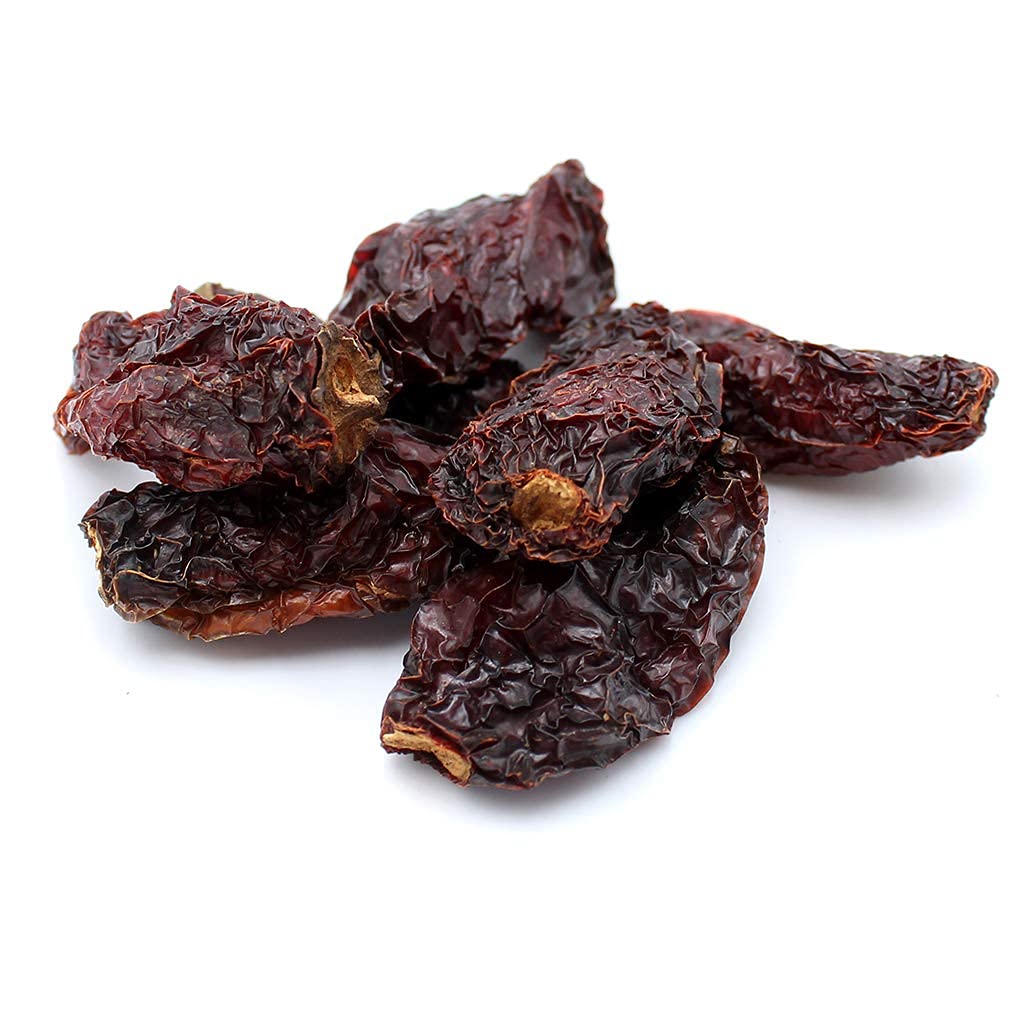
If you’ve spent any time cooking chili from scratch — meaning starting with dried chiles instead of a powder from the grocery shelf — you’ve probably discovered that the ingredients doing the heaviest lifting aren’t always the obvious ones. Smoke is a good example. Most people associate smoky flavor with a grill, a smoker rig, or a can of chipotle peppers in adobo sauce (those are smoked jalapeños, packed in a tangy tomato-and-vinegar marinade). But dried smoked chiles go much further than that one familiar can. Chipotle meco, morita, and cascabel are three distinct dried peppers — each processed differently, each landing in a different flavor neighborhood — and together they give an indoor chili cook a full toolkit for dialing in smoke without ever leaving the kitchen. This guide breaks down how each one works, what to look for when buying, and how to combine them so you’re building complexity rather than just layering heat.
What Makes a Dried Chile “Smoky” — and Why It Matters for Chili
Not all dried chiles are smoked. Most — ancho, guajillo, mulato, pasilla — are simply sun-dried or dehydrated, which concentrates their fruity, earthy, or chocolatey notes without adding any wood-smoke character. Smoked dried chiles go through an additional step: they’re slow-smoked over wood (typically pecan or mesquite) during or after drying, which bonds phenolic smoke compounds to the pepper’s oils. That smoke doesn’t just flavor the chile — it becomes part of the fat-soluble flavor matrix that disperses slowly into a braised or simmered dish.
This is exactly why smoked dried chiles behave differently in a long chili cook than liquid smoke or smoked paprika. Per Serious Eats’ pantry guide on dried chiles, the fat-soluble aromatic compounds in dried chiles release gradually over extended cook times, meaning a three-hour simmer pulls flavors out of a rehydrated dried chile that a 45-minute cook would barely touch. Liquid smoke, by contrast, is water-soluble and front-loaded — it peaks early and can turn acrid. If your chili is going three hours or longer, dried smoked chiles have a structural advantage.
The Three Chile Profiles: A Comparison
Chipotle Meco — The Workhorse
When most home cooks say “chipotle,” they mean the morita (more on that below). The meco is the version you’re less likely to encounter in a grocery store but more likely to find at a specialty spice retailer or through a source like Rancho Gordo or Burlap & Barrel. Meco chipotles are fully ripe, red jalapeños that have been left on the plant until they start to dry naturally, then smoked for a much longer period than moritas — sometimes two weeks or more. The result is a tan-to-gray, slightly wrinkled pod that looks almost ashy. Chili Pepper Madness’s guide to chipotle varieties describes the meco as having a “tobacco-like, earthy smokiness” with a slower-building heat and significantly more complexity than its more common counterpart.
For chili, meco is the chile you reach for when you want smoke to be a structural note rather than a top-note. It’s drier, meatier in texture when rehydrated, and holds up to extended simmering without turning bitter. Heat lands in the 2,500–8,000 Scoville range — moderate, flexible, and easy to stack with other chiles. Because meco is more intensely dried, you typically use fewer pods per batch: two to three rehydrated mecos will season a six-quart pot without overwhelming it.
Best sourcing signal: Look for pods with visible flexibility (not bone-dry brittle) and a grayish-tan color. Jet-black or very dark brown pods are usually moritas mislabeled as meco. Rancho Gordo’s dried chile listings typically note harvest date and regional origin — both matter for meco because older crop pods lose the subtle tobacco volatiles first.
Morita — The Most Accessible Smoked Chile
Morita chipotles are smoked red jalapeños that are pulled from the smoke earlier than mecos, preserving more of the pepper’s moisture and resulting in a smaller, darker, more pliable pod. Bon Appétit’s dried chile guide describes moritas as tasting “fruity and smoky simultaneously” — there’s still a berry-like sweetness underneath the smoke that mecos have largely lost to the extended drying process.
In chili, morita functions more like a mid-register flavoring agent: it contributes smoke but also brings a subtle jam-like fruit note that works well with tomato-based chilis or anything with a touch of sweetness (dried fruit additions, for instance). It’s easier to find in good form at well-stocked grocers and Latin markets, and it’s the default ingredient when a recipe just says “chipotle.”
The practical tradeoff: morita’s higher residual moisture means it doesn’t store as long as meco, and the smoke character can soften significantly in chilis that simmer longer than two hours. Serious home cooks on long-simmer Texas-style chili (no beans, extended braise) often report that morita’s fruit notes are welcome early but fade before the end of the cook. A good workaround is adding half your moritas at the beginning and half in the final 45 minutes.
Heat level: 2,500–8,000 Scoville — essentially the same range as meco, but the perception of heat often reads softer because the fruit sweetness offsets it.
Cascabel — The Underrated Depth Charge
Cascabel (“little rattle” — the seeds shake inside the dried pod) is not a smoked chile in the traditional sense. It’s a small, round, thick-walled fresh pepper that dries to a deep reddish-brown globe, and its smoke-adjacent quality comes from the roasting process during drying rather than active wood smoke. Saveur’s chile pepper guide characterizes cascabel as delivering “nutty, woody, slightly smoky tones with a hint of tobacco and dried cherry.”
This is where cascabel earns its place in a multi-chile chili build: it reads like smoke to the palate but doesn’t announce itself as smoke. It fills in the mid-palette where meco and morita both tend to leave gaps — the place where you want earthiness rather than the sharp phenolic edge of wood smoke. Cooks who find full chipotle-forward chili “one-dimensional” in its smokiness often describe cascabel as the missing piece.
Cascabels are also notably forgiving in a long simmer. Food52’s guide on dried chile technique notes that thicker-walled dried chiles like cascabel tend to release flavor more evenly over extended cook times, making them particularly reliable for three-hour-plus chili builds where you can’t babysit extraction timing.
Heat level: 1,000–3,000 Scoville — the mildest of the three, which makes it the safest “add more” chile if you want to intensify smoke and earthiness without spiking heat.
By the Numbers
| Chile | Smoke Source | Scoville Range | Best Cook Window | Pods per 6-Qt Pot |
|---|---|---|---|---|
| Chipotle Meco | Long wood smoke (2+ weeks) | 2,500–8,000 | 2–4+ hours | 2–3 |
| Morita | Short wood smoke | 2,500–8,000 | 1–2.5 hours | 3–5 |
| Cascabel | Roast-dried (no active smoke) | 1,000–3,000 | 2–4+ hours | 4–6 |
How to Build a Smoke Profile Instead of Just Adding Heat
The mistake most intermediate cooks make is treating smoked chiles as a heat source and scaling up or down accordingly. The more useful mental model — and the one competition-circuit chili cooks tend to operate with, per Texas Monthly’s reporting on competition chili technique — is to think of dried smoked chiles as flavoring agents on two separate axes: smoke intensity and smoke character.
Meco gives you high intensity, earthy character. Morita gives you medium intensity, fruity character. Cascabel gives you low intensity, nutty/roast character.
A blended base that works well across a range of chili styles: 1–2 mecos for the smoke anchor + 2–3 moritas for mid-register fruit + 4–5 cascabels for earth and body. This combination, rehydrated in warm water for 20–30 minutes then blended into a paste, gives you a smoke profile that’s complex enough to not read as “just chipotle” but cohesive enough that you can still identify the throughline.
For CASI-style competition chili where the rules restrict whole chiles and require ground powder builds, the equivalent would be sourcing single-varietal ground versions of each and building a ratio by weight — a conversation worth having with your spice supplier, since pre-blended chipotle powders almost always default to morita.
Sourcing, Freshness, and What “Good” Actually Looks Like
All three of these chiles are subject to the same quality ceiling as any dried agricultural product: harvest date and storage conditions determine how much flavor you actually get. Per Rancho Gordo’s published sourcing notes on their dried chile inventory (available on their product listings), current-crop dried chiles from a given harvest typically retain peak volatile aromatics for 12–18 months if stored properly (airtight, away from heat and light). Chiles sitting in a bulk bin at a store with no dating are frequently 2–3 harvests old — still functional, but meaningfully flatter.
What good looks like in the bag or in hand:
- Meco: Pliable enough to fold slightly without cracking; grayish-tan color; no visible mold or white powder (crystallized capsaicin is fine, mold is not)
- Morita: Glossy-dark and pliable; should smell like smoke and fruit when you press the pod; avoid completely desiccated, brittle pods
- Cascabel: Seeds should audibly rattle; exterior should be a deep brick-red to burgundy; avoid pale, faded pods which indicate significant age
Specialty spice sources that typically carry all three with harvest transparency: Rancho Gordo (dried chiles, not spice blends), Burlap & Barrel (their whole dried chile program), and Diaspora Co. (for complementary smoked spice additions like their smoked spices that pair with chile-forward builds). For competition-grade consistency, buying whole pods and grinding to order on a Zassenhaus or Peugeot burr grinder gives you control that pre-ground product can’t match.
The Decision Framework: Which Chile for Which Chili
If you’re building a long-simmer Texas-style chili (no beans, beef-forward, 3+ hours): anchor with meco, use cascabel for body, add morita only in the last hour. The meco’s intensity survives the cook; the cascabel adds earthy ballast; the morita’s fruit note, added late, stays bright.
If you’re building a tomato-based chili (beans welcome, shorter cook, 1.5–2 hours): lead with morita, use cascabel to round the smoke. Skip meco or use just one pod — its intensity can overpower shorter builds.
If you’re experimenting for the first time with all three: start with cascabel only. It’s the lowest-risk entry point — the smoke reads subtle, the heat is mild, and it won’t overpower your other dried chiles. Once you have cascabel’s contribution calibrated, layer in morita, then meco.
The deeper principle here is what Serious Eats’ dried chile coverage keeps returning to: smoke in a chile build should feel like it’s coming from inside the chili, not sitting on top of it. Mecos, moritas, and cascabels, used with intention, get you there without a single piece of wood.