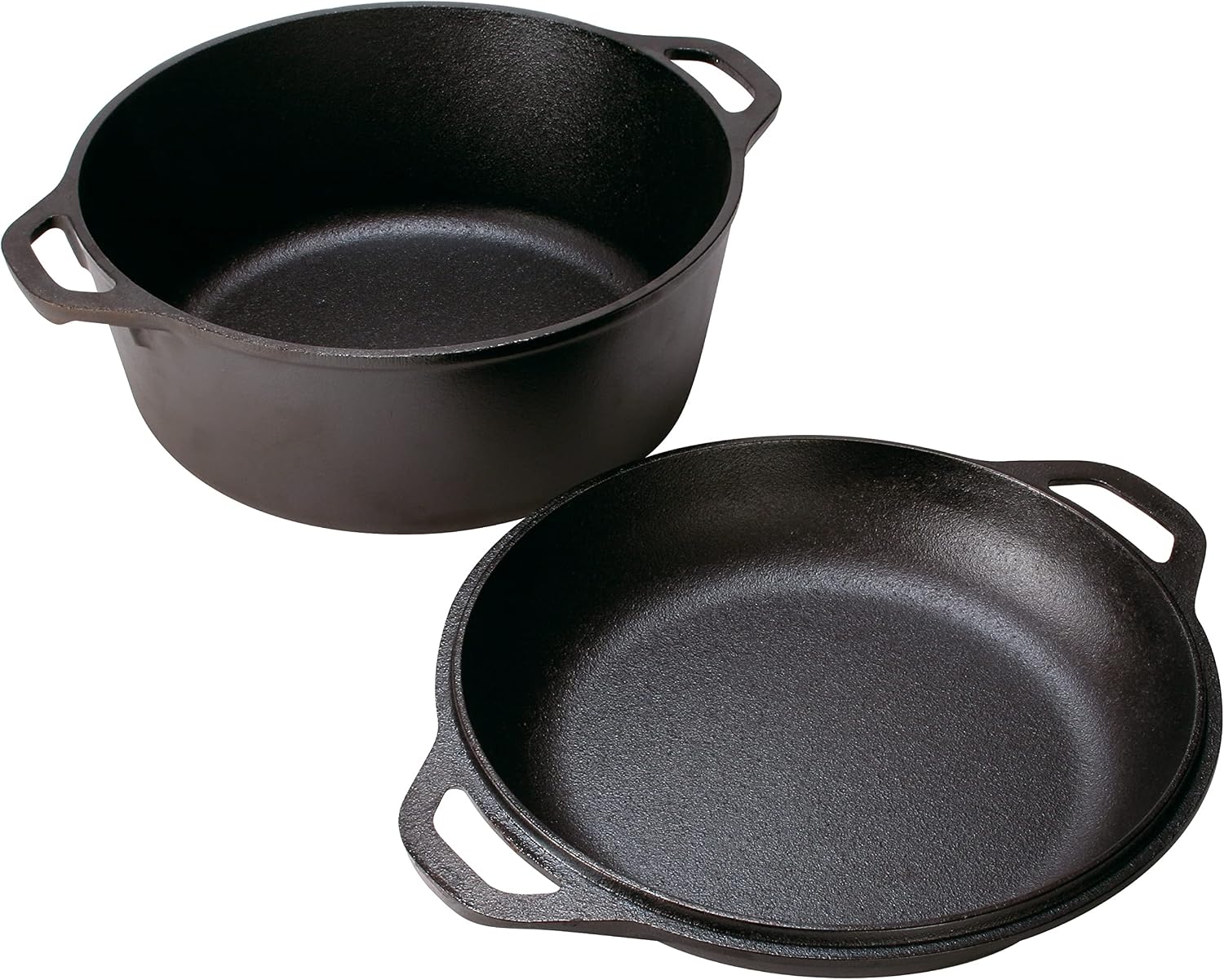
If you’ve ever made chili from scratch — the kind where you’re browning beef in batches, building a fond on the pan bottom, then slow-cooking everything low and covered — you already know the Dutch oven is the right tool for the job. A Dutch oven is simply a thick-walled pot with a tight-fitting lid, designed to hold and distribute heat evenly for long cooks. Most home cooks own one. What fewer people realize is that one specific version, called the Double Dutch Oven, flips the lid concept on its head: its lid is a fully functional, flat-bottomed skillet. That means you get a deep braising pot and a searing pan in a single purchase — and for chili, which demands both searing and slow braising in sequence, that design isn’t just convenient. According to owners who’ve cooked their way to strong opinions, it’s the reason this piece becomes the one they reach for most.
This guide breaks down who should buy a Double Dutch Oven for chili, which version makes sense at which price point, and what the bare-cast-iron commitment actually looks like in practice. If you’re coming from enameled cookware and wondering whether the maintenance trade-off is worth it, there’s a section for that too.
| EDITOR'S PICKLodge Chef Collection 6qt Doubl… | Mid-tierLodge Cast Iron Double Dutch Ov… | Budget pickEDGING CASTING 2-in-1 Pre-Seaso… | |
|---|---|---|---|
| Capacity | 6 qt | 5 Quart | — |
| Pre-seasoned | — | ✓ | ✓ |
| Lid as Skillet | — | ✓ | ✓ |
| Oven-safe | — | ✓ | — |
| Price | $89.90 | $59.90 | $33.99 |
| See on Amazon → | See on Amazon → | See on Amazon → |
What the Skillet Lid Actually Does for Chili
The standard chili workflow creates a cookware scheduling problem. You sear ground beef or chunks of chuck in batches — and if you’re doing it right, you’re cooking in a single layer, not crowding the pan, which means three to four rounds of browning before anything else happens. Then you’re sweating aromatics, toasting dried chiles, building your base, and finally doing the long covered simmer. That’s a lot of pan passes before the lid even goes on.
With a conventional Dutch oven, this means either dirtying a separate skillet for the searing phase or doing the whole job in the Dutch oven itself — which works, but requires you to keep moving seared batches to a bowl and managing heat in a deep pot that wasn’t optimized for wide-surface searing.
The Double Dutch Oven collapses that problem. The lid — typically a 10.25-inch skillet on Lodge’s design — functions as a standalone searing surface. Owners consistently report running two or three batches of beef directly in the lid while the base pot preheats, then nesting everything together for the braise. One frequently cited Lodge owner review puts it plainly: the ability to sear multiple batches in the lid without pulling out a separate pan is the reason it’s become their favorite Lodge piece, full stop.
That’s not a minor quality-of-life improvement. For chili specifically, the fond (the browned bits that stick to the pan and dissolve into the cooking liquid) you build during searing is a significant flavor multiplier. Getting maximum surface contact on your meat — which means using a wide, flat pan rather than a deep pot — produces more of it. The skillet lid is purpose-built for that job in a way the pot base isn’t.
Serious Eats’ coverage of Dutch oven performance consistently highlights heat distribution and vessel geometry as the primary differentiators in long braises — factors that explain why the lid’s flat cooking surface earns its keep when you’re doing real chili work rather than dumping everything into one pot and walking away.
Lodge vs. Lodge Chef Collection: Where the Price Gap Goes
There are two Lodge Double Dutch Ovens worth knowing about, and the decision between them is narrower than the price gap suggests.
By the numbers:
- Lodge Double Dutch Oven (standard): 5-quart capacity, approximately 12 lbs combined, bare cast iron
- Lodge Chef Collection Double Dutch Oven: 5-quart capacity, polished interior, slightly refined exterior finish, typically $20–$40 more at retail
- EDGING CASTING Double Dutch Oven (third-party): 5-quart, bare cast iron, meaningfully lower price point than either Lodge SKU
The core functionality — pot plus skillet lid, bare cast iron, 5-quart capacity — is identical across both Lodge versions. The Chef Collection’s polished interior reduces initial surface roughness, which can make early seasoning sessions slightly more forgiving. Reviewers who have used both note that the cooking performance converges after a few seasoning cycles anyway, because the seasoned layer you build over time matters more than the factory surface underneath.
Cook’s Illustrated’s cast iron testing consistently finds that seasoned performance across brands evens out with use — the initial surface texture advantage narrows as polymerized oil builds up. That’s relevant here: the Chef Collection’s premium is largely about the out-of-box experience, not long-run cooking performance.
If you’re new to bare cast iron, the Chef Collection’s smoother interior is a real psychological and practical ease-in. If you’ve already seasoned a cast iron pan before, the standard Lodge performs identically at the end of six months of use, and the price difference buys you another bag of Rancho Gordo dried chiles.
The EDGING CASTING alternative attracts a different buyer profile — owners who note “surprising quality and thickness for the price point” and praise the out-of-box seasoning. At its lower price, it’s a legitimate entry point if budget is a real constraint, though Lodge’s manufacturing consistency and warranty support are well-documented advantages.
Wirecutter’s Dutch oven guide notes that Lodge remains the most tested and consistently recommended bare cast iron brand at its price tier — a baseline worth anchoring on before venturing to lesser-known alternatives.
Bare Cast Iron for Chili: The Real Trade-Off Conversation
If you’re coming from a Le Creuset or Staub enameled Dutch oven — where you can simmer a tomato-heavy chili for four hours and wipe the pot clean without a second thought — bare cast iron will feel like a different contract.
Here’s what that contract actually involves:
Acid reactivity is real, but manageable. Bare cast iron does react with acidic ingredients. A tomato-based chili simmered for multiple hours in an unseasoned or lightly seasoned pan can pick up metallic off-flavors and strip seasoning. The honest mitigation: a well-seasoned pan handles standard chili acid loads better than people expect, and adding tomatoes after browning and blooming your chiles (rather than cooking acid from the beginning) reduces contact time. Food52’s cast iron coverage notes that a robust polymerized oil layer — not just one seasoning pass, but three or four — creates a meaningful barrier against acidic ingredients. Still, if your signature recipe runs two cans of diced tomatoes plus a cup of tomato paste and cooks for five hours, an enameled pot is genuinely the lower-maintenance choice.
The seasoning ritual is front-loaded, then low-effort. Multiple owners across Lodge reviews describe the same pre-first-use routine: a light coat of neutral oil (some specify olive oil; others use flaxseed or vegetable), wiped almost completely off, then baked upside-down in a 350–375°F oven for an hour. Repeat two or three times before the first cook. After that, normal cast iron maintenance — dry thoroughly, apply a micro-thin oil coat, store — becomes automatic for most cooks within a few uses. The people who say cast iron is “too much work” are usually describing a one-time onboarding friction that doesn’t reflect the ongoing reality.
Weight is a non-trivial factor. A 5-quart cast iron pot with a full batch of chili is heavy. The Lodge Double Dutch runs approximately 12 pounds before food. That’s a consideration for anyone who has wrist or shoulder concerns, and it’s worth naming honestly rather than minimizing.
Is 5 Quarts Actually Enough?
For most home chili batches, yes — comfortably. A standard competition-style or home chili recipe using 2–3 pounds of meat, two cans of beans (or a full cook of dried), aromatics, and liquid fits a 5-quart pot with room to stir and appropriate headspace. Owners consistently describe 5 quarts as sufficient for a batch that feeds six to eight people, which covers most household and small dinner-party scenarios.
The calculus shifts if you’re scaling for a large gathering, a chili cook-off where you’re making multiple test batches, or a meal-prep session intended to fill a chest freezer. In those cases, a 7- or 8-quart pot becomes the right tool — but it won’t be a Double Dutch design at that size. The Double Dutch Oven’s value proposition is specifically the two-in-one sear-and-braise workflow, which is most useful at volumes where a 5-quart pot is appropriate.
Frequently Asked Questions
Can you use the skillet lid directly on the stovetop for searing? Yes — this is the design’s central advantage. The lid functions as a standalone skillet on any stovetop, including gas, electric, and induction. Owners consistently use it for exactly this purpose. The only practical note: make sure you’re comfortable lifting and maneuvering a heavy cast iron skillet from a preheated burner, because it will not have a helper handle on most configurations.
How do you season a bare cast iron Double Dutch Oven before first use? The standard approach: wash with warm soapy water to remove factory coating, dry completely (stovetop heat helps), then apply a very thin coat of oil — thin enough that the pan looks almost dry. Bake upside-down at 350–375°F for one hour. Repeat two to three times. The low-oven olive oil ritual that multiple owners describe works; so does flaxseed oil, which polymerizes at a slightly lower temperature. Either produces a usable baseline seasoning for first use.
Is 5 quarts large enough for a full batch of chili? For most home batches — 2 to 3 pounds of meat, standard aromatics, one to two cans of beans, appropriate liquid — yes. Feeds six to eight people with normal proportions. Not the right vessel if you’re doubling a recipe or cooking for a crowd.
Does bare cast iron react with acidic tomato-based chili? It can, in an underseasoned pan or with very long acid-contact times. A well-seasoned pan handles most chili recipes without issue. Adding tomatoes later in the cook reduces exposure time. If your recipe is heavily acidic and long-simmering, enameled cast iron removes the variable entirely — that’s the honest trade-off.
How does the Lodge Chef Collection differ from the standard Lodge Double Dutch, and is the price difference justified? The Chef Collection has a polished interior, which lowers initial surface roughness and makes early cooks slightly more forgiving. Long-run performance converges with the standard version as seasoning builds up. The premium is worth paying if you’re new to bare cast iron and want the smoothest possible onboarding. It’s not worth paying if you’ve already seasoned and cooked on bare cast iron before — the standard Lodge is the same pot at the end of a season of use.
The Decision Frame
The Double Dutch Oven earns its place specifically when the two-pan searing-and-braising workflow matches how you actually cook chili. If you’re already pulling out a skillet for the searing phase and a Dutch oven for the braise, you’re doing the same job in two pans that this does in one.
The bare cast iron commitment is real but front-loaded. The weight is non-negotiable. The acid reactivity concern is manageable with good seasoning and technique.
If you’re already comfortable with cast iron and want to reduce pan-juggling on chili day: the standard Lodge Double Dutch Oven is the clear call — lower price, identical long-run performance.
If you’re new to bare cast iron and want the gentlest entry point: the Lodge Chef Collection’s polished interior gives you more margin for error while you build intuition.
If budget is the binding constraint and you’re willing to do the seasoning work immediately: the EDGING CASTING option has enough positive owner feedback on thickness and out-of-box seasoning to be worth considering, with the understanding that Lodge’s track record and support are longer-established.
What owners keep coming back to — across all three options — is the same thing: they stopped reaching for other pots. That’s the kind of review pattern that’s worth taking seriously.