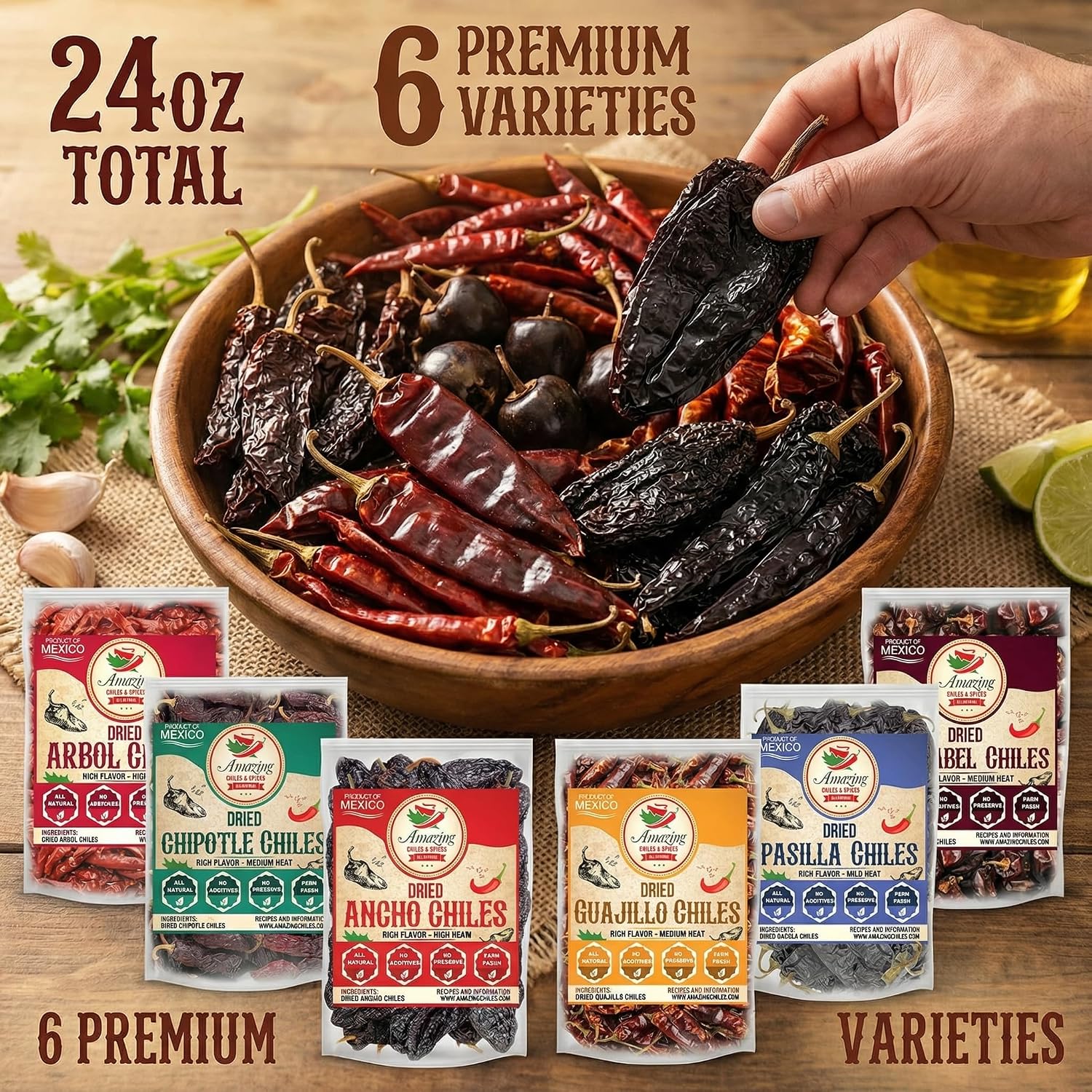
Dried chiles are exactly what they sound like — fresh chili peppers that have been harvested and dried, either by sun or mechanical process, until most of their moisture is gone. What that drying does to flavor is the whole story: it concentrates sugars, deepens earthiness, and builds complexity that no fresh pepper or jarred powder can replicate. If you’ve ever made chili from scratch using a blend of whole dried chiles — toasted, soaked, and blended into a paste — and compared it side by side with a batch made from a standard chili powder off the grocery shelf, you already understand the gap. This article is for cooks who’ve crossed that threshold and are now trying to figure out which variety packs are actually worth buying, what the flavor logic is across the chile lineup, and how to avoid buying beautiful-looking pods that are two harvests old and essentially flavorless.
We’re going to rank and compare the major dried chile variety packs available to home cooks in 2026, from the approachable multi-pack bundles designed for beginners to the single-origin specialty collections aimed at competition-circuit cooks who want documented harvest provenance. The decision frame throughout: given your build goals, here’s what to buy and why.
| EDITOR'S PICK[Dried Peppers 6 Pack Bundle - A…](https://www.amazon.com/dp/B095W2CPYH?tag=greenflower20-20) | Mid-tier[Dried Chile Peppers Variety Pac…](https://www.amazon.com/dp/B08D2LRSD4?tag=greenflower20-20) | Budget pick[1lb Guajillo Stemless Chile](https://www.amazon.com/dp/B07VB5DVP1?tag=greenflower20-20) | |
|---|---|---|---|
| Varieties | 6 | 3 | 1 |
| Total Weight | 24 oz | 12 oz | 16 oz |
| Includes Ancho | ✓ | ✓ | ✗ |
| Price | $29.95 | $18.95 | $14.97 |
| See on Amazon → | See on Amazon → | See on Amazon → |
Why Variety Packs Beat Single-Chile Purchases (At First)
The classic scratch chili formula — sometimes called the “holy trinity” of dried chiles — typically combines three complementary pods: a mild, earthy base chile (usually ancho, the dried form of a poblano), a fruity mid-range heat chile (guajillo, a dried mirasol), and a smoky or complex top-note chile (pasilla, mulato, or a small hot chile like chile de árbol). Each brings something different to the bowl. Ancho contributes body and a raisin-like sweetness. Guajillo brings acidity and a bright red color. Pasilla adds a darker, almost chocolatey bitterness. Together, they create layered heat and flavor that a single-pepper build simply can’t achieve.
The argument for buying a variety pack rather than separate bags of each comes down to three things: cost-per-ounce efficiency on small quantities, the benefit of having chiles from the same source and (ideally) the same harvest cohort, and the learning value of experimenting with ratios when you have all three in front of you at once. Serious Eats’ guide to dried chiles for cooking notes that the ancho-guajillo-pasilla trio is the most common foundation in competition-style Texas red chili, and it’s a reliable starting point before you start substituting mulatos for anchos or adding cascabels for nutty warmth.
The problem with most mass-market variety packs — the ones you’ll find in the bulk section of large grocery chains — is harvest age. Dried chiles have a practical flavor shelf life of about 12–18 months from harvest. After that, the volatile aromatic compounds that give each variety its distinctive character (the fruitiness of a guajillo, the earthiness of an ancho) begin to degrade, leaving behind heat and texture but not much else. Most grocery bulk bins don’t display harvest dates, and the same is true for many national-brand blister packs. You’re frequently buying pods that are 18 to 30 months out of the ground by the time they reach your pantry.
The Ranking Framework: What Actually Matters in a Variety Pack
Before comparing specific products, it helps to have an explicit scorecard. Here’s the decision framework this analysis uses:
Harvest transparency — Does the seller publish or otherwise provide harvest year and origin information? This is the single biggest quality signal. A producer who knows their supply chain well enough to tell you the chile was a 2025 Oaxaca crop has demonstrably more sourcing rigor than one who can’t tell you which country it came from.
Flavor range coverage — A good variety pack should span the flavor spectrum: mild-sweet (ancho, mulato), fruity-acidic (guajillo, New Mexico), smoky-dark (pasilla negro, chipotle morita), and optionally a heat-forward wild card (árbol, cascabel, pequín). Packs that double up on flavor profiles (three different mild chiles, no acid note) limit your build options.
Pod physical condition — Dried chiles should be pliable, not brittle. They should smell fragrant when you flex and snap them slightly — fruity, earthy, or smoky, depending on variety. Brittle pods that crumble and smell like dust are old-crop. This is something reviewers and buyers across aggregated purchasing reviews consistently flag as the primary failure mode of budget variety packs.
Sourcing ethics and traceability — A secondary but meaningful criterion for the premium segment: are these chiles grown by named or documented farm operations? Does the seller work directly with growers?
By the Numbers
| Tier | Avg. Price (2026) | Typical Weight | Harvest Date Disclosed? | Varieties Included |
|---|---|---|---|---|
| Grocery / mass-market bundle | $8–$14 | 4–8 oz total | Rarely | 3–4 (often ancho, guajillo, pasilla) |
| Specialty online mid-tier | $18–$32 | 6–12 oz total | Sometimes | 4–6 |
| Single-origin premium (Rancho Gordo, Burlap & Barrel) | $12–$18/oz | 2–4 oz per variety | Usually | 1–3 per pack, high provenance |
Pack-by-Pack Rankings
Tier 1: Best Overall for Scratch Chili Builders — Rancho Gordo Dried Chile Selection
Rancho Gordo’s individual dried chile offerings — available as standalone bags and increasingly as curated bundles through their website and select retailers — represent the current benchmark for harvest transparency in the home-cook market. Their producer documentation publishes crop year and regional origin for most varieties, including their prized mulato negro and dried guajillo from Zacatecas. Saveur’s chile pepper primer specifically calls out Rancho Gordo’s sourcing rigor as a model for understanding what “current crop” actually means in practice.
The tradeoff: price. At $12–$18 per two-to-four-ounce bag, assembling your own trinity from Rancho Gordo sources costs more than any pre-bundled variety pack on the market. But the quality delta is real — owners across aggregated reviews consistently note that the aroma alone on fresh-crop Rancho Gordo anchos is dramatically more pronounced than anything available in a grocery bin. For a practitioner who’s already cooking scratch chili regularly, the per-bowl cost increase is modest. For someone making one batch a month, the math is easy to justify.
If you’re building a serious spice shelf and want documented provenance, this is the move. Buy the ancho, guajillo, and pasilla negro individually; add a mulato if you want the darker, earthier swap for anchos that competition cooks favor.
Tier 2: Best Value Mid-Tier Pack — Melissa’s Produce Dried Chile Variety Pack
Melissa’s Produce, a specialty produce distributor with wide national distribution, offers a consistently available dried chile variety pack that typically includes ancho, guajillo, pasilla, and mulato in a single package, running $18–$26 for a combined 6–8 oz depending on retailer. Harvest date information isn’t consistently disclosed on packaging, but chile quality across aggregated buyer reviews is meaningfully better than grocery-chain bulk bins — pods arrive pliable, aromatic, and without the dusty, desiccated texture that marks genuinely old-crop product.
Chili Pepper Madness’s comparison of ancho, mulato, and pasilla varieties specifically notes that mulato (a dried chile that looks like an ancho but has a darker color and more complex chocolate-tobacco note) is underrepresented in most intro-level packs — and Melissa’s including it meaningfully expands your build range. This is the pack I’d recommend to a cook who wants all four core chiles in one order without paying single-origin premium pricing.
The limitation: no transparency on origin or harvest cohort. You’re betting on the distributor’s supply chain rigor.
Tier 3: Best for Heat-Forward Builds — Burlap & Barrel Whole Chile Collections
Burlap & Barrel, a direct-trade spice company known for documented small-farm sourcing, carries a rotating selection of whole dried chiles with explicit farm and harvest provenance. Their offering changes seasonally and isn’t a fixed “variety pack” in the traditional sense — you’re assembling a build from their current catalog. In 2026, their lineup has included Urfa biber (a Turkish dried chile with intense dried-fruit and tobacco complexity), Aleppo-style pepper, and occasional limited runs of Mexican-origin dried chiles when sourcing partnerships allow.
Texas Monthly’s feature on the gospel of red chile specifically discusses how competition cooks are increasingly integrating non-traditional dried chiles — Turkish, Calabrian, and Peruvian varieties — into their builds for flavor complexity that judges haven’t calibrated to. Burlap & Barrel is the primary channel for that kind of experimentation.
This is not a beginner purchase. If you don’t already have a working ancho-guajillo base locked in, adding Urfa biber to an unfamiliar chili build will make diagnosis harder. But for a practitioner who wants a top-note differentiator — something that adds depth without immediately reading as “chile flavor” — Burlap & Barrel’s rotating catalog is unmatched.
What to Skip: Mass-Market Blister Packs
The generic three-pack dried chile bundles widely available at grocery chains and big-box stores — typically cellophane-wrapped combinations of ancho, guajillo, and pasilla from unnamed origins — are a known quantity. They work in a pinch. But across aggregated purchasing reviews, the most common complaint is exactly what you’d expect: brittle, low-aroma pods that reconstitute with diminished flavor, requiring higher volumes to achieve the same depth that a current-crop chile delivers at standard quantities. Without harvest date disclosure, you have no way to assess age before purchase.
If a mass-market pack is your only accessible option right now, buy it — don’t let the perfect be the enemy of a real bowl of chili. But the upgrade path to a mid-tier option like Melissa’s or a Rancho Gordo assembly is materially worth taking as soon as sourcing logistics allow.
The Decision Rule
Building a scratch chili spice shelf is a staged investment. Here’s the clean if/then framework:
If you’re in your first 1–3 scratch batches: Buy the Melissa’s Produce variety pack. You get all four core chiles, they arrive in usable condition, and the price doesn’t punish experimentation. Learn your flavor preferences before spending premium.
If you’re cooking regularly and ready to calibrate your build: Move to Rancho Gordo individual bags for your base trinity. The harvest transparency tells you what you’re actually working with, and the flavor difference at this level is documentable — owners consistently report needing less chile by volume to achieve the same depth.
If you want to differentiate a competition or high-stakes build: Keep the Rancho Gordo base. Add a Burlap & Barrel wild card — Urfa biber or a limited-run Mexican variety — as a 10–15% volume addition to your paste. This is where a bowl stops tasting like everyone else’s bowl.
The chiles are doing the work. Your job is to give them the conditions — freshness, sourced provenance, correct ratio — to do it well.