Once your chile collection crosses the twenty-jar threshold — and if you’re sourcing dried chiles seriously, it will — the humble cabinet shelf stops working. Jars stack behind each other, labels face the wrong direction, and the difference between your ancho powder and your mulato powder becomes a mid-cook guessing game. Spice storage systems are the organizational hardware designed to solve exactly this: they give every jar a visible, reachable home. Three formats dominate the market right now: magnetic racks that mount to the side of your refrigerator, pull-out cabinet organizers that slide toward you on a track, and tiered shelving (think stair-step risers) that sit inside a cabinet or on a countertop. Each has a genuinely different use case. This article breaks down the tradeoffs with real numbers, names the products that reviewers consistently single out, and ends with a clear decision rule so you can stop second-guessing and start organizing.
Why Your Storage System Is Actually a Cooking Tool
This isn’t an aesthetics conversation — it’s a speed and accuracy conversation. When you’re building a complex red chili that calls for four or five distinct dried chiles — ancho for sweetness, guajillo for brightness, cascabel for nuttiness, chipotle for smoke — you need to identify and measure each one without breaking your workflow. A storage system that buries any jar is a system that slows you down and increases the odds of grabbing the wrong thing.
Serious Eats, in their guide “How to Store Spices So They Actually Stay Fresh,” makes a point that applies directly here: ground chiles lose volatile oils and heat compounds faster when exposed to light and temperature fluctuation. That means your storage system isn’t just organizational — it affects flavor shelf life. Magnetic racks on the fridge exterior are light-exposed. Pull-out cabinet organizers sit in dark, temperature-stable space. Tiered shelves can go either way depending on placement. That distinction should weigh in your decision alongside pure accessibility.
The second thing to understand before comparing systems: undershooting capacity is the most common mistake buyers make. Plan for the collection you’ll have in eighteen months, not the one you have today. If you’re at twenty jars now, design for thirty-five.
The Three Systems, Side by Side
The table below maps the core tradeoffs before we go deeper into each format.
| Format | Avg. Jar Capacity | Install Required | Light Exposure | Depth Needed |
|---|---|---|---|---|
| Magnetic rack | 8–16 jars | None | Yes | N/A (fridge surface) Copco — $6.78 |
| Pull-out organizer | 30–45 jars (2-tier) | Yes (screws) | No | 10–12 in. minimum LYNK — $39.99 |
| Tiered shelf | 18–30 jars | None | Depends on placement | Matches cabinet SpaceAid — $36.99 |
Magnetic Fridge Racks: High Visibility, Hard Limits
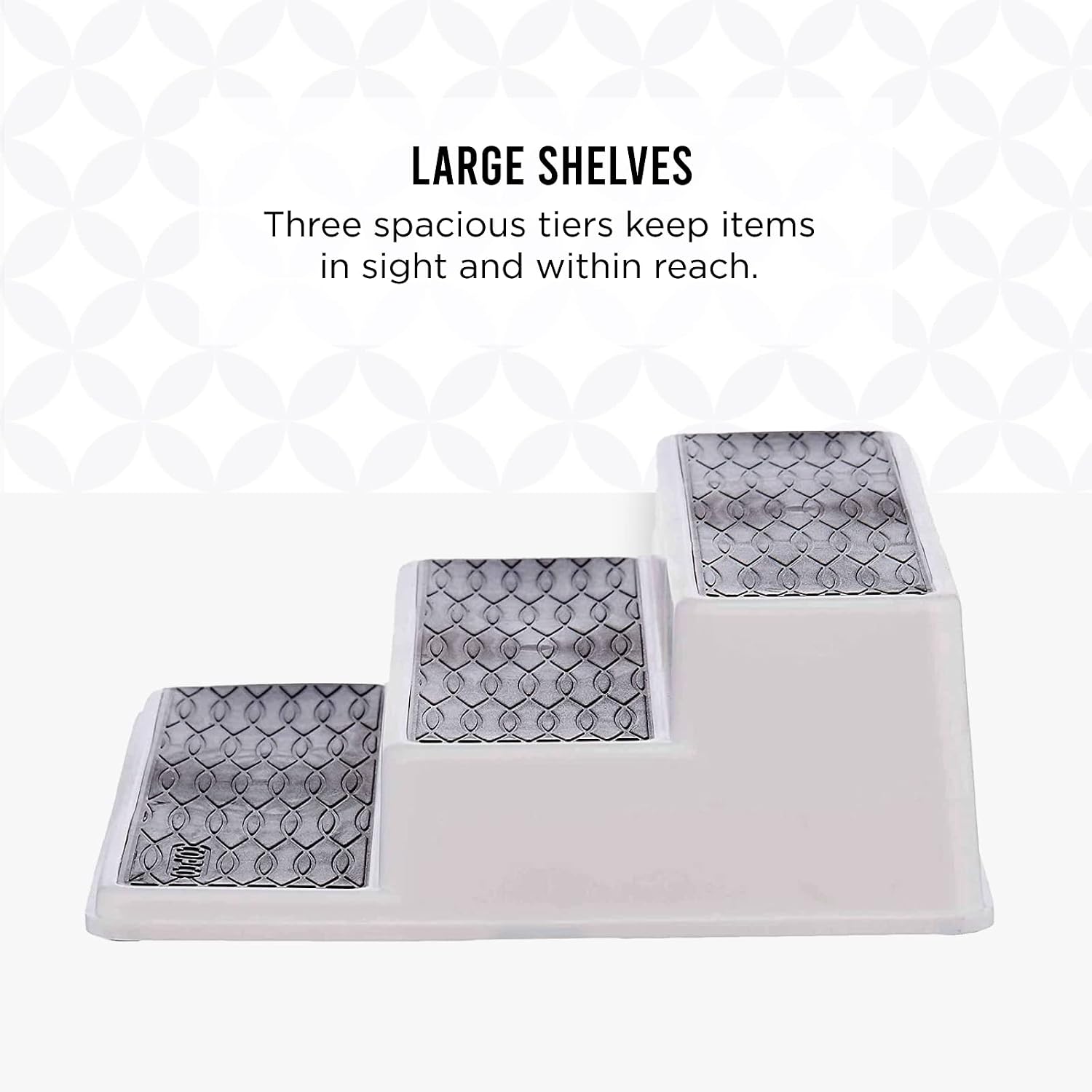
Copco
$6.78
In stock on Amazon
Check price on AmazonThe case for them: Magnetic racks attach to any ferromagnetic surface without drilling or tools. Wirecutter, in their roundup “The Best Spice Racks,” notes that the strongest contenders in this category hold firmly even on smooth appliance surfaces, with reviewers specifically calling out zero slipping under normal kitchen conditions. One documented use case: deploying a unit on a garage freezer — which tells you something about the format’s versatility beyond the kitchen proper.
The visibility advantage is real. Because the jars face outward on an open rack at roughly eye level, you see your entire collection at once. For a chili cook who rotates between five or six core chiles regularly, that instant visual scan is genuinely useful.
The hard limits: Magnetic racks have weight ceilings, and they compound. A typical magnetic spice jar holds two to four ounces of ground chile. At the high end of that range, a rack holding twelve jars is carrying three pounds of product — before you account for the jar weight itself. Most magnetic rack systems are rated comfortably for light spice jars, but longer-run use suggests that heavier jars (particularly 4-oz glass) at full capacity can stress the magnetic bond on older appliances where the surface coating has worn.
More importantly: magnetic racks solve a visibility problem but not a capacity problem. Most configurations max out at eight to sixteen jars per unit. At twenty-plus jars — and especially if your collection includes larger bulk containers alongside standard spice jars — you’ll need multiple units or a supplementary system. The light-exposure factor also matters for whole dried chile pods or ground powders you’ve invested in from single-origin sources; Serious Eats’ spice storage guidance identifies light as one of the two primary accelerants of volatile oil degradation.
Who this is for: Renters who can’t drill. Cooks whose core rotation is small (eight to twelve jars) and who want those jars immediately accessible without opening anything. Works best as a satellite system for your most-used chiles alongside a primary cabinet solution.
Copco
$6.78
In stock on Amazon
Check price on AmazonPull-Out Cabinet Organizers: The Deep-Cabinet Problem Solver
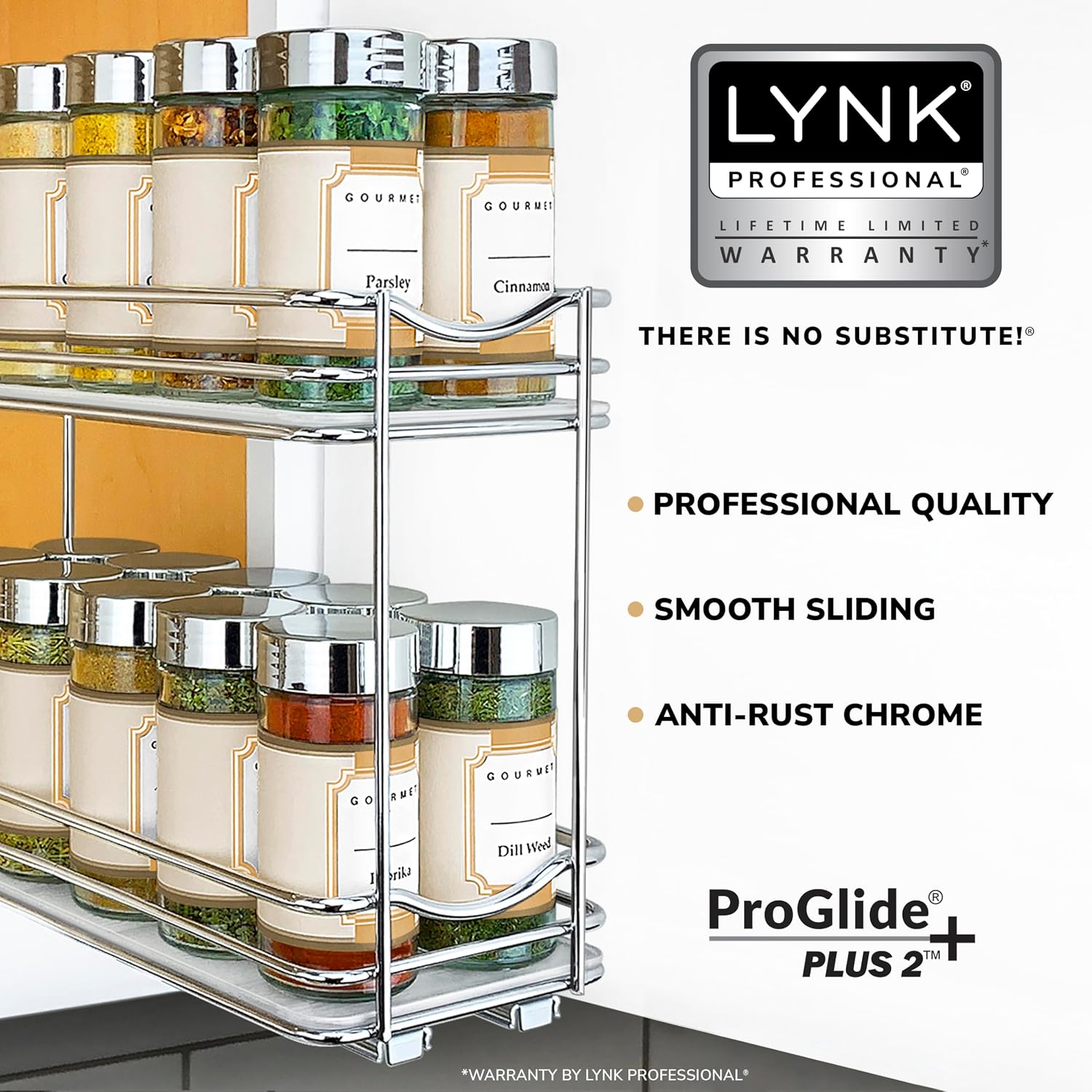
LYNK
$39.99
In stock on Amazon
Check price on AmazonThe case for them: Full-extension pull-out spice racks are the product that consistently earns the phrase “game changer” in reviewer commentary — and the reason is specific: they solve the wasted-depth problem. Standard kitchen cabinets run twelve to twenty-four inches deep, and without a pull-out system, anything beyond the front six inches is effectively invisible and unreachable. A full-extension pull-out track brings the entire cabinet depth to your fingertips.
Reviewers across both Wirecutter’s “The Best Spice Racks” coverage and Apartment Therapy’s “The Best Spice Rack Organizers, According to Our Editors and Readers” describe previously wasted deep-cabinet space becoming fully functional — not just accessible, but usable in a way that changes how they shop and store. For a chile pantry that includes jars of varying heights (standard 2-oz spice jars alongside 8-oz bulk containers and 1-oz sample jars from specialty purveyors), the pull-out format accommodates the mix without requiring uniform jar heights.
Cook’s Illustrated, in their testing on “Spice Storage and Freshness,” consistently emphasizes dark, cool, and dry conditions as the primary freshness variables — and a closed cabinet on a pull-out track checks all three. This is the format with the best flavor-preservation profile of the three systems.
The installation reality: Pull-out organizers require a cabinet with minimum interior depth — typically 10 to 12 inches of clear depth after accounting for the door and any existing shelf supports. Installation is straightforward for most standard cabinets (screws into the cabinet floor or side walls), but it’s not tool-free. Renters or anyone in a no-drill situation should factor that in.
Capacity scales well: Unlike magnetic racks, pull-out systems can stack two tiers within a single cabinet bay. A two-tier install in a standard 24-inch-deep cabinet can realistically hold thirty to forty-five jars depending on diameter — which covers even an ambitious competition-level chile pantry. Wirecutter’s kitchen organization coverage flags minimum cabinet depth as the single most common installation mismatch; measure before purchasing.
Who this is for: Homeowners with standard cabinet depth who have a serious, growing collection. The right choice if flavor preservation matters to you and you’re willing to do a one-time install. Also works well in a pantry cabinet — the mechanics translate from kitchen cabinets to pantry units without modification, provided the depth is adequate.
LYNK
$39.99
In stock on Amazon
Check price on AmazonTiered Shelves: The No-Commitment, High-Flexibility Option
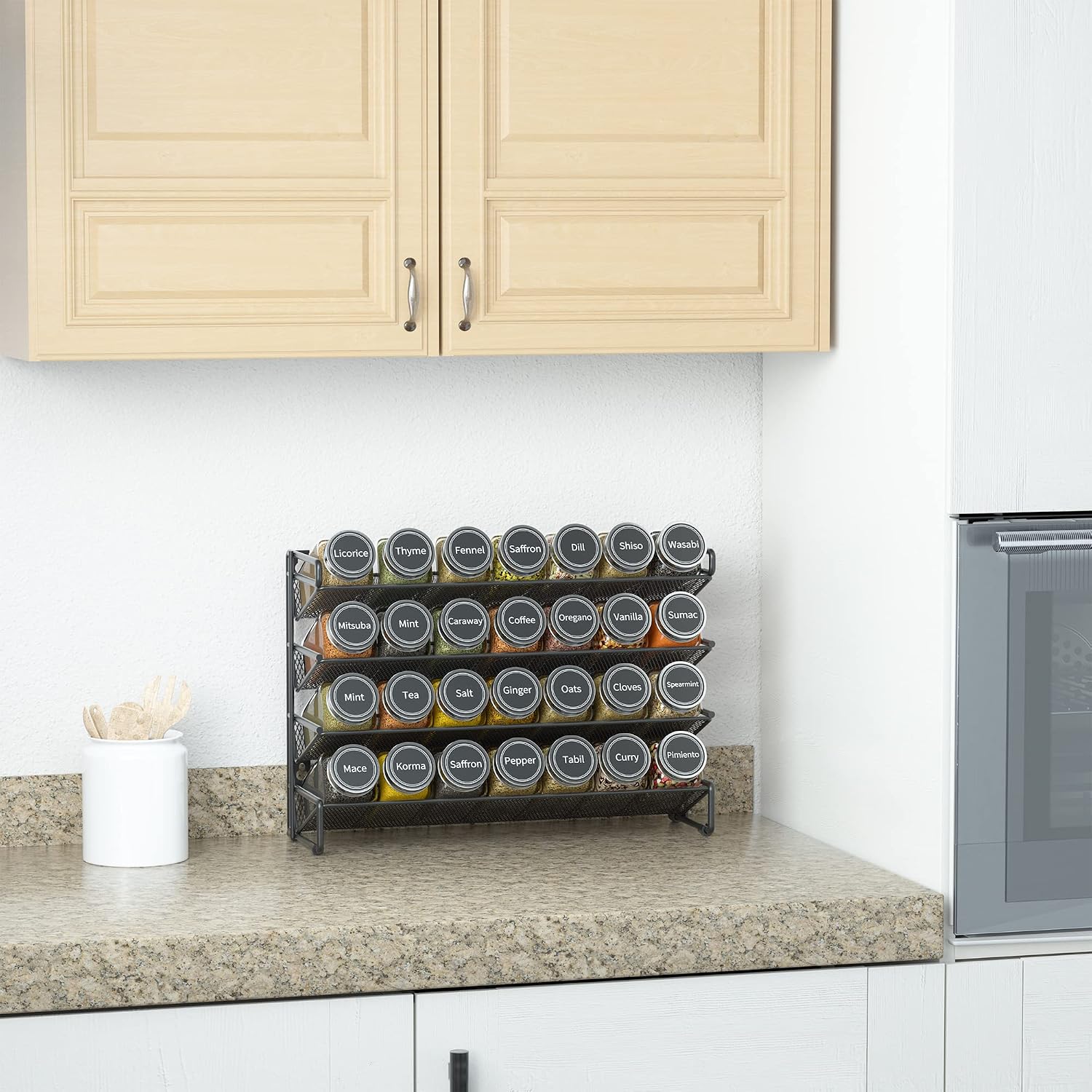
SpaceAid
$36.99
In stock on Amazon
Check price on AmazonThe case for them: Tiered (stair-step) shelving — expandable bamboo formats earn consistent praise in this category — sits inside an existing cabinet or on an open countertop without any installation at all. The stair-step design puts every jar’s label at a visible angle, solving the “jars hiding behind other jars” problem that a flat shelf creates.
The expandable bamboo format specifically earns reviewer praise for one critical feature: it accommodates different-sized jars. For a collection that mixes small 1-oz sample jars from specialty purveyors alongside standard 2-oz spice jars and larger 4-oz bulk containers, a tiered shelf doesn’t require you to decant everything into uniform vessels to make the system work. That’s a meaningful practical advantage.
Apartment Therapy’s roundup “The Best Spice Rack Organizers, According to Our Editors and Readers” consistently highlights tiered shelves as the highest-flexibility option for renters and for cooks who reorganize their pantry seasonally — which, if you’re tracking current-crop chile releases and rotating your stock accordingly, describes you.
The real limitation: Tiered shelves don’t solve the depth problem — they mitigate the visibility problem within a fixed footprint. If your cabinet is twelve inches deep and you install a three-tier bamboo shelf, you’re still working within that twelve-inch constraint. They also don’t keep your collection contained; jars can slide on smooth shelves, and the open format means light exposure if placed on a countertop. Serious Eats’ spice storage guidance specifically calls out countertop placement near the stove as one of the worst combinations of light and heat exposure for ground spices.
Who this is for: Renters, cooks who want flexibility without commitment, and anyone building a collection that isn’t uniform in jar size. Also the best entry point if you’re not ready to commit to a decanting system and want to see how your collection grows before investing in a permanent solution.
SpaceAid
$36.99
In stock on Amazon
Check price on AmazonThe Decision Rule
Here’s the framework. Apply it to your actual situation:
- If you rent, have twelve or fewer high-rotation jars, and want zero installation: Magnetic fridge rack as your primary, bamboo tiered shelf as overflow inside a cabinet.
- If you own your home, have a standard cabinet with 10-plus inches of depth, and your collection is at twenty jars or heading there: Pull-out organizer is the correct primary system. The flavor-preservation profile and the capacity ceiling make it the right long-term investment. Pair it with a tiered shelf for bulk containers that won’t fit the pull-out.
- If your collection mixes dramatically different jar sizes and you’re not ready to decant: Start with the expandable tiered shelf. It’s the only format that handles mixed-format storage gracefully without requiring any upfront commitment.
- If you’re building a competition-level pantry with thirty-plus SKUs: Budget for a two-tier pull-out install as your primary system. Then use a magnetic rack as a satellite for the five to seven chiles you reach for every cook. Assume you’ll need a second pull-out unit within six months — the capacity math almost always demands it.
Frequently Asked Questions
How many jars can a magnetic fridge rack realistically hold before the weight becomes a problem? Based on manufacturer ratings and long-run reviewer feedback aggregated in Wirecutter’s “The Best Spice Racks,” eight to twelve standard 2-oz glass spice jars is the practical safe range for most magnetic rack systems. At twelve jars of heavier 4-oz glass, slipping risk increases on smooth or worn appliance surfaces. If your jars are uniform and lightweight, sixteen is achievable — but a second unit is safer than overloading one.
Do pull-out cabinet organizers work in a pantry as well as a cabinet? Yes. Pantry installation works on the same mechanics as cabinet installation provided the shelf or floor of the pantry unit can accept screws and the interior depth meets the minimum (typically 10 to 12 inches). Freestanding pantry furniture may have thinner construction than built-in cabinets, so check that the mounting surface will hold fasteners before buying.
Is it worth decanting all your chile powders into uniform jars, or is mixed-format storage manageable? Food52, in their piece “The Case for Decanting Your Spices (and When Not To),” makes the case for uniformity on aesthetics and shelf efficiency, but the practical argument depends on your system. Pull-out organizers handle mixed formats reasonably well. Magnetic racks require uniform magnetic-compatible containers by definition. Tiered bamboo shelves are the most tolerant of mixed formats. For twenty-plus jars, partial decanting — standardizing your most-used ten jars while leaving bulk and samples in original packaging — is a reasonable middle path.
How do you label jars for 20-plus different chile varieties so you can tell them apart mid-cook? At twenty-plus varieties, the practical approach is chalkboard labels (hand-writable, erasable when stock rotates) or printed labels that include the chile name, the supplier, and the harvest year. Partial decanting into a standardized jar format makes labeling consistent and readable even in low-light cabinet conditions. Origin and vintage matter as much as name when you’re comparing two red chile powders side by side.
What is the minimum cabinet depth needed to install a pull-out spice rack organizer? The standard minimum is 10 inches of clear interior depth — measured from the inside face of the cabinet door (when closed) to the back wall. Most kitchen base and wall cabinets run 12 to 24 inches deep, which accommodates pull-out systems easily. Shallower upper cabinets (sometimes as little as 8 to 9 inches in older kitchens) may not accommodate a standard pull-out unit. Wirecutter’s kitchen organization coverage, in “The Best Spice Racks,” flags this measurement as the single most common installation mismatch — measure before purchasing.