Chili powder — the pre-mixed kind — is a blend of dried ground chile peppers, cumin, garlic, and sometimes oregano and salt, all in a single jar. It’s the shortcut that built American chili culture. Single-origin chili powder, by contrast, is ground from one variety of dried chile (say, just ancho, or just guajillo) with nothing added — the cook does the blending themselves. For years, scratch-build enthusiasts have argued that blending your own single-origin powders is always the superior move. And they’re mostly right. But “mostly” is doing a lot of work in that sentence. This article maps the real tradeoff: when the convenience powder wins on flavor consistency, workflow, and value, and when you genuinely need to leave it on the shelf. By the end, you’ll have a clear decision rule you can apply the next time you’re staring at the spice aisle or loading up an online cart.
| EDITOR'S PICKFrontier Co-op Organic Chili Po… | Mid-tierMcCormick Dark Chili Powder | Budget pickSimply Organic Ancho Chili Powd… | |
|---|---|---|---|
| Weight | 1 lb | 1.25 lb | 2.85 oz |
| Organic | ✓ | — | ✓ |
| Kosher | ✓ | — | — |
| Salt Free | ✓ | — | — |
| Spice Level | Mild to Moderate | — | — |
| Flavor Notes | Sweet, Tangy, Zesty | — | — |
| Price | $16.06 | $12.20 | $5.67 |
| See on Amazon → | See on Amazon → | See on Amazon → |
What McCormick Dark Chili Powder Actually Is — and Why It Has a Cult Following
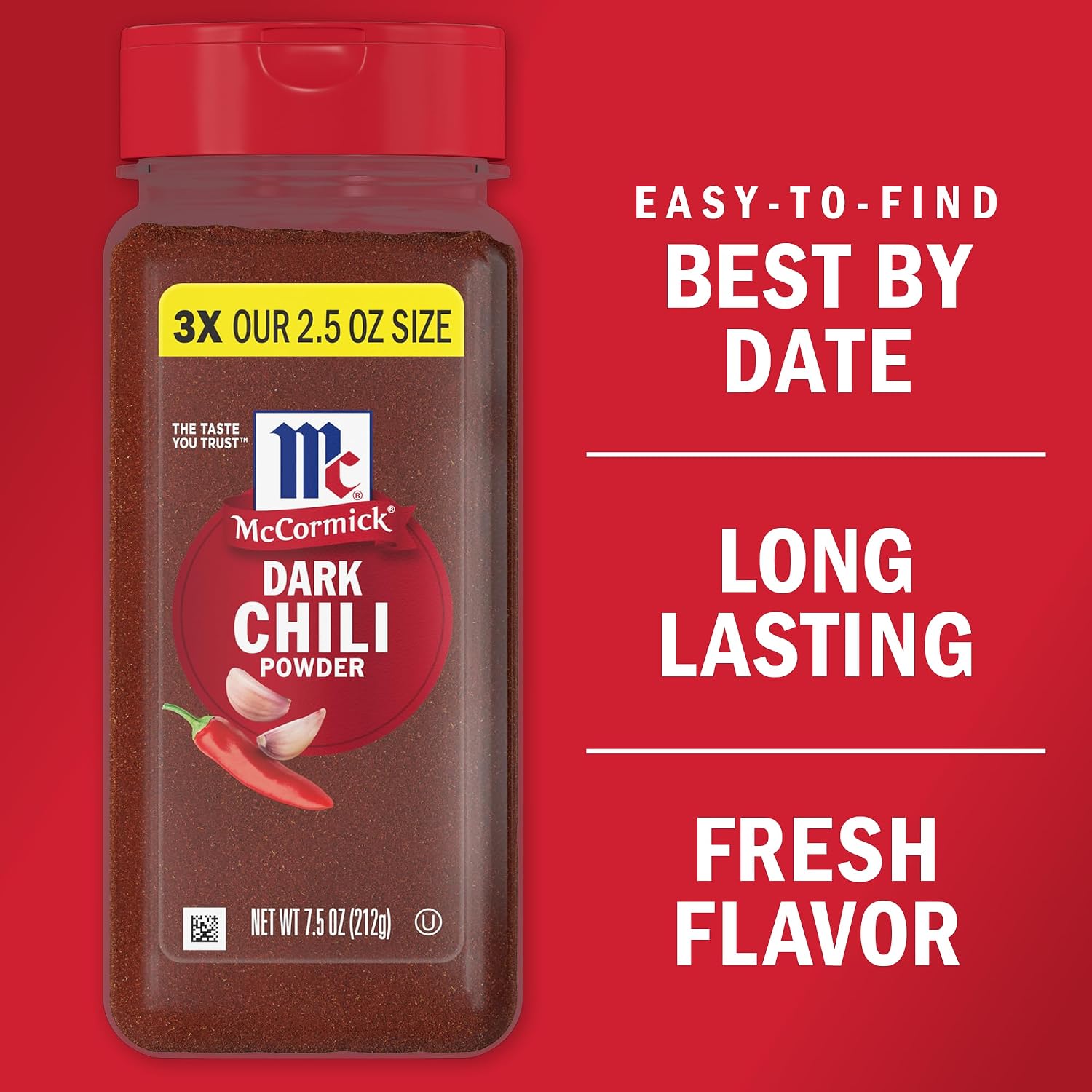
McCormick Dark Chili Powder isn’t just a darker-roasted version of the standard McCormick blend. It’s a noticeably different flavor profile: deeper, earthier, with more of the bitter-roasted chocolate notes you’d associate with mulato or pasilla chiles. Where standard chili powder reads as bright and cumin-forward, Dark reads as backdrop — a low, sustained hum rather than a sharp top note.
What stands out across aggregated buyer reviews is how often people describe it as not hot. That framing matters. Reviewers consistently position it as a base-layer spice: something that builds complexity and color without pushing the Scoville reading up. If you’re calibrating heat separately with arbol, cayenne, or fresh serrano, this is exactly what you want from a blended base. You control the burn; the powder handles the depth.
The more striking pattern is the portability loyalty. A recurring theme in long-run reviews involves buyers traveling internationally or relocating and specifically sourcing McCormick Dark because they cannot replicate its flavor by recombining individual spices at the destination. What those reviewers are describing is formula consistency: the blend ratio, the roast level, and the sourcing are locked and stable batch to batch in a way that a home cook improvising a blend cannot easily match without documented ratios and a consistent chile supplier.
Serious Eats, in their chili powder taste test “The Best Chili Powder, According to Our Tests,” notes that proprietary blended powders often outperform DIY combinations in blind tastings precisely because the blend ratios are optimized through repeated testing — something most home cooks don’t iterate enough to nail on the first attempt. That’s not an argument against scratch-blending; it’s an argument for humility about when the shortcut is actually the better tool.
The Contenders: Where Single-Origin and Organic Blends Shine
Single-origin powders earn their price premium in one specific scenario: when you know what you want and you’re building a layered blend intentionally. That’s a meaningful caveat. The three products below represent the range of what the non-McCormick tier offers — and each comes with a distinct workflow implication.
Frontier Co-op Organic Chili Powder
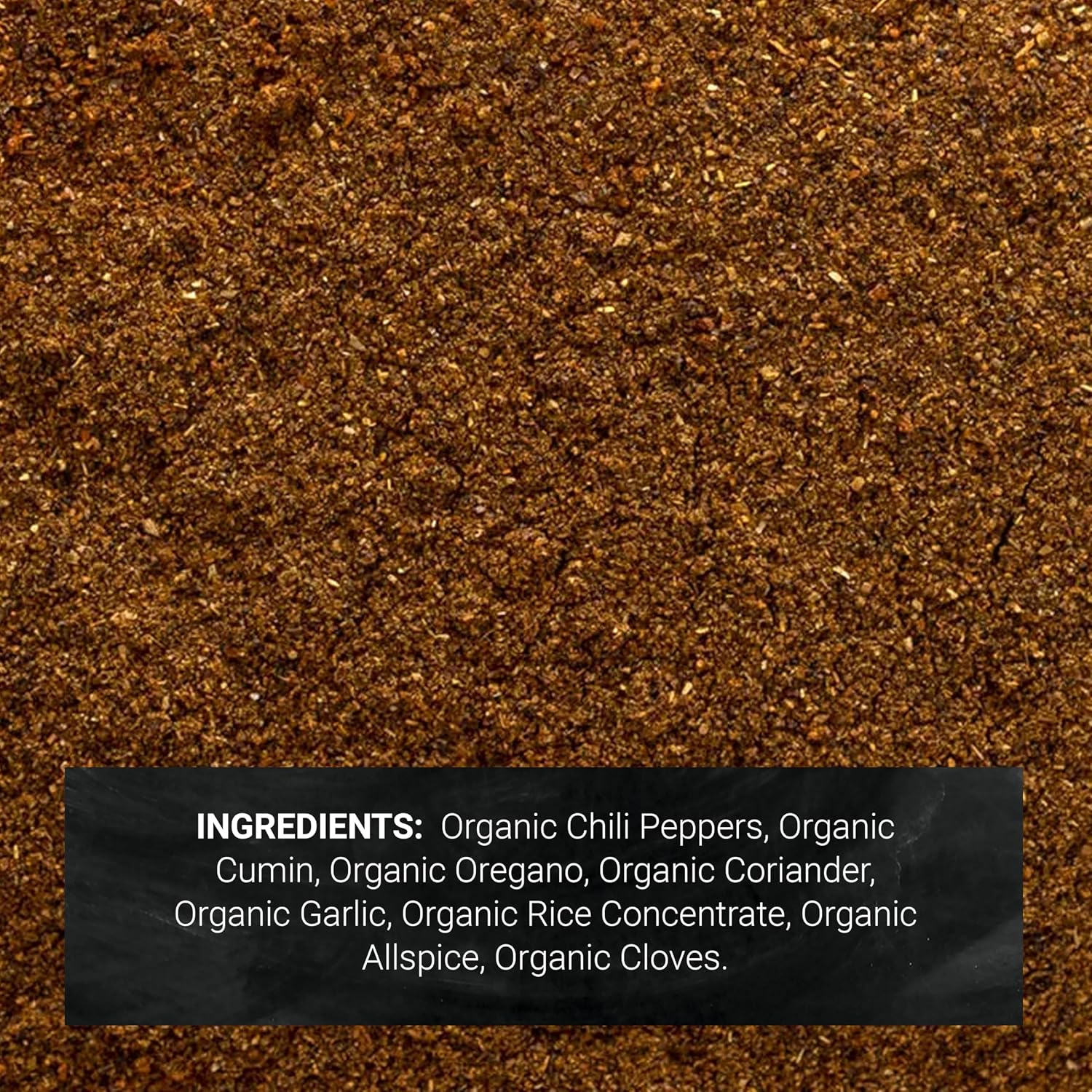
Frontier Co-op Organic Chili Powder is a blended product — not strictly single-origin — but it skews cleaner in ingredient sourcing and reads noticeably more organic-forward in flavor, with less of the industrial smoothness that makes McCormick blends so frictionless. Reviewers consistently praise the clarity of flavor. The catch, surfaced repeatedly in review threads: the powder tastes flat and one-dimensional until salt is introduced in stages during cooking. This isn’t a defect — Frontier’s product is salt-free, which means the cook carries all the seasoning responsibility. If you’re cooking from a recipe written around a salted blend, you’ll need to compensate early and taste repeatedly.
The workflow fix is straightforward: add a small pinch of kosher salt at the same time you bloom the powder in fat, then taste again at the 30-minute simmer mark. The flavor unlocks in stages. Saveur, in “The Spice Shelf: Chili Powder Decoded,” addresses exactly this phenomenon — salt-free spice blends require active seasoning management rather than the set-and-forget approach that salted blends allow. Cook’s Illustrated, in their “Chili Powder Taste Test,” makes a related point: cooks who manage salt separately from their spice blend tend to produce more accurately seasoned final dishes, because they can adjust salt at each stage of development rather than inheriting it from a pre-mixed ratio.
McCormick
$12.20
In stock on Amazon
Check price on AmazonSpice Way Ancho Chile Powder
Spice Way Ancho Chile Powder earns consistent praise for fragrance — reviewers describe the dried-fruit, raisin, and mild-chocolate aroma as best-in-class among accessible anchos at this price point. The practical flag worth noting: a notable pattern in buyer reviews identifies the grind as coarser than expected for a powder labeled as ready-to-use.
In a wet-sauce chili — chile colorado, birria-adjacent preparations, anything where the powder rehydrates into a smooth base — a coarser grind creates integration problems. You get flecks rather than a unified sauce. Chili Pepper Madness, in their “Ancho Chile Powder Guide,” notes that particle size directly affects hydration speed and sauce texture, which is why commercial spice operations standardize mesh counts. The fix for Spice Way is either a quick 30-second pass through a spice grinder before use, or reserving it for dry-rub applications and slow-cooked braises where long cook time completes the hydration work on its own.
McCormick
$12.20
In stock on Amazon
Check price on AmazonSimply Organic Ancho Chili Powder
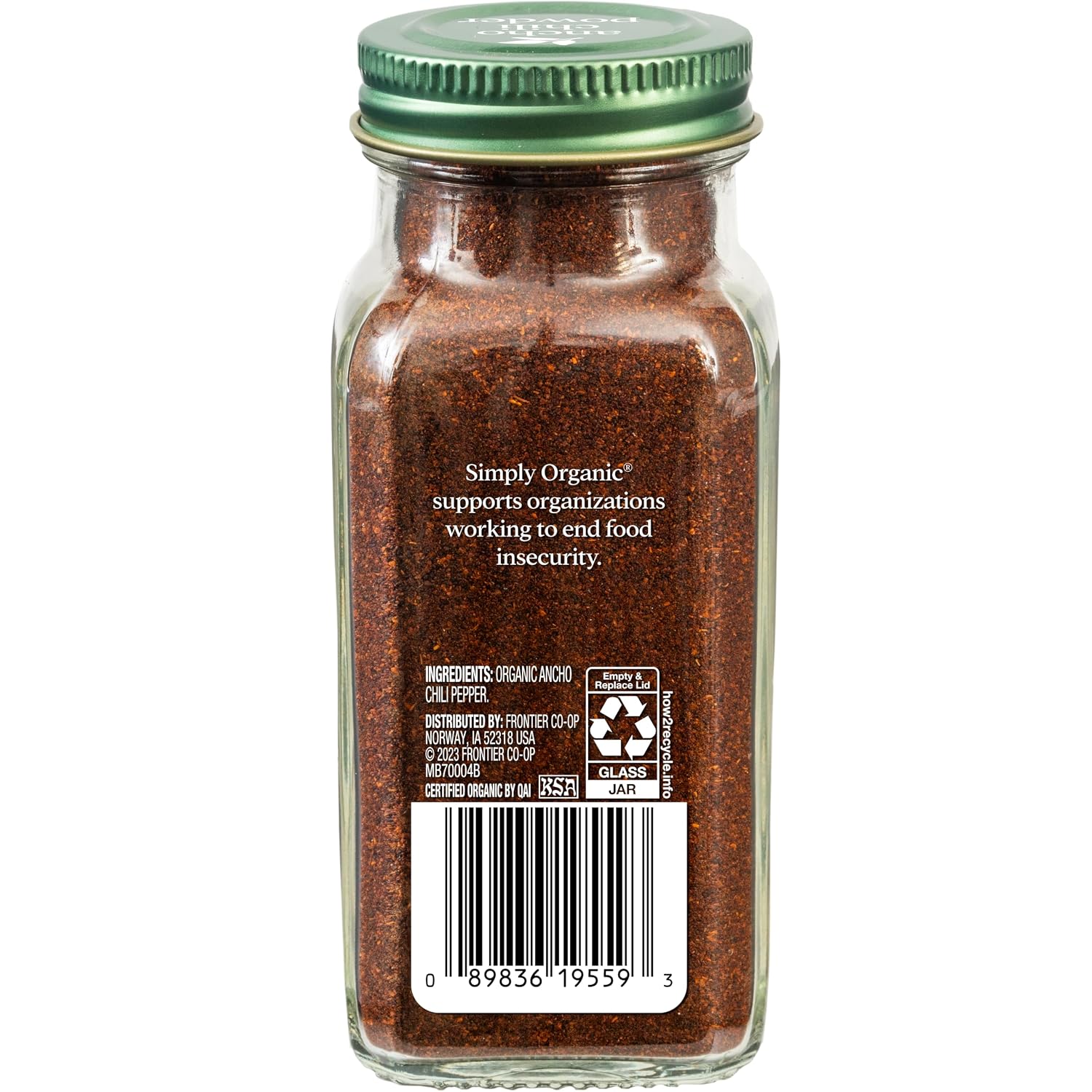
Simply Organic Ancho Chili Powder presents a more complicated picture. Reviewers describe a distinctly smoky, oak-forward character that makes it stand out from other anchos in this tier. However, a significant caveat applies: some reviews in the product listing appear to describe smoked paprika rather than ancho chile — a labeling ambiguity that Saveur’s spice-shelf coverage has flagged as a recurring issue across the organic spice category more broadly.
Before you build a recipe around a smoky profile, verify what you’re actually opening. Genuine ancho powder is a dark burgundy-brown — almost mahogany. If the powder in your jar is a bright red-orange, you may have smoked paprika instead. Once you’ve confirmed you have genuine ancho, the oak-smoke depth it contributes is genuinely difficult to replicate from other sources at this price point. It fills a niche that earns the premium — but only after label verification.
Frontier
$16.06
In stock on Amazon
Check price on AmazonSide-by-Side Comparison: Four Products, Four Use Cases
| Product | Type | Salt-free? | Grind Consistency | Best Use Case |
|---|---|---|---|---|
| McCormick Dark Chili Powder Simply — $5.67 | Proprietary blend | No | Very fine, uniform | Base-layer for any chili; maximum consistency |
| Frontier Co-op Organic McCormick — $12.20 | Blended (organic) | Yes | Fine | Salt-controlled cooking; layered seasoning |
| Spice Way Ancho McCormick — $12.20 | Single-origin ancho | Yes | Coarser than labeled | Dry rubs; long braises; pre-grind before sauce use |
| Simply Organic Ancho Frontier — $16.06 | Single-origin ancho* | Yes | Medium-fine | Smoky-forward applications (verify labeling first) |
*Verify product label matches intended chile variety before use.
Decision Framework: Which One Do You Actually Buy?
Here’s the tradeoff laid out directly, because this is a decision, not a philosophy.
Buy McCormick Dark if: You’re cooking under time pressure, you need batch-to-batch consistency, or you’re making a large pot for a crowd where one variable going wrong matters. Reviewers who cook competition chili as a repeatable system often anchor on a reliable blended base precisely because it removes one unpredictable variable. Cook’s Illustrated’s “Chili Powder Taste Test” demonstrates consistently that blended convenience powders close the gap with DIY combinations when the home cook isn’t iterating batch-to-batch on the blend itself — a scenario that describes most weeknight cooks accurately.
Simply
$5.67
In stock on Amazon
Check price on AmazonBuy Frontier Co-op if: You’re managing sodium at the recipe level — cooking for people on salt-restricted diets, dialing in a competition recipe where you need to know exactly what salt is in every component, or building a blending experiment where a neutral organic base is the foundation. Accept the salt-staging workflow described above and it performs at a level that justifies the price difference over supermarket blends.
Buy Spice Way Ancho if: You want best-in-class fragrance from an accessible ancho and you’re willing to either pre-grind or use it in a long-cooked preparation where grind size doesn’t matter. Do not drop it straight into a 20-minute quick chili and expect smooth, uniform sauce integration — it will not behave that way without processing first.
Buy Simply Organic if: The smoky depth matches your intended flavor profile and you’ve confirmed the jar contains genuine ancho rather than smoked paprika. Once verified, it fills a niche that’s genuinely hard to source elsewhere at this price point.
The underlying principle, as Saveur’s “The Spice Shelf: Chili Powder Decoded” frames it: blended powders optimize for consistency; single-origin powders optimize for control. If you have the attention and the batch volume to iterate, single-origin wins long-term. If consistency and reliability are the priority — weeknight cooking, large batches, or cooking in an unfamiliar kitchen — the convenience powder earns its place without apology.
Frequently Asked Questions
Is McCormick Dark Chili Powder hot enough to skip adding separate heat? No — and that’s by design. Reviewers consistently describe it as mild to low-heat, built for depth rather than burn. Treat it as your flavor base and add heat separately: dried arbol, cayenne, or fresh chiles give you control over the heat level without muddying the dark, roasted base notes. If you skip the separate heat addition, your chili will be complex but gentle — which is the right outcome for a crowd with unknown heat tolerance.
Why does a salt-free chili powder taste flat at first, and how do you fix it? Salt is a flavor amplifier — it doesn’t just add saltiness, it activates and brightens other flavor compounds. A salt-free powder like Frontier Co-op holds its flavor potential in suspension until salt is introduced. The fix: bloom the powder in fat (oil or rendered lard) for 60–90 seconds before adding liquids, and add a small amount of salt at that same step. Taste again after 20–30 minutes of simmering. The flavor will open up in stages. Don’t try to correct all the seasoning at the end — it is a layering process, not a finishing adjustment.
How much of a bulk 20 oz chili powder jug does a single 6-quart batch of chili use? Most tested recipes call for 2–4 tablespoons of chili powder per 6-quart batch serving 6–8 people. At roughly 85 tablespoons per 20 oz jug, you’re looking at 20–40 batches per container. For a home cook making chili twice a month, a 20 oz jug represents 10–20 months of supply — which is why freshness and storage matter more than price-per-ounce for most buyers. Store in a sealed container away from heat and light; the volatile aromatic oils that carry flavor degrade faster than most cooks expect.
Can a single-variety ancho powder fully replace a blended chili powder in a recipe? Technically yes; practically, expect a different result. A blended chili powder includes cumin, garlic, and sometimes oregano — all of which contribute to the familiar “chili flavor” profile most American recipes assume. Pure ancho powder contributes fruitiness, mild heat, and earthy chocolate notes but lacks the cumin backbone. Chili Pepper Madness, in their “Ancho Chile Powder Guide,” recommends adding roughly 1 teaspoon of ground cumin per tablespoon of blended powder replaced, plus a pinch of garlic powder, when converting a recipe from blended to single-origin powder.
How do you tell if a chili powder has gone stale before using it? Crush a small pinch between your fingers and smell it immediately. Fresh chili powder has a sharp, distinct aroma — you should be able to identify individual notes: earthy, fruity, smoky. Stale powder smells like cardboard or nothing at all. Visually, stale powder often fades from deep burgundy or dark brown to a dull brick-orange. If the color has washed out and the smell is flat, the volatile aromatic oils have degraded. The powder is safe to eat but will contribute almost no flavor — effectively dead weight in the pot. Replace it rather than doubling the quantity and hoping for the best.