If you’ve been cooking chili long enough to care about results — not just a passable weeknight pot but a bowl where the flavor depth actually reflects the effort you put into your ingredients — you’ve probably already landed on the enameled Dutch oven as the right vessel. An enameled Dutch oven is a heavy cast-iron pot coated on the inside and outside with a glass-like enamel finish. That coating means no seasoning required, no reactivity with acidic ingredients like tomatoes or dried chiles, and an interior that retains heat evenly for long, low simmers. The problem is that the most-discussed options — Le Creuset, Staub — run $300 to $500. For a lot of home cooks, that’s a real barrier. This article is for the reader who’s already decided an enameled Dutch oven is the right tool and now needs to know whether the $60–$120 mid-tier options are genuinely capable or just visually similar to the premium stuff. The short answer: some are legitimate. Here’s how to read the field.
The Mid-Tier Landscape: What You’re Actually Choosing Between
By “mid-tier,” we mean enameled cast iron Dutch ovens priced roughly in the $50–$150 range at standard retail. These are not the same as bare (unseasoned) cast iron or ceramic inserts for slow cookers — they are heavy, enamel-coated, multi-use pots designed for stovetop-to-oven cooking. Four names come up consistently in this category: the Crock-Pot Artisan, the Cuisinart enameled Dutch oven, the Mueller Dutch oven, and the Babish enameled Dutch oven. A fifth — the Krustic — is worth a brief mention, with a major caveat addressed below.
By the Numbers
| Pot | Typical Street Price (2026) | Common Sizes | Induction Compatible |
|---|---|---|---|
| Crock-Pot Artisan | ~$60–$80 | 5 qt, 7 qt | Yes |
| Cuisinart | ~$60–$90 | 5 qt, 7 qt | Yes |
| Mueller | ~$65–$90 | 6 qt | Yes |
| Babish | ~$70–$100 | 5.5 qt, 7 qt | Yes |
| Krustic | ~$80–$110 | 5 qt | Yes |
All five use cast iron cores with enamel interiors. The performance differences you care about for chili come down to enamel durability, heat distribution, lid seal quality, and manufacturer quality control — not to any proprietary material technology.
Crock-Pot Artisan: The Long-Run Loyalist Pick
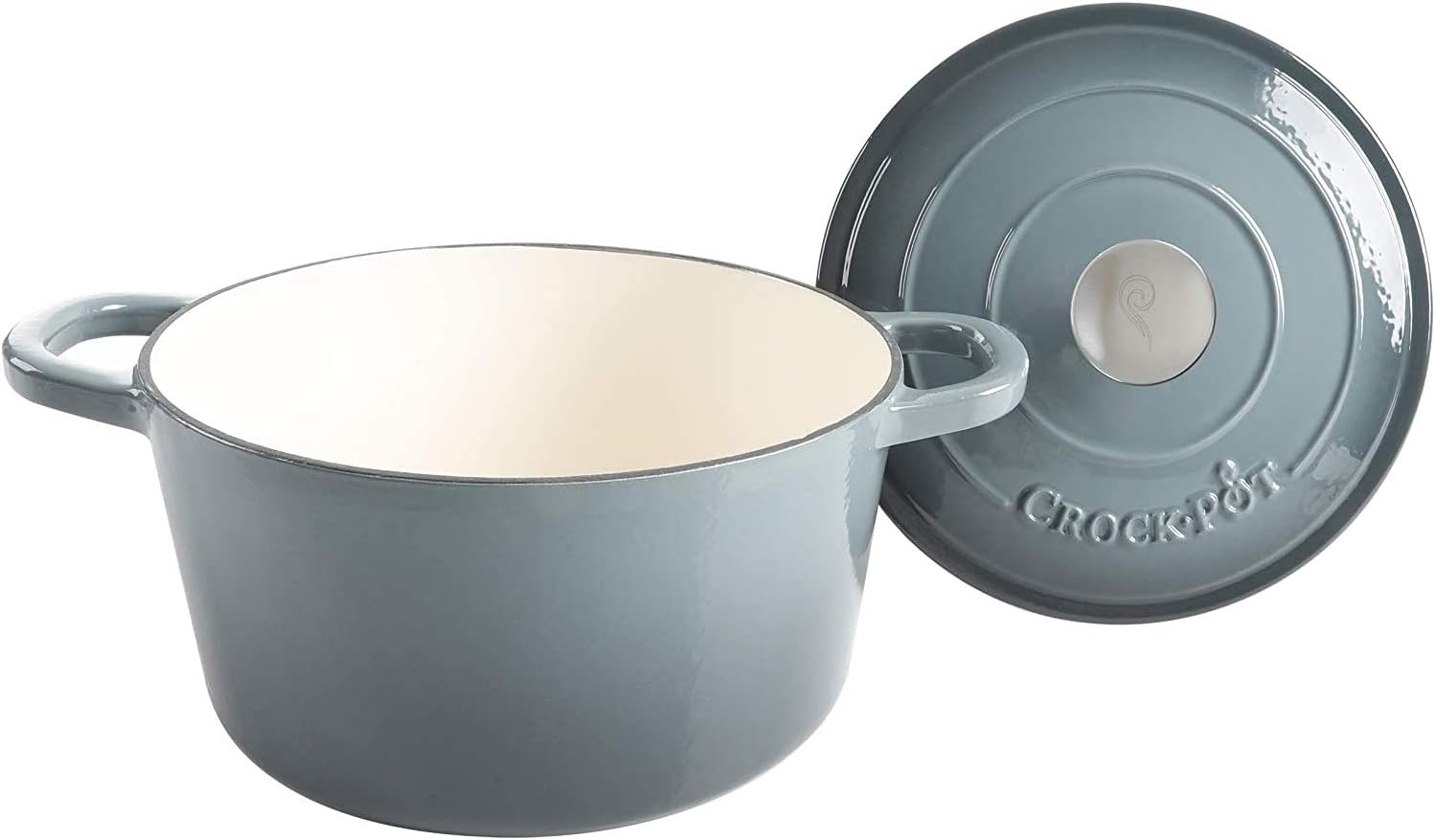
The Crock-Pot Artisan is the one that keeps generating a specific kind of owner report: multi-year use without enamel incident. The most telling signal in aggregated owner feedback is the repeat buyer — at least one documented owner used their first Artisan for eight years without chipping, then purchased a second unit for a different size. Eight years of chip-free use at this price tier is unusual and worth weighting heavily.
That owner attributed the result directly to hand-washing discipline — never running the pot through a dishwasher. This detail deserves amplification because it’s actionable. The thermal shock of a dishwasher cycle — rapid heat, high-pressure spray, and detergent chemistry — is one of the leading accelerants of enamel crazing and micro-fracture across all enameled cast iron, including premium brands. Serious Eats, in their Dutch oven equipment coverage titled “The Best Dutch Ovens for Every Budget,” consistently flags dishwasher use as a primary risk factor for enamel degradation. Hand-washing with warm water and a soft sponge is not just good practice — for mid-tier pots, it is effectively part of the maintenance contract.
The honest counterpoint: at least one buyer received a Crock-Pot Artisan with a chipped lid from the factory. A chip on delivery is a quality-control issue, not a durability story, and it tells you something about packaging and pre-ship inspection rather than how the pot performs over years. Inspect on arrival; most major retailers handle returns without friction. A chipped lid does not meaningfully affect cooking performance, but the principle stands.
For chili specifically: the Artisan’s wide, flat base and relatively tight lid make it well-suited to the kind of low-and-slow cooking a red chili demands. Owners report no unusual hot-spotting on gas or electric burners. The 7-quart configuration is the right call for a standard 6-quart chili batch — you need headroom for simmer bubble and steam management.
Cuisinart
$111.19
In stock on Amazon
Check price on AmazonCuisinart: Strong Pot, Real Price Confusion
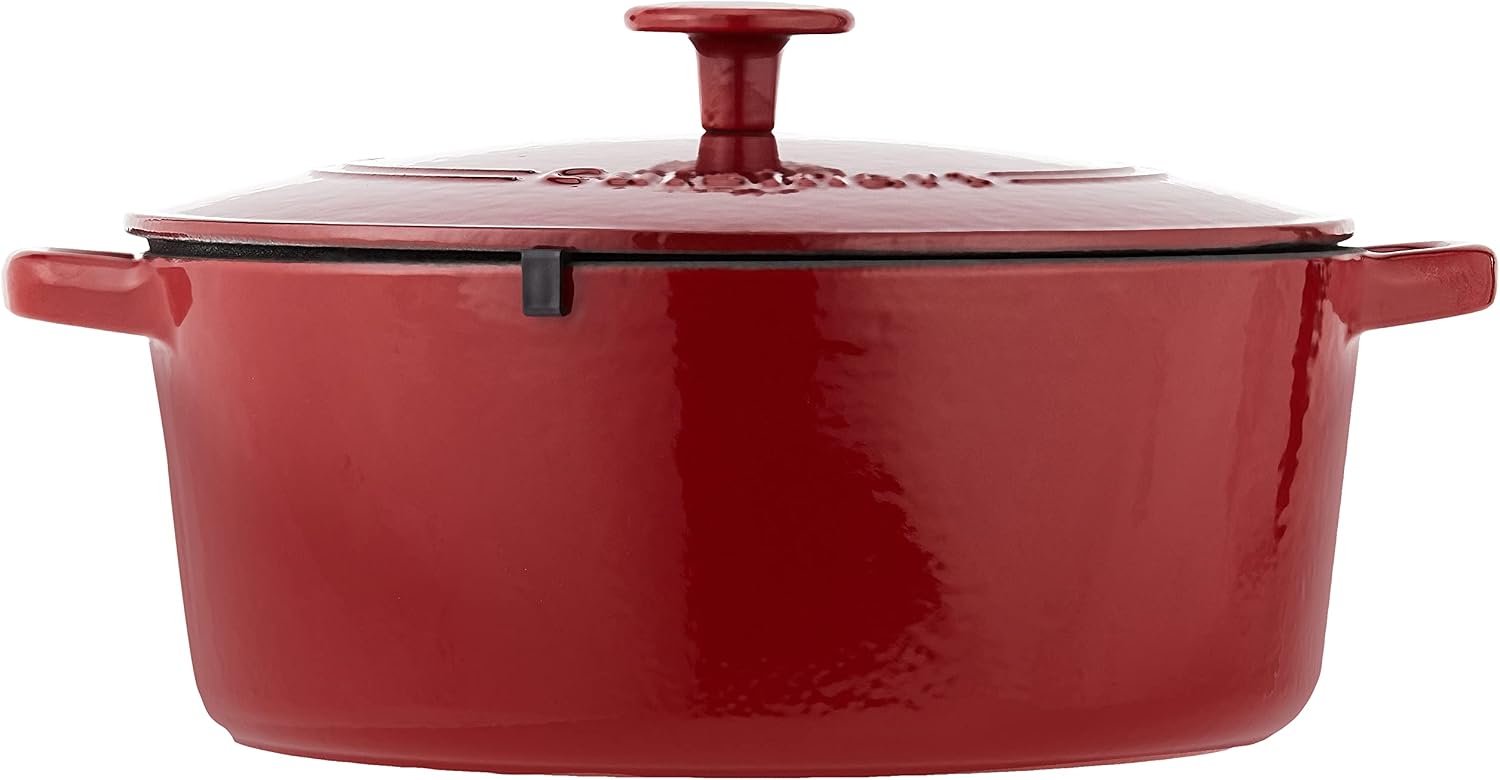
The Cuisinart enameled Dutch oven has a confusing public price history. A review that circulated widely cited a purchase price of approximately $20, prompting buy recommendations that do not reflect standard retail reality. That figure represents a sale-price outlier — a promotional window or warehouse liquidation event. At typical 2026 prices, Cuisinart’s enameled Dutch oven runs closer to $60–$90 depending on size and colorway.
At that price, it is a legitimate competitor. Wirecutter, in their equipment review “The Best Dutch Oven,” notes that Cuisinart’s enameled line performs competently for standard braise-and-simmer tasks, and owner feedback confirms low defect rates and consistent heat retention across sizes. The enamel interior on most Cuisinart colorways runs slightly lighter than the Artisan’s, which some cooks prefer for monitoring fond development — the browned layer that forms on the pot bottom when searing chile-marinated meat before adding liquid. Fond visibility matters if you’re building a flavor base rather than simply simmering a pre-assembled mixture.
The trade-off: Cuisinart’s handles are proportionally smaller than the Artisan’s on larger sizes, which becomes relevant when moving a full pot of chili from stovetop to oven. Owners in long-run accounts occasionally flag handle grip comfort, particularly with oven mitts. Not a dealbreaker, but worth knowing before you buy.
If you find Cuisinart at a genuine sale price below $50, buy it without overthinking. At standard retail, the choice between Cuisinart and the Artisan comes down largely to handle ergonomics and color preference.
Cuisinart
$111.19
In stock on Amazon
Check price on AmazonMueller: The Accessory-Forward Option
Mueller markets its Dutch oven with a bundle of included extras — a rack, rubber storage feet, and in some configurations, additional lids or tools. Owner reviews focus heavily on these accessories, which tells you something about who is buying: cooks who value out-of-box utility and don’t already have an established kitchen toolkit.
The rubber storage feet are genuinely useful if you’re storing the pot on a surface that could be scratched by raw cast iron edges, or if cabinet organization is tight. Owner accounts document making chili with no scorching, which matters because scorching during a long chili simmer usually indicates uneven heat distribution or a base that is too thin. No-scorch reports are consistent with a reasonably well-distributed cast iron base — not proof of perfection, but a meaningful data point.
Mueller’s enamel has generated fewer long-run durability reviews than the Artisan simply because the Mueller Dutch oven is a newer market entrant. The existing record is positive, but the evidentiary base is thinner. If you are optimizing for a pot you want to use for ten years, the Artisan’s longer owner track record provides more confidence. If you are equipping a kitchen and the included accessories solve a real need, Mueller earns consideration.
For chili specifically: the 6-quart size is well-matched to standard batch sizes in the 4–5 quart range, and owners report a good lid seal with no unusual complaints about acid reactivity in tomato-heavy recipes.
Cuisinart
$111.19
In stock on Amazon
Check price on AmazonBabish: Newer Entrant, Consistently Positive Early Signal
The Babish enameled Dutch oven has a smaller review corpus than the other three — it is newer to market — but the pattern of those reviews is worth noting. Owners report positive results across a wide range of cooking tasks including chili, braises, soups, and baking. Consistency across task types suggests the pot’s heat retention and enamel quality are performing as expected rather than excelling in one context and failing in another.
Food52, in their buyer guidance piece “What to Look for in a Dutch Oven,” notes that enamel interior color and surface texture affect how cooks interact with a pot during long cooks — lighter interiors show fond development clearly, while darker interiors can mask it. Babish runs a cream or light-colored interior in most colorways, which serves the chili cook well when monitoring the bottom of the pot during the sear-and-sweat phase. The exterior colorways are appealing, which matters to buyers making gifting decisions or equipping a kitchen they care about aesthetically.
The caveat is timeline. Enamel durability is a years-long story, and Babish’s reviews are strong but recent. If you are buying for longevity and don’t want to serve as an early-adopter data point, weight the Artisan’s eight-year owner testimony more heavily. If you are equipping a kitchen now and the price and aesthetics align, Babish is a reasonable buy with eyes open about the shorter review history.
Cuisinart
$111.19
In stock on Amazon
Check price on AmazonThe Krustic: Bread Baker in Chili Clothing
The Krustic earns a brief mention because it appears in the same search results as the other four, but the owner review base tells a different story: the vast majority of Krustic feedback comes from bread bakers, specifically sourdough enthusiasts who value the lid-as-steam-trap function. That is not a problem with the pot — it is a useful context signal. The Krustic’s proportions, lid design, and typical use patterns are optimized for bread, and its owner community reflects that orientation.
For chili: it works, because any enameled cast iron Dutch oven can make chili. But if you are buying specifically for a long-simmer chili pot, the Krustic is a crossover pick rather than a primary recommendation. You would be buying for the bread and accepting it as adequate for chili, rather than buying for chili and getting bread capability as a bonus.
Frequently Asked Questions
Is the Crock-Pot Artisan Dutch oven made by the same company as the Crock-Pot slow cooker? Yes — both fall under the Crock-Pot brand, now owned by Newell Brands. The Dutch oven is a separate product line from the electric slow cooker appliance and operates on entirely different principles: it is an unpowered, stovetop-and-oven vessel, not an electric countertop appliance. The brand connection is real but the products share no components or manufacturing.
Does hand-washing really prevent enamel chipping? The evidence from long-run owners is consistent: dishwasher use accelerates enamel degradation across all enameled cast iron, not just mid-tier brands. Cook’s Illustrated’s Dutch oven equipment testing flags thermal cycling in dishwashers as a primary stress factor for enamel integrity. Standard owner cleaning practice is warm water, a non-abrasive sponge, and mild dish soap. For stuck-on chili residue, soaking in warm water for 15–20 minutes before washing handles most cases. Bar Keepers Friend, used gently, is widely cited by owners for stubborn stains on light-colored interiors.
Which of these pots is induction compatible? All four primary recommendations — Crock-Pot Artisan, Cuisinart, Mueller, and Babish — are induction compatible. Cast iron is inherently magnetic and works on induction surfaces. Verify via the manufacturer spec sheet for your specific size and colorway before purchase, but induction compatibility is standard across this category.
What size Dutch oven is best for a 6-quart batch of chili? A 7-quart Dutch oven for a 6-quart batch. You need headroom for simmer bubble and steam management — filling a pot to its nominal capacity produces spillover risk and uneven evaporation. The Mueller 6-quart works well for a 4–5 quart batch by the same logic. If your standard batch is 6 quarts, the 7-quart Artisan or 7-quart Babish is the right call.
How do these compare to Lodge enamel for long, acidic simmers? Lodge’s enameled Dutch oven is the most discussed budget-tier reference point. Wirecutter’s Dutch oven review has positioned it as the value benchmark at the lower end of the market. The mid-tier pots reviewed here are generally priced above Lodge’s typical street price and offer modest incremental improvements in enamel finish smoothness and lid fit — both of which matter for long acidic simmers where a tight lid seal affects moisture retention. For chili with significant tomato or dried chile acid content, none of these pots — including Lodge — present reactivity concerns; the enamel coating is the protective layer, and all of them provide it. The real Lodge comparison is about enamel surface quality over years: the Crock-Pot Artisan’s eight-year chip-free owner accounts give it a slight edge in documented longevity at this tier, though Lodge has its own strong long-run owner community.
The Decision Rule
If you are building a chili pot for the long term and want the most owner-documented durability at this price tier: buy the Crock-Pot Artisan in the 7-quart, hand-wash it every time, and use it for a decade. The evidence for this recommendation is the strongest in the category.
If you are equipping a kitchen now and want strong out-of-box utility with a good accessory bundle: Mueller is a reasonable buy with the understanding that you are working with a shorter long-run track record.
If aesthetics and gifting context matter and you are comfortable being an early adopter: Babish earns consideration, with eyes open about its thinner review history.
If you find Cuisinart at a legitimate sale price below $50: buy it without overthinking it. At standard retail, it competes squarely with the Artisan and the choice comes down to handle ergonomics and color preference.
What none of these pots will do: match the enamel interior smoothness, lid seal precision, or manufacturer warranty depth of a Le Creuset or Staub. If that gap matters to your cooking at this stage, the premium tier is the honest answer. But if your goal is a capable, long-lasting chili vessel that does not require a $400 commitment, the Artisan in particular has earned its place in the mid-tier conversation.