Blended chili powder — the jar of pre-mixed, ready-to-scoop ground spice that says “chili powder” on the label — is the workhorse of weeknight chili. A blend typically contains ground dried red chiles as its base, plus some combination of cumin, garlic, oregano, salt, and occasionally paprika or cayenne. It is not, confusingly, a single ground chile the way ancho powder or guajillo powder are. Understanding that distinction matters because it changes how you salt, how you layer, and how you calibrate heat. This article ranks and compares four blends worth knowing — Mexene, Frontier Co-op Organic, Watkins, and Burlap & Barrel — and gives you the honest tradeoff picture so you can buy with intention rather than habit.
If you already know the difference between a blended chili powder and a single-origin chile powder, you are in the right place. The comparison below names the real practical differences between these four: flavor profile, salt content, ingredient transparency, and how each performs inside a more complex build.
The Four Contenders at a Glance
| Brand | Salt in blend? | Primary claim | Approx. size available | Tier |
|---|---|---|---|---|
| Mexene | Yes | Regional / legacy blend | 2 oz, 4 oz | Mexene — $7.89 |
| Frontier Co-op Organic | No | Certified organic, salt-free | 1 lb bulk, 2.5 oz | Mexene — $7.89 |
| Watkins | Yes | Traditional blend + added spices | 3.5 oz | Frontier — $16.06 |
| Burlap & Barrel | Varies by SKU | Small-batch, high-provenance | 1.8 oz, 2.3 oz | Spice — $23.99 |
Mexene, Frontier Co-op, Watkins, and Burlap & Barrel: Full Breakdown
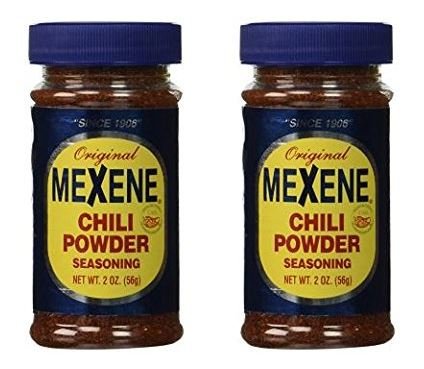
Mexene: The Regional Benchmark That Earns Its Reputation
Mexene has a longer shelf legacy than almost any other commercial chili powder still in wide circulation. It originated in Texas and has been a Lone Star pantry staple for well over a century. Texas Monthly, in its extensive coverage of traditional Texas chili culture, surfaces Mexene repeatedly as the reference blend when cooks argue about what “chili powder” is supposed to taste like. That history creates an interesting dynamic in the current market: Mexene is simultaneously old-fashioned and, for a specific flavor target, irreplaceable.
Cooks who have used both Mexene and standard mass-market blends describe Mexene as tasting more chile-forward — less paprika-padded, more actual dried pepper character. A notable pattern in aggregated buyer feedback: home cooks who normally build their own blends from scratch tried Mexene specifically to evaluate it against their homemade version, and a meaningful share returned to it for convenience batches. That is a real signal. Scratch blenders tend to be skeptics, so their endorsement carries weight.
The salt content deserves explicit attention. Mexene’s formulation includes salt in the blend, which means every tablespoon you add is also adding sodium. In a straightforward weeknight chili where you are not adding additional flavored elements, this is manageable — you adjust your added salt accordingly. In a more complex build where you are layering dried whole chiles, a beef or chicken stock base, canned tomatoes with their own sodium load, and beans that may have been salted in the can, you will want to estimate cumulative sodium before the blend goes in. The technique is simple: add the Mexene, taste after five minutes of simmering, and hold back any additional salt until you have evaluated the overall level.
Best fit: Cooks building a traditional Texas-style or Tex-Mex chili who want a reliable, historically grounded blend without sourcing complexity.
Mexene
$7.89
In stock on Amazon
Check price on AmazonFrontier Co-op Organic: The Salt-Free Blank Canvas
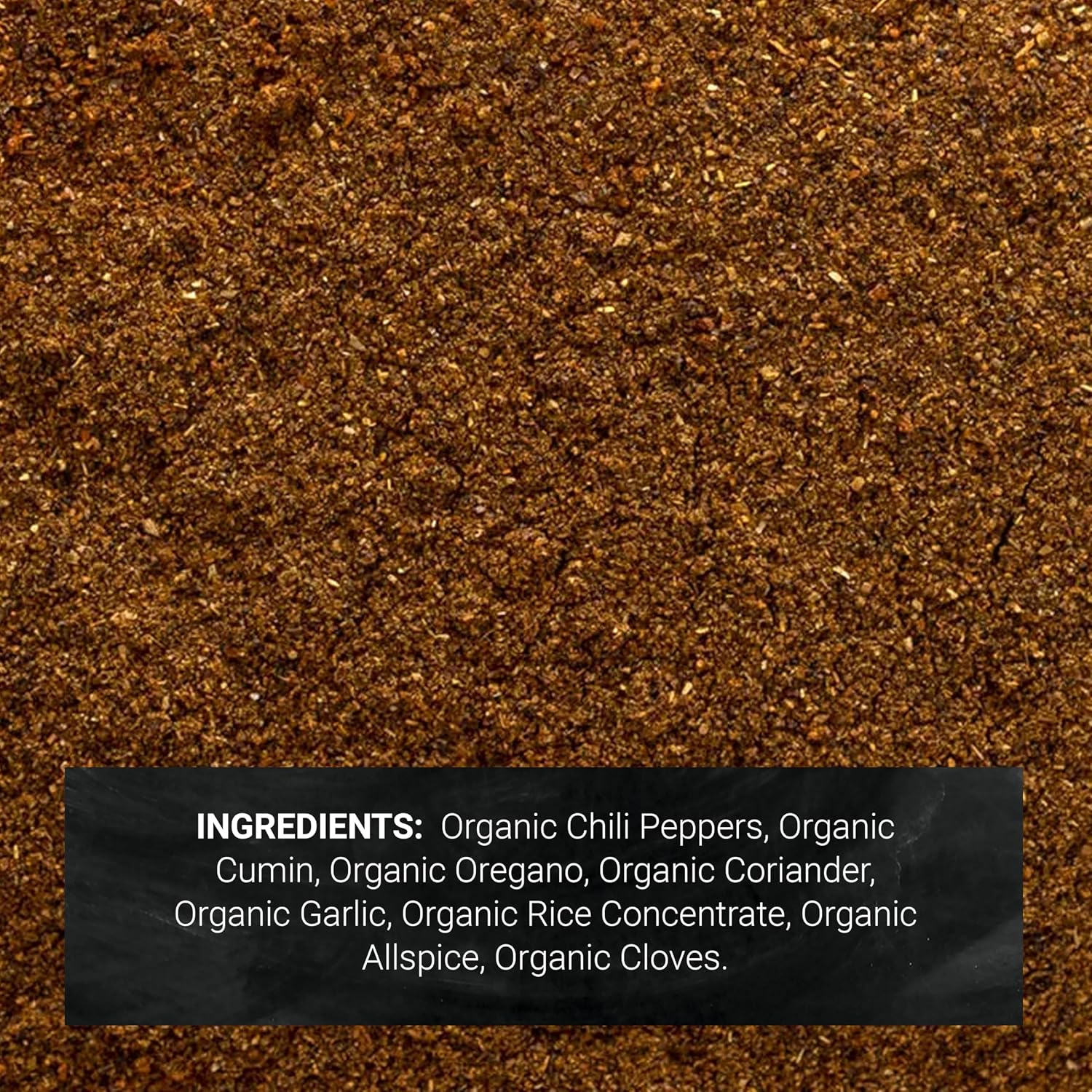
Frontier Co-op’s organic chili powder takes the opposite formulation philosophy from Mexene: no salt in the blend at all. This sounds minor until you run it through a real recipe and realize it changes your entire seasoning workflow — in a useful way.
Cooks working with Frontier’s blend consistently observe that the flavors only fully open up once salt is added in stages during cooking. This is not a flaw. Salt suppresses bitterness and amplifies volatile aroma compounds, which is why a bowl of unsalted chili tastes flat even when built with good ingredients. The practical takeaway: add the Frontier blend early in the cook with your aromatics, then salt in layers — a pinch when the onions are sweating, another when you add the liquid, a final adjustment at the end. This intentional, layered salting approach produces measurably better flavor development than adding all salt at once.
For label-readers and ingredient-transparency enthusiasts, Frontier’s USDA Organic certification means the component chiles and spices cleared organic sourcing standards. Cook’s Illustrated, in their published chili powder taste test, notes that the raw material quality of the dried chiles in a blend correlates strongly with the final depth of flavor — and organic sourcing at least sets a floor on growing conditions, even if it does not specify varietal or harvest date the way single-origin products do.
Best fit: Cooks who want sodium control, organic certification, and the flexibility to salt intentionally — particularly useful in complex builds or when cooking for guests managing sodium intake.
Mexene
$7.89
In stock on Amazon
Check price on AmazonWatkins: The Crowd-Pleaser With a Complex Label
Watkins chili powder draws consistent praise from everyday home cooks and has a loyal following built partly on nostalgia — the brand’s history stretches back to the 1860s, when its products were sold door to door — and partly on a flavor profile that reviewers describe as warm, rounded, and immediately appealing.
The recurring note in buyer feedback is that Watkins “has other things in it besides chili powder.” That observation, read against the product’s actual ingredient label, points to a formulation that includes not just the standard blend of dried chile, cumin, garlic, and oregano, but additional savory and aromatic spice components that create a more complex background flavor. Per Watkins’ product label and formulation documentation for their Chili Powder, the ingredient list goes beyond the minimal core found in simpler blends. This can work beautifully — that layered quality is exactly what makes Watkins a strong standalone blend for simpler chili recipes where you are not building from whole dried chiles. But for a practitioner layering in single-origin powders, Watkins’ multi-element blend can complicate the flavor math. You are adding known quantities of your sourced ingredients alongside an unknown quantity of background spice from the blend, and the result is harder to tune.
Reading the ingredient list on Watkins’ product label before you commit is worth doing. If the added components align with the flavor direction you are building toward, Watkins is an excellent and widely available choice. If you are running a recipe where you want to control every aromatic variable, the complexity of the formulation becomes a constraint.
Best fit: Cooks who want a warm, approachable, ready-to-use blend for straightforward chili recipes — and those who appreciate the brand’s long domestic heritage.
Frontier
$16.06
In stock on Amazon
Check price on AmazonBurlap & Barrel: The High-Provenance Outlier
Burlap & Barrel sits in a different tier from the other three on this list. The brand specializes in directly sourced spices, with harvest dates and growing regions documented on the label — the kind of sourcing information that most commercial spice brands do not provide. Their chile-based products live at the intersection of a blended chili powder and a high-end single-origin product, and understanding that distinction matters before you buy.
Per Burlap & Barrel’s product label and specification documentation, their chile offerings include both single-origin dried chile powders — such as their Cobanero chile sourced from Guatemala — and blended formulations. The line between these is not always obvious from the product name alone, so reading the label carefully is essential. Reviewers mention Burlap & Barrel in the context of everyday cooking across multiple dishes, not just chili, which reflects both the quality ceiling and the price point. At roughly $10–$15 per small jar (prices vary by SKU and availability as of mid-2026), you are paying for provenance documentation and freshness transparency that mass-market blends do not offer.
Serious Eats, in their published chili powder taste test titled “The Best Chili Powder,” emphasizes freshness and volatile oil content as the primary differentiators between good and mediocre dried chile products. On both counts, Burlap & Barrel’s sourcing model — direct relationships, documented harvest dates — scores well against that evaluation framework. Whether the real-world flavor difference justifies the price delta is a judgment call based on your budget and how much a given batch matters to you.
For competition-circuit cooks or serious practitioners building a refined pot, Burlap & Barrel’s chile products work best as precision instruments rather than volume seasoning. Use them where the chile flavor is a featured note — a finishing tablespoon stirred in after the long simmer, or in a small-batch sauce where provenance matters. For the bulk of a six-quart pot, the cost math favors one of the other three blends as the base.
Best fit: Practitioners who want provenance documentation and high freshness ceilings — used as a precision layer in complex builds, not as a sole-blend workhorse.
Spice
$23.99
In stock on Amazon
Check price on AmazonFrequently Asked Questions
Why does Mexene taste different from McCormick if they’re both chili powder blends? Blended chili powders vary significantly in their base chile varieties, the ratio of chile to filler spices, and their salt content. Mexene uses a formulation that cooks consistently describe as more chile-forward and less paprika-heavy than standard McCormick, giving it a more direct, savory heat profile. The two brands also have different manufacturing histories and likely source different underlying dried chile varieties — small differences in raw material produce noticeable differences in the bowl.
Should I add salt when using Frontier Organic chili powder in a chili recipe? Yes — and the technique matters. Because Frontier’s blend contains no salt, the aromatics in the powder will not fully express until salt is present in the pot. Add the Frontier blend with your aromatics early in the cook, then salt in stages: a small amount with your sweating onions and garlic, more when you add liquid, and a final adjustment at the end. This intentional, layered salting approach produces better flavor development than adding all your salt at once.
Can I combine a blended chili powder with single-origin ancho or guajillo powder in the same pot? Yes, and it is one of the most effective ways to build depth. The conventional approach is to use a blended chili powder as your seasoning backbone — it provides cumin, garlic, and oregano alongside the chile — and then layer single-origin powders for specific flavor notes. Ancho adds raisin-like sweetness and low-medium heat; guajillo adds bright, tart red fruit and a clean heat. Start with 2–3 tablespoons of blend for a six-quart pot, then add 1–2 tablespoons of single-origin powder and adjust from there.
How much chili powder does a 6-quart pot of chili typically need? A general baseline is 3–4 tablespoons of blended chili powder per six-quart pot of chili made with 2–3 pounds of meat and standard aromatics. This is a starting point, not a ceiling. Many serious practitioners go higher — 5–6 tablespoons or more — especially in slow-cook recipes where flavors mellow over hours. Taste as you go and remember that flavor will concentrate as liquid reduces.
What does “dark” mean in McCormick Dark Chili Powder versus their standard version? McCormick’s Dark Chili Powder uses a higher proportion of darker, richer dried chiles — likely ancho or mulato varieties — compared to their standard blend, which leans more on lighter red chiles and paprika. The result is a deeper, earthier flavor with less brightness and a lower perceived heat. It has a distinctive flavor fingerprint that some cooks find difficult to replicate with a scratch blend.
Is Burlap & Barrel chili powder a single-origin product or a blend? It depends on the specific SKU. Burlap & Barrel sells both single-origin dried chile powders and blended products under their brand. Their single-origin offerings list a specific chile variety and growing region; their blends combine multiple elements. Reading the product label and ingredient list before buying is essential — the distinction matters both for how you use it and for what you are paying for.
If X, Then Y: The Decision Rule
If you want a historically grounded, straightforward blend with proven flavor and do not mind built-in salt — Mexene.
If you want full sodium control and organic certification with a blank-canvas approach that rewards intentional salting technique — Frontier Co-op Organic.
If you want a warm, complex, widely available blend for simple or crowd-feeding chili without deep sourcing research — Watkins, but read the label first.
If you are building a high-stakes or competition batch and want provenance documentation and fresh-crop chile flavor as a precision layer on top of your base blend — Burlap & Barrel, used as a finishing or accent powder rather than your primary volume seasoning.
None of these choices is wrong. The right answer depends entirely on what you are building, how much ingredient control you want, and what the bowl is for.