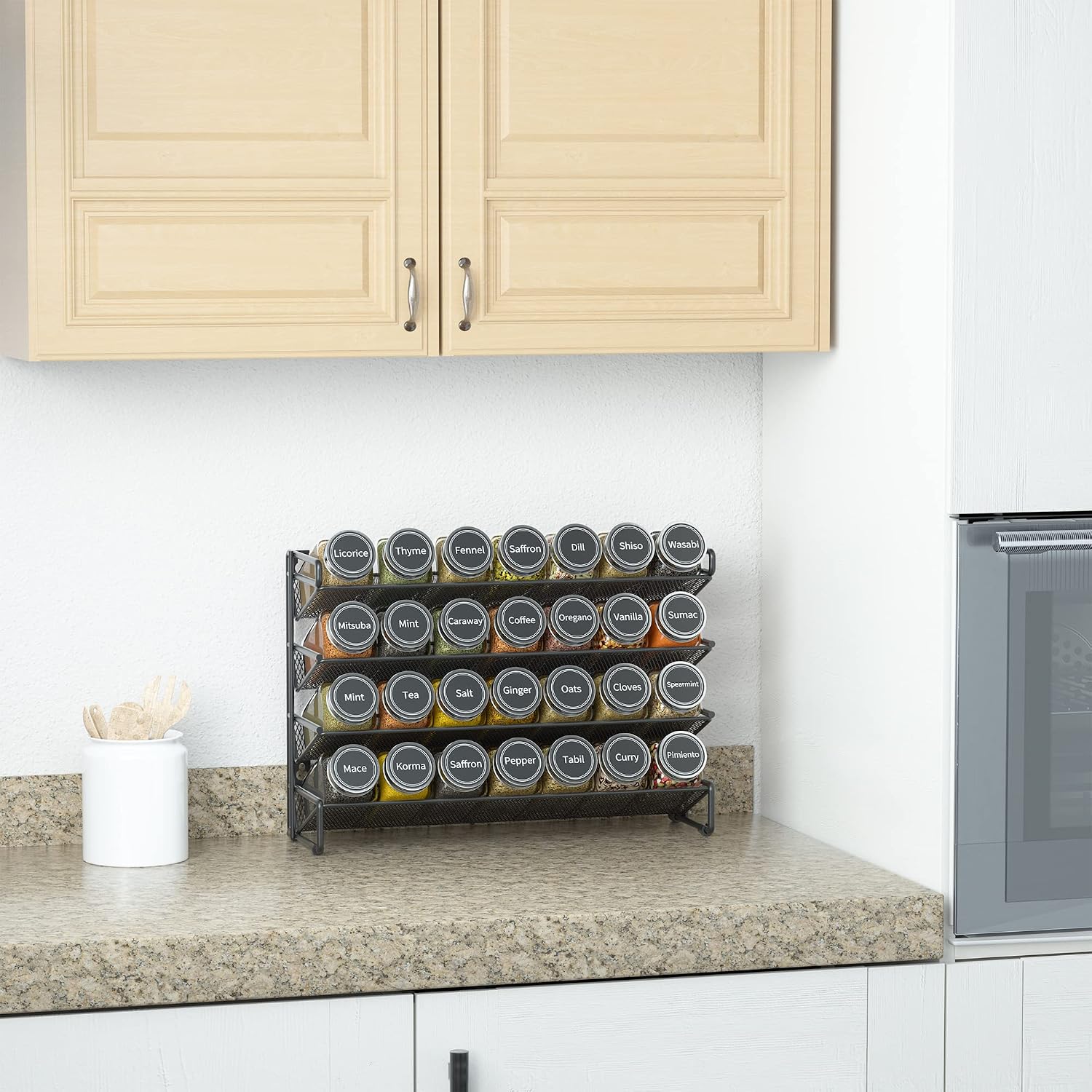
If you’ve started buying dried chiles from more than one or two sources — a bag of ancho (a dried, ripe poblano pepper) here, some guajillo (a long, mild-to-medium Mexican chile) there, a tin of New Mexico red from the farmers market — your cabinet situation has probably already become a problem. Chile powders are ground versions of those same dried chiles, and when you’re building a serious scratch-chili spice shelf, you can easily accumulate 20 or more distinct powders, each with a different heat level, color, and flavor profile. Storing them in mismatched bags and factory bottles means you’re either forgetting what you have, grabbing the wrong thing mid-cook, or letting expensive product go stale in the dark. This article compares the main organizational formats — labeled uniform-jar sets, pull-out cabinet racks, and magnetic wall or fridge mounts — so you can build a system that fits your cooking workflow and your kitchen footprint.
Why Your Chile Powder Collection Needs Its Own System
A standard spice drawer or single-tier shelf works fine for a general cook with ten or twelve bottles. It stops working when you’re running ancho alongside pasilla (both dark and earthy, easy to mix up), keeping separate jars of toasted-and-ground versus untoasted cascabel, and maintaining a backup stock of bulk-size containers for refilling.
Serious Eats, in their guide “How to Store Spices So They Actually Stay Fresh,” makes the core point plainly: spices stored in opaque containers away from heat and light retain volatile aromatic compounds significantly longer than those left in clear factory packaging near the stove. For chile powders specifically — where the difference between a fresh-crop ancho and a two-year-old one is the difference between a nuanced bowl and a flat one — this matters more than it does for something like garlic powder. Chile Pepper Madness, in their “Guide to Dried Chile Peppers,” reinforces that most of the flavor complexity in dried chiles lives in volatile oils that degrade with light and oxygen exposure.
So the organizational problem is also a freshness problem. A good system keeps your powders labeled, accessible, and sealed. The format — jar set, pull-out, or magnetic rack — determines which of those three you optimize for.
The Three Formats, Compared Head-to-Head
Basic Uniform Jar Sets: The Refill-Workflow Foundation
The most accessible entry point into uniform jar storage is a glass jar set with consistent diameter and height. The core appeal is straightforward: every jar is identical, which means stackable storage and a clean visual row when labeled. Wirecutter, in “The Best Spice Racks and Storage Solutions,” consistently identifies uniform jar systems as the best baseline for cooks who are building a collection from scratch and want to standardize on a single container format.
The workflow habit worth naming explicitly: keep original bulk-size containers — from a warehouse club or a bulk spice supplier — behind the rack and use the active jar set as your “pour set.” You refill from the large container as you go, which solves the problem of decanting your entire stock on day one while also keeping your freshest product up front. If you’re buying small-batch product from specialty suppliers, decanting into uniform jars is also the right moment to write the purchase date on the label, creating a personal freshness-tracking system.
One quality-control issue worth flagging for buyers of bamboo pull-out drawer variants in this category: some units have drawn complaints about cracked plastic fittings on arrival, apparently caused by over-tightening during shipping. If you order a pull-out drawer configuration, open the package before storing it and check the drawer joints before anything goes into the jars. Jar-only sets without the pull-out component have not drawn the same complaint pattern.
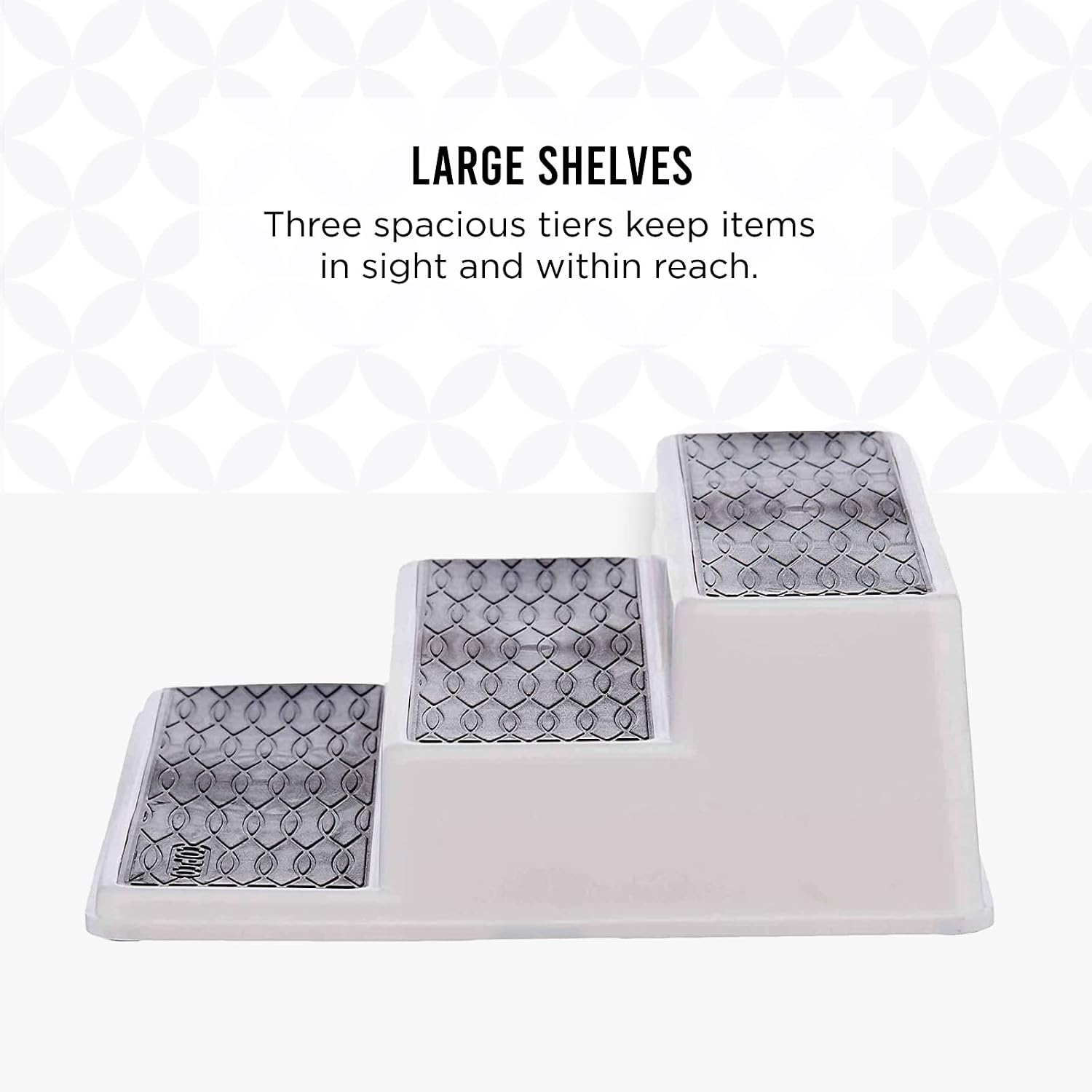
Copco
$6.78
In stock on Amazon
Check price on AmazonDual-Lid and Mid-Tier Jar Sets: Pour and Shake Flexibility
A step up in the jar-set category brings dual-opening lid designs that are directly relevant to chile powder use. A lid that offers both a wide-mouth pour opening and a shaker-top option covers two real cooking scenarios: when you’re building a sauce base and want a measured pour of ancho powder into a hot pan, you use the wide opening; when you’re finishing a bowl at the table and want to shake in a pinch of chipotle, you flip to the shaker side. For a collection where some powders are used by the tablespoon and others by the pinch, that flexibility is a genuine workflow advantage.
Mid-tier jar sets in this configuration typically run 4 to 6 ounces per jar — check your shelf height clearance before ordering, as the taller profile of some 6-ounce jars requires more vertical space than a standard spice shelf allows. Wirecutter’s spice storage coverage also recommends chalkboard labels or pre-printed label sets as more durable than handwritten paper labels on glass jars in humid kitchen environments — an important note if your spice shelf sits near the stove or a steam source.
EDGING
$33.99
In stock on Amazon
Check price on AmazonPull-Out Cabinet Racks: Visibility as the Primary Goal
A pull-out rack — a drawer-style insert that slides out from inside your cabinet — solves the deepest single problem in spice storage: things at the back of a cabinet become invisible, and invisible spices don’t get used. Wire-frame pull-out organizers use an open construction that accommodates different bottle heights, which means you can run uniform jars on the same pull-out as your full-size factory bottles without reconfiguring anything. Reviewers of this category consistently reach for “game changer” language, and the pattern in that feedback is specific: they can see every container from the front without moving anything.
For a 20-jar chile powder collection where ancho, pasilla, mulato, and negro anchos all look similar in dark powder form, being able to read every label on a single pull-out is operationally significant. Apartment Therapy, in “The Best Spice Rack Organizers for Every Kitchen,” identifies pull-out visibility as one of the features buyers most consistently wish they had prioritized before purchasing a spice storage system.
Installation for most pull-out cabinet racks requires mounting screws into cabinet shelving — a one-time 20-minute job for owned-kitchen cooks, and a potential issue for renters (addressed in the FAQ section below). For renters or cooks who want zero permanent modification, a bamboo expandable rack handles mixed bottle sizes without installation and is fully portable, though it trades pull-out visibility for adjustable-width accommodation of non-uniform containers.
At the premium end of the pull-out category, full-cabinet-width organizers with soft-close hardware and higher weight ratings accommodate deeper collections — including the airtight canisters you would use for whole dried chiles stored alongside ground powders. These units are wide enough to include both a uniform jar row and a few larger containers in the same drawer, which is the configuration that makes a 25-plus powder collection feel organized rather than merely stored. The premium price reflects the hardware quality and the installation permanence; these are kitchen-renovation tier purchases, not impulse buys.
EDGING
$33.99
In stock on Amazon
Check price on AmazonMagnetic Racks: Speed Over Scale
Magnetic spice racks — a metal backing plate that mounts to a wall or refrigerator surface, with individual magnetic-bottomed canisters — appeal to cooks with zero available cabinet space or cooks who want their most-used powders at true arm’s reach from the stove. Entry-level magnetic rack sets typically include 10 to 12 canisters and a fridge-mountable or screw-mount backer plate. Magnet strength varies significantly across manufacturers; well-reviewed units in this category are specifically noted for holding on refrigerator surfaces without sliding, including in non-kitchen applications like garage chest freezers.
The format tradeoff for chile powder collectors is real: magnetic canisters are small, typically under 3 ounces, which works for your five or six most-used powders but does not scale to a 20-jar collection without covering a significant stretch of wall or fridge surface. The best use pattern for a large collection is hybrid — magnetic rack for the powders you reach for in every cook (your ancho, your New Mexico red, your chipotle), with a pull-out or jar set handling the less-frequent single-origin and specialty powders.
Reviewers consistently recommend keeping heavier glass containers lower on the mounting surface rather than clustered at the top, and confirm that canisters rated for the system’s own containers perform more reliably than third-party glass jars mounted on magnetic bases.
Copco
$6.78
In stock on Amazon
Check price on AmazonPremium Soft-Close Pull-Outs: For Large Collections and Whole Chiles
Full-cabinet-width soft-close pull-out organizers represent the highest-investment option in this comparison, and the case for them is specific: if your collection runs past 25 powders and you are also storing whole dried chiles in the same cabinet, nothing else in this comparison scales to that volume without compromise. The soft-close hardware and higher weight ratings mean you can load airtight canisters for whole anchos or guajillos alongside your uniform jar rows without stressing the drawer hardware.
Food52, in “The Right Way to Label and Organize Your Spice Collection,” identifies two consistent labeling mistakes that are especially damaging at this collection scale: labels that name only the chile without noting form (powder vs. flake vs. whole), and labels with no date. At 25-plus containers, the label has to do real work. The most functional label format includes chile name, origin or brand, and date decanted — “Ancho — Rancho Gordo — 03/2026” on a uniform jar tells you what it is, where it came from, and whether it is still at peak.
Color-coded label rings add a second visual layer that works faster than reading at a glance: one color per heat tier, or one color per sourcing region (Mexican dried chiles versus New Mexican versus California versus smoked), depending on how your brain organizes the collection.
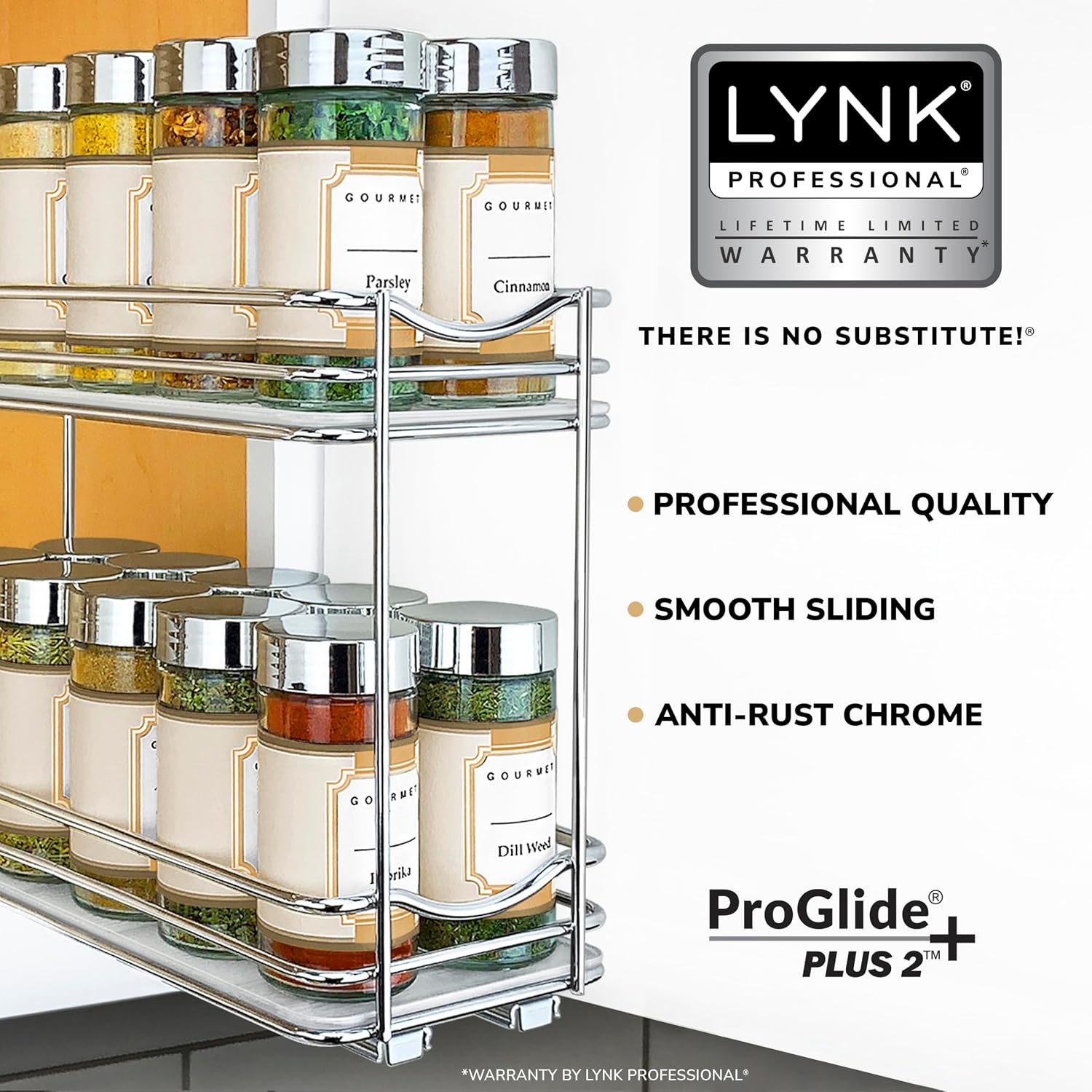
LYNK
$39.99
In stock on Amazon
Check price on AmazonComparison at a Glance
| Format | Typical capacity | Best for | Main tradeoff | Tier |
|---|---|---|---|---|
| Basic uniform jar set | 4 oz per jar | Shelf rows, refill workflow | Bamboo pull-out QC risk | Copco — $6.78 |
| Dual-lid jar set | 4–6 oz per jar | Pour and shake flexibility | Check shelf height clearance | EDGING — $33.99 |
| Wire-frame pull-out | Full cabinet width | Deep cabinet visibility | Requires installation | EDGING — $33.99 |
| Bamboo expandable rack | Adjustable width | Mixed bottle sizes, renters | Fixed height shelving required | Copco — $6.78 |
| Premium soft-close pull-out | Full cabinet width + depth | Large collections, whole chiles | Kitchen-renovation cost tier | LYNK — $39.99 |
| Magnetic canister rack | Under 3 oz per canister | Zero cabinet use, daily-reach powders | Does not scale to 20+ jars alone | Copco — $6.78 |
How to Label So You Can Actually Tell Your Chiles Apart
For a collection where ancho powder, pasilla powder, and mulato powder are visually nearly identical in color and texture, the label has to do real work. Food52, in “The Right Way to Label and Organize Your Spice Collection,” identifies two consistent labeling mistakes: labels that name only the chile without noting form (powder vs. flake vs. whole), and labels with no date.
The most functional label format for a chile powder shelf includes: chile name + origin or brand + date decanted. Wirecutter’s spice storage coverage recommends chalkboard labels or pre-printed label sets as more durable than handwritten paper labels on glass jars in humid kitchen environments. Color-coded label rings add a second visual layer that works faster than reading text — one color per heat tier, or one color per sourcing region, depending on how your brain organizes the collection.
Frequently Asked Questions
How many jars do I actually need for a complete scratch chili spice shelf? A functional scratch chili powder shelf — covering the core Mexican dried chiles, a couple of blends, and supporting aromatics like cumin, Mexican oregano, and coriander — runs 18 to 24 jars. A 30-jar set gives you room to grow without a second purchase. Buy more than you think you need on day one.
Can I fit full-size store-bought spice bottles in a uniform jar system, or do I need to decant everything? Uniform jar systems are designed for their own containers. Full-size factory bottles, especially taller ones, will not fit without exceeding shelf-height clearance. For mixed collections, a bamboo expandable rack or a wire-frame pull-out handles different bottle sizes better. Decanting into uniform jars is the cleanest long-term solution, but it is not required on day one.
Will magnetic spice racks hold heavy glass jars without sliding? Well-rated magnetic systems report no sliding under normal use, but reviewers consistently recommend keeping heavier glass jars lower on the mounting surface. Canisters rated for the system’s own containers are the safest choice; third-party heavy glass jars are a judgment call based on the unit’s published weight rating.
How do I label jars so I can tell ancho powder from pasilla powder at a glance? Include chile name, source or brand, and decant date on every label. Color-coded label rings add a second visual layer that works faster than reading text. Chalkboard labels hold up better than paper in kitchen humidity, as noted in Wirecutter’s spice storage coverage.
What is the best way to store whole dried chiles alongside ground chile powders in the same cabinet system? Whole dried chiles need more space and different containers — typically a sealed zip bag or airtight canister rather than a small spice jar. The most practical setup is a dedicated shelf or bin for whole chiles adjacent to the powder rack, rather than mixing formats on the same shelf. Premium-tier soft-close pull-out organizers are wide enough to include a few airtight canisters alongside uniform jar rows.
Are pull-out cabinet racks worth installing in a rental kitchen? Most pull-out racks require mounting screws, which many rentals prohibit without landlord approval. The bamboo expandable rack and jar-only systems require no installation and are fully portable. For renters, an expandable rack plus a magnetic surface mount on the refrigerator — not the wall — is the combination that gives you the most visibility without permanent modification.
The decision rule is straightforward: if you are sourcing from multiple suppliers and running 20-plus powders, a uniform jar set paired with a pull-out is the highest-utility combination, and a hybrid magnetic rack for your top five daily-use powders adds the speed layer that makes it feel like a real working kitchen rather than a display shelf. If cabinet space is genuinely the constraint, magnetic only for the core set and an expandable rack for the overflow. Pick the format that matches how you actually cook — then label everything before you forget what is in the jar.