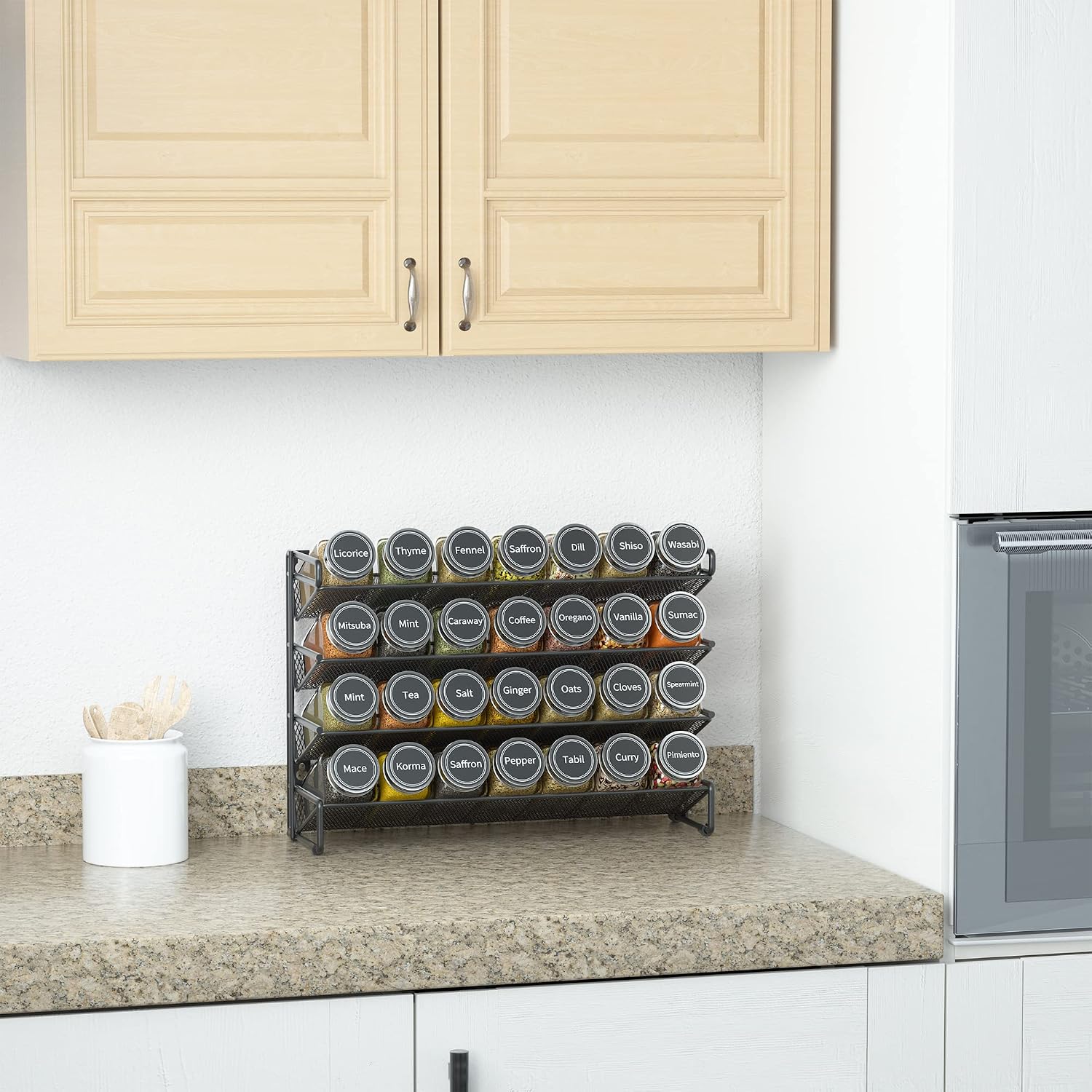
If your chili spice shelf has crossed into double digits — ancho, guajillo, pasilla, mulato, New Mexico red, chipotle, arbol, cascabel, and counting — you’ve probably felt the pain of digging through identical-looking jars to find the right one before your onions burn. A spice jar system is an organized set of containers plus some kind of storage structure (a rack, a drawer organizer, or magnetic strips on the fridge) that lets you see and grab every powder at once. Getting this right isn’t a minor kitchen-tidying project: when you’re building heat and flavor from five or six different dried chile powders, seconds of hunting and grabbing the wrong jar costs you momentum and, occasionally, a scorched pot.
This article is for the cook who has moved past a starter spice kit and is now managing a real collection — 20 or more chile powders, probably a mix of store-bought blends, Penzeys single-origin options, and maybe a few Rancho Gordo or Burlap & Barrel bags waiting to be decanted. The question isn’t whether to get organized. It’s whether a complete set (jars plus labels plus rack, all in one box) or a DIY approach (buy the jars you want, the rack you want, label them your way) gives you better value, better workflow, and better long-term flexibility.
Here’s where this comparison lands after weighing owner feedback, published product specs, and the practical math of a 24-plus jar collection.
Complete Sets vs. DIY: How the Approaches Stack Up
Before drilling into individual products, it helps to frame the core trade-off. Complete sets optimize for getting you functional in one afternoon — one purchase, consistent jar sizing, rack and labels included. DIY optimizes for fit: the exact jar capacity you need, the exact rack format your cabinet allows, and a label system that actually covers chile morita and ñora instead of garlic powder and paprika. Neither approach is universally better. The right answer depends on your cabinet geometry, how eclectic your collection is, and whether you’re starting from scratch or upgrading an existing setup.
The Three Tiers of Spice Jar Systems
Budget-Friendly Complete Sets: One Box, One Decision
Complete spice jar sets in the $30–$55 range are appealing for an obvious reason: you make one call and you’re done. The most frequently discussed option in culinary enthusiast communities pairs a tiered bamboo or wire rack with a matched set of 4–6 fl oz glass jars and a printed label catalog.
The workflow that makes complete sets actually sustainable — rather than a pretty organizing project that collapses in six months — is the bulk-to-small-jar refill loop. Keep large containers (Costco-sized bags or 8 oz pouches of frequently used powders) stored behind or below the rack, and refill the display jars from those as needed. Building that habit in from day one prevents the situation where you run out mid-cook and realize you have no idea where the backup bag is.
The label catalog included in most budget sets is broader than buyers expect. That said, for a serious chile collection, pre-printed labels are the weak point. How many sets include a pre-printed label for ají amarillo, chile negro, or pasilla negro? Very few. Plan to supplement with custom labels from the start.
The trade-off with complete sets is standardization. You get the jar size they decided on, the lid design they chose, and the rack footprint they built for. As Serious Eats noted in their spice jar review coverage, jar capacity is the most common buyer disappointment — a 4 oz by weight bag of ancho powder fills a 6 fl oz jar to roughly 80% capacity, but only barely fits (or overflows slightly) in a 4 fl oz jar. Check listed volume, not jar count, before ordering.
By the numbers:
- Most complete-set jars hold 4–6 fl oz by volume
- A 24-jar complete set: $30–$55
- DIY (separate jars plus rack): $45–$90 for comparable coverage
Spice
$20.99
In stock on Amazon
Check price on AmazonMid-Tier: Individual Jar Design Matched to a Separate Rack
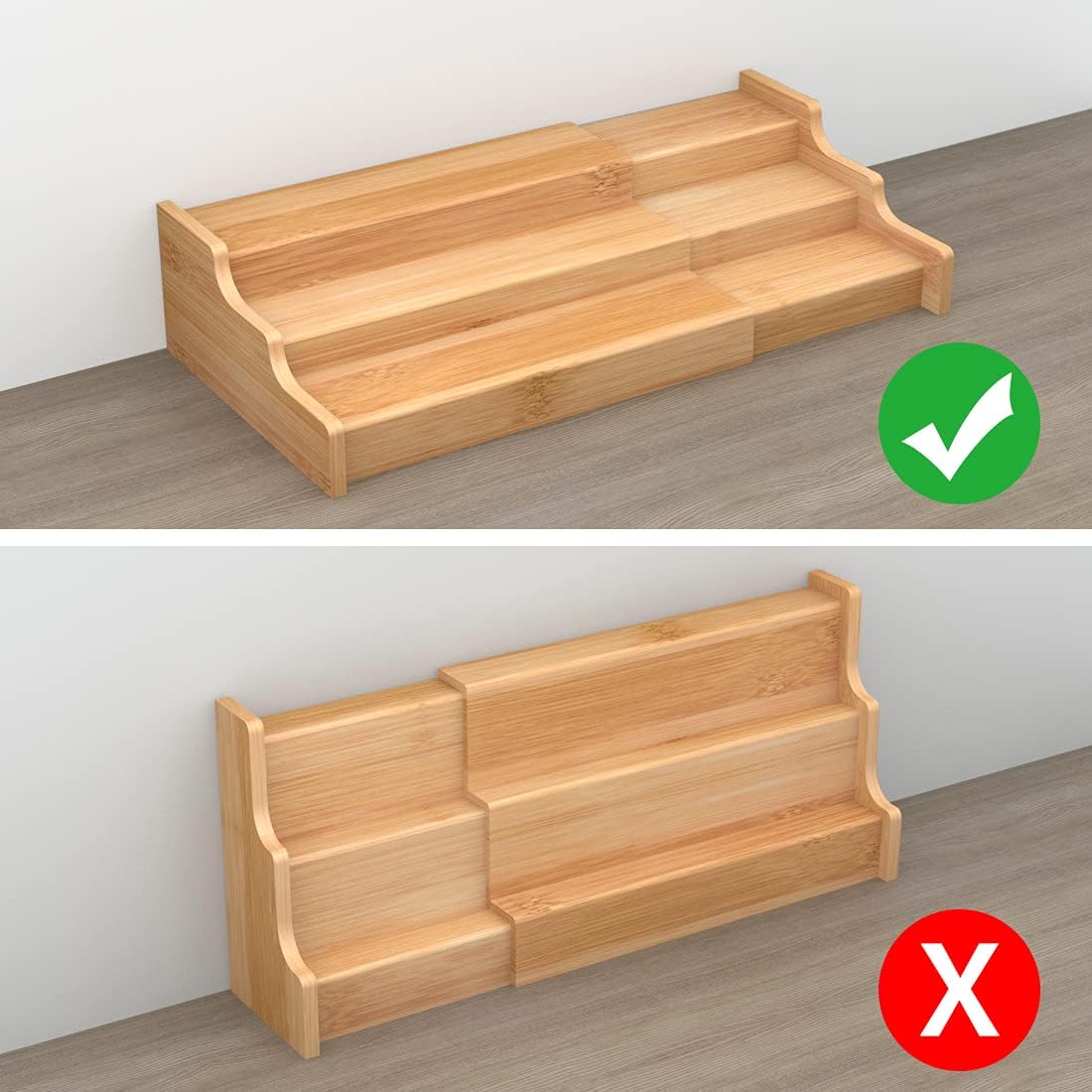
This is where the decision opens up if you have specific jar requirements. Glass jars purchased separately — 4 oz hexagonal glass jars are the most popular format among culinary enthusiast communities, based on Serious Eats’ spice jar coverage — can be paired with whichever rack format fits your actual cabinet dimensions. You’re not hoping the complete set fits your 11-inch cabinet shelf; you measured first and you know it does.
The jar design detail that matters most for chile powder specifically is lid format. A dual-opening lid — one wide opening for spooning directly into a pot or measuring cup, one fine-sprinkle opening for controlled dosing — is directly useful during a long simmer. Ancho, guajillo, and pasilla powders are coarse-ground enough that an uncontrolled wide-mouth pour can dump significantly more than intended, especially when the pot is steaming and your hand isn’t perfectly steady. The sprinkle opening doesn’t replace a scale for precision work, but it reduces the “too much too fast” mistake that has wrecked more than a few batches.
Food52, in their spice drawer organization coverage, emphasizes that airtight seals matter more for ground spices than for whole ones, because increased surface area accelerates oxidation. A mediocre lid on your ancho powder is actively costing you flavor over a three-month shelf period. When buying jars separately, verify the lid seal before committing to a 24-unit order.
Rack format at this tier: tiered cabinet shelves are the most space-efficient option. Apartment Therapy’s spice cabinet organization coverage identifies the “rear-jar shuffle” — digging past front-row jars to reach the ones in the back — as the single most-reported friction point in cabinet spice storage. A two- or three-tier shelf raises back rows into visible sightlines and eliminates that problem entirely. Most tiered cabinet shelves are designed for jars roughly 4–5 inches tall; if you’re buying taller 8 oz jars to accommodate bulk purchases, verify tier spacing before ordering.
LYNK
$39.99
In stock on Amazon
Check price on AmazonPremium Tier: Pull-Out Drawer Systems and Full Custom Builds
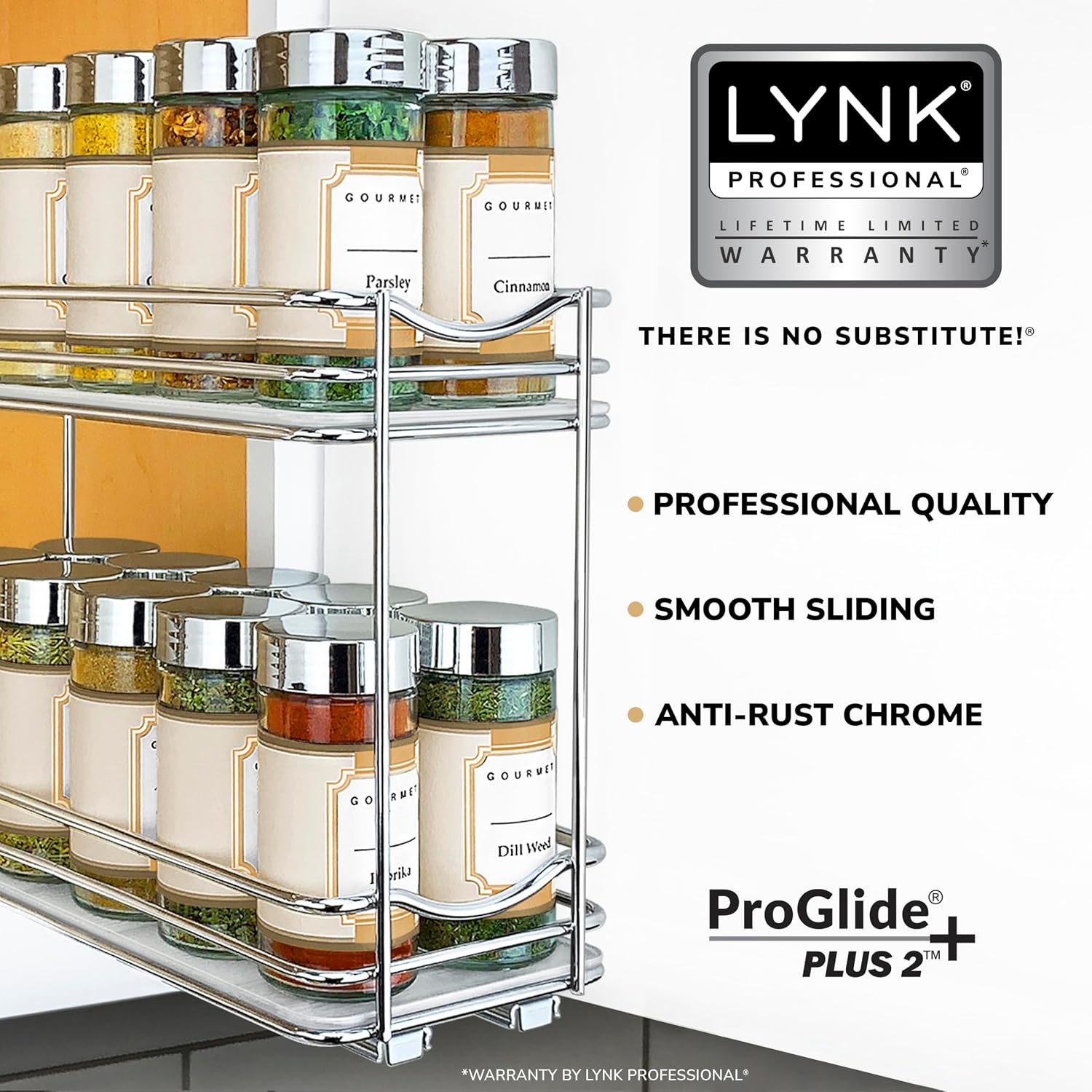
Pull-out drawer organizers represent the premium end of spice storage for one specific reason: top-down label visibility. When you pull the drawer out fully, every jar faces upward and you can read all labels simultaneously. For a 24-jar chile powder collection where eight of your powders are shades of dark red-brown, reading from above is meaningfully more useful than reading front-facing labels — especially if you’ve taken the time to design labels that are legible from above.
Wirecutter’s spice rack coverage notes that pull-out formats get the strongest owner satisfaction scores among people who have tried multiple storage approaches, specifically because the visibility problem is solved completely rather than partially. The friction reduction is real: owners consistently describe the moment of pulling the drawer and seeing everything as disproportionately satisfying.
Wire-construction pull-out organizers are available in tool-free tension-mounted versions (no drilling, width-adjustable) and screw-mounted versions that require cabinet installation. The tool-free versions are adequate for lighter glass jars. If you’re storing full 4 oz glass jars — which are heavier than they look when filled with dense dried powder — check the weight rating before assuming the tension mount will hold.
Bamboo-construction pull-out units are aesthetically warmer than wire options and sit at the higher end of the pull-out price range ($45–$75). A practical note worth knowing before ordering: bamboo is a hard material that can crack under direct screw pressure, so pre-drilling pilot holes is strongly recommended rather than driving screws directly into the material. That’s a real installation detail, not a dealbreaker, but it means having a drill and an extra 20 minutes available for assembly.
Magnetic fridge racks occupy a separate niche within the premium tier. They solve a specific problem — counter or cabinet space is at a premium and you want visual access without opening anything — but carry a weight capacity constraint. Wirecutter’s spice rack coverage notes that magnetic systems work best as a “frequently used” tier, holding the six to eight chile powders you reach for every cook, rather than primary storage for a full 20-plus collection. For full 4 oz glass jars at capacity, verify the per-jar weight rating; standard magnetic mounts are generally more reliable with acrylic jars or smaller 2 oz glass containers.
Le
$334.91
In stock on Amazon
Check price on AmazonThe Label Problem (and Why It Drives the DIY Decision)
For most kitchens, the label situation is a minor inconvenience. For a serious chile collection, it’s the deciding factor.
Included label sets in complete-set systems are designed for a general kitchen audience. A collection that includes chile morita, ñora, chile de agua, mulato, and pasilla negro will outrun any pre-printed catalog. When your powders are all dark red-brown and you’re moving fast, a label that makes you slow down to read carefully is a label that’s failing its job.
Food52’s spice organization coverage recommends building differentiation cues into your label design rather than relying on text alone. Practical options for a chile collection:
- Color-code by heat tier using colored label borders or adhesive dot stickers (mild / medium / hot) in addition to text
- Include flavor notes in small print — “earthy-sweet” for ancho, “fruity-bright” for guajillo — so you’re reading intent, not just name
- Design labels for your rack orientation — top-reading labels for pull-out drawers, front-reading labels for tiered shelves
A Dymo label maker or a simple printed paper label with clear tape over it performs as well as any premium label set. The investment is time, not money.
Frequently Asked Questions
Will a full 4 oz bag of chile powder fit in a standard spice jar from a complete set? Most complete-set jars are listed by fluid ounce volume (typically 4–6 fl oz). A 4 oz by weight bag of dried chile powder is less dense than liquid and usually fills a 6 fl oz jar to about 80% capacity. It will fill a 4 fl oz jar close to the brim or slightly over, depending on how finely the powder is ground. Check listed volume — not jar count — before ordering.
Can you skip the included label stickers and use custom labels on complete-set jars? Yes. Most complete-set jars have smooth-surfaced label panels that accept aftermarket labels cleanly. Owners routinely skip included stickers entirely in favor of printed labels or a label maker. For a chile powder collection, custom labels are the better choice regardless — pre-printed sets rarely include specific varietals beyond generic “chili powder.”
Do pull-out drawer organizers require drilling? It depends on the model. Tension-mounted pull-outs require no drilling and adjust to cabinet width without tools. Screw-mounted versions, including bamboo-construction pull-outs, do require drilling — and pre-drilling pilot holes is strongly recommended for bamboo units to avoid cracking during assembly.
Will magnetic fridge racks hold 4 oz glass jars safely? Standard magnetic racks are rated for lighter jars. For full 4 oz glass containers, check the per-jar weight rating before purchasing. Acrylic jars or smaller 2 oz glass jars are more reliable for magnetic mounting; 4 oz glass at full capacity is at or beyond the limit for most standard magnetic systems.
What’s the most reliable way to tell similar-colored chile powders apart quickly? Combine text labels with a color-coded heat indicator and, if your rack is a pull-out, design labels to be read from above rather than from the front. Dark red powders from ancho, guajillo, cascabel, and New Mexico red are nearly visually identical at a glance — a secondary color cue saves real time mid-cook.
The Decision Rule
Starting from zero and want one purchase: a complete set with a tiered shelf gets you functional in an afternoon. Accept the label limitations and build your own custom label layer on top from the start.
Cabinet depth under 12 inches or a deep drawer: a pull-out organizer with separately purchased jars gives you top-down visibility that front-facing racks cannot match.
Counter and cabinet space are genuinely constrained: go magnetic for your daily-use six to eight chiles, and keep the full collection in a tiered shelf in a secondary cabinet — the access friction is acceptable because you’re not reaching for it mid-cook.
Jar lid design is the primary concern: buy dual-lid jars separately and pair them with whatever rack format fits your space. The sprinkle-control lid is worth prioritizing for a collection where getting the heat balance right on the first pour matters more than convenience.
A 20-plus chile powder collection is a real culinary asset. The system you put it in should make that collection faster to use, not just prettier to look at.