If you’ve been cooking serious chili for more than a few months, you’ve probably crossed a threshold that snuck up on you: your spice situation stopped being a drawer and started being a problem. Where you once had one generic “chili powder” — a pre-blended mix of ground chiles, cumin, garlic, and other spices sold as a single product — you now have a growing collection of individual dried chile powders, each ground from a single variety of pepper. Ancho (a dried poblano, deep and chocolatey), guajillo (fruity and bright), mulato (earthier, more tobacco-dark than ancho), cascabel, pasilla, New Mexico — each one behaves differently in a pot and contributes a distinct layer to the final bowl. When you’re working with five varieties, a rough grouping is fine. When you’re working with twenty or more, a real system isn’t optional anymore. This article is about building that system: how to categorize your powders by the logic that actually matters for cooking, how to store them so they stay potent, and how to label and arrange them so you can reach for exactly what you want without stopping to read every jar.
Why the Usual “Alphabetical by Name” System Breaks Down
Alphabetical storage is borrowed from pantry-organization content written for general audiences. For a diverse spice shelf, it’s fine — you need paprika, you find it under P. But for a collection anchored around dried chile powders, alphabetical order actively works against you. Here’s why: the distinctions that matter when you’re building a chili aren’t the chile’s name — they’re its heat level, its flavor profile, and whether it’s a base note or a finish note in your blend.
Consider a Saturday afternoon batch. You want a foundation of mild, earthy depth, a secondary layer of fruity brightness, and a controlled spike of heat that doesn’t bury the beef. In that workflow, you’re reaching across three functional categories. If your shelf is alphabetical, you’re scanning past chipotle to get to guajillo, then circling back through mulato and New Mexico before landing on serrano. Every jar-read is a context switch that breaks your cooking rhythm.
Serious Eats’ writing on spice organization consistently emphasizes grouping by use case rather than by name — a principle that applies with particular force here, because chile powders overlap in naming conventions in ways that create genuine confusion. “Pasilla” means different things in different regions; in some Mexican culinary traditions it refers to the dried chilaca, while in parts of California it’s used for the poblano-derived powder sold elsewhere as ancho. Saveur’s guide to dried Mexican chiles notes these regional naming variations explicitly and recommends sourcing from suppliers who identify chiles by both common name and botanical or regional designation.
The solution isn’t memorizing every naming convention. It’s building a shelf organized by the attributes you reach for first when you’re actually cooking.
The Three-Axis Framework: Heat, Base vs. Accent, and Smoke
Before any physical organization happens, you need a mental model. Here’s the one that pays off most quickly in actual kitchen use.
Axis 1: Heat level. Not a binary hot/mild split, but a working three-tier: mild (ancho, mulato, guajillo, New Mexico/Hatch), medium (pasilla, cascabel, chipotle at moderate doses, California), and hot (arbol, cayenne, serrano-derived powders, pequin). Your hand goes to the right section before your eyes read a label.
Axis 2: Base note vs. accent. Base powders are your volume players — you might use two to four tablespoons of ancho or guajillo in a pot. Accent powders are your precision additions — a half-teaspoon of chipotle morita, a pinch of urfa (a Turkish chile variety with dark, raisin-like characteristics, increasingly available through specialty suppliers like Burlap & Barrel and Diaspora Co.). Keeping these physically separate prevents the mistake of grabbing a potent accent powder at tablespoon scale.
Axis 3: Smoked vs. unsmoked. This axis crosses the first two, but it’s worth calling out separately. Chipotle is a smoked jalapeño; morita is a specific smaller, fruitier smoked jalapeño variety. Smoked powders add a campfire dimension that’s transformative in the right context and distracting in others. Aggregated reviews on spice-focused retail communities consistently flag the “accidentally too smoky” batch as one of the most common intermediate-cook errors — and it’s almost always a labeling/grouping failure.
The Numbers That Make the Case for a Real System
A quick sense of scale:
- A fully built intermediate-practitioner shelf typically holds 18–28 individual chile powder varieties
- Rancho Gordo’s current dried chile selection (as of their 2025–2026 catalog) lists 14+ single-origin whole dried chile varieties, most of which grind into distinct powders
- Flavor volatiles in ground spices — the compounds that give each powder its distinctive aroma — degrade measurably after 6–12 months when stored in light or heat, per Cook’s Illustrated’s analysis of spice freshness
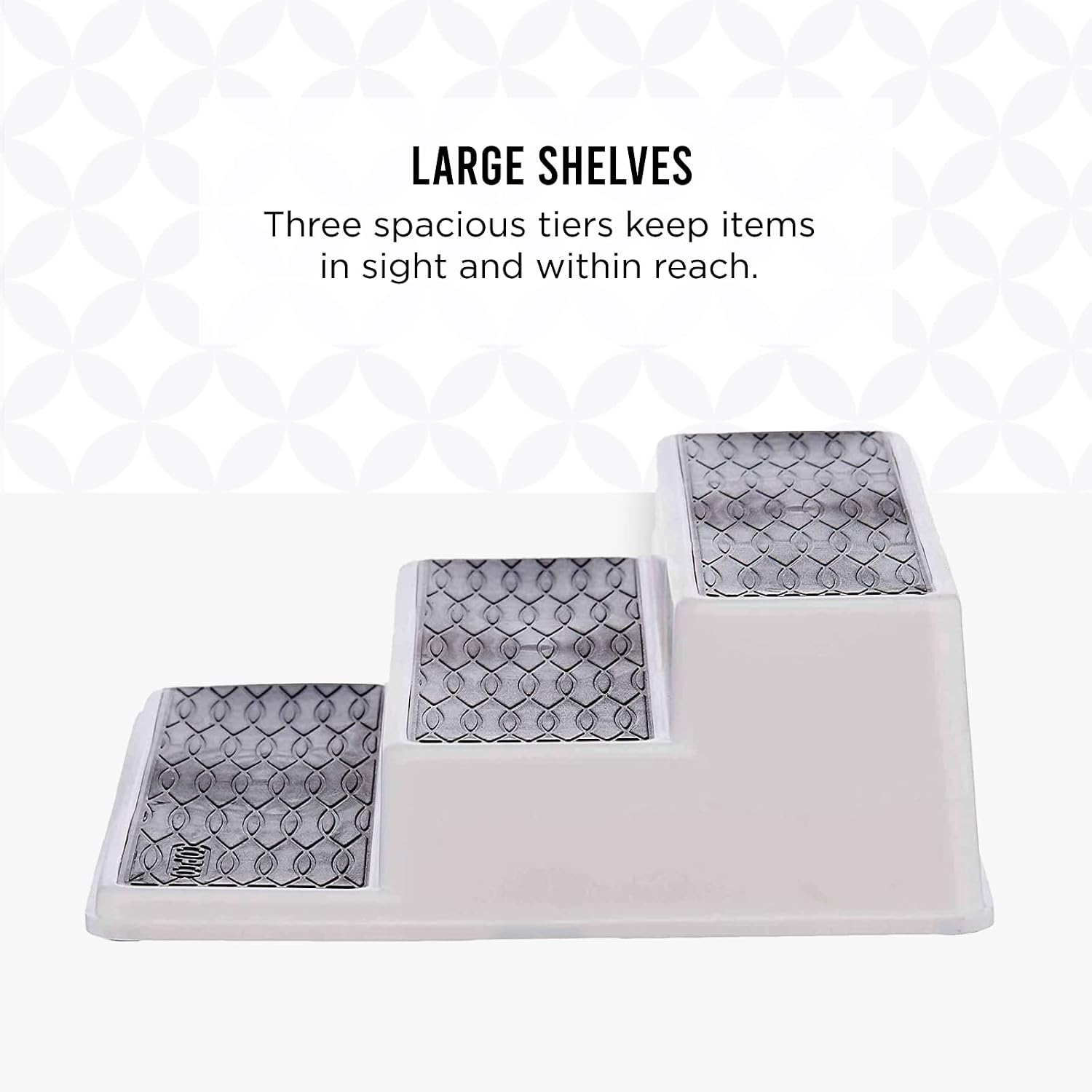
- A well-designed tiered drawer insert or pull-out spice rack can be sourced for $25–$65, making storage infrastructure the lowest-cost upgrade available to most intermediate cooks
Physical Storage: What Actually Protects Potency
Organization and storage are related but distinct problems. Solving the organizational logic while leaving powders in original packaging — often paper bags with poor light protection and no reliable seal — means your system won’t hold. Food52’s guidance on building an effective spice shelf identifies three enemies: heat, light, and air. Dried chile powders are more susceptible to all three than most spices because their volatile aromatic compounds (including capsaicinoids, which carry both heat and flavor) oxidize relatively quickly once ground.
The practical implications:
Containers. Uniform, opaque or dark-tinted glass jars with airtight lids are the standard recommendation from most culinary sources. 4-ounce wide-mouth mason jars work and are cheap. Dedicated spice jars from OXO or Weck at the 4–6 oz size are slightly cleaner and stack or nest more reliably if drawer storage is your plan. The key outcome: every container is the same form factor so your shelf reads visually as a system rather than a pile.
Location. Away from the stove. This sounds obvious, but the magnetic spice rail mounted two feet from an active burner — popular in small kitchens — is exactly the wrong environment for chile powders you’ve invested real money sourcing. A lower cabinet with a pull-out insert, or a pantry shelf at eye level with a door that closes, is the functional standard. Apartment Therapy’s kitchen organization coverage consistently identifies the “spice drawer adjacent to the range” as the single most common source of premature spice degradation in home kitchens.
Volume. Only decant what you’ll use in 6–8 months. Keep bulk or backup supply in original sealed packaging in a cool, dark location — a back pantry shelf or even a refrigerator drawer works well for high-investment small-batch powders like single-origin varieties from Burlap & Barrel or Diaspora Co. smoked spices. Refrigeration is mildly controversial in culinary literature (condensation risk when returning to room temp), but for powders you’re using slowly, the cold-storage benefit outweighs the risk if you let the jar return fully to room temperature before opening.
Labeling: The One Place Where Over-Engineering Pays Off
Most spice organization systems fail at the label, not the container. A label that reads only “Ancho” is insufficient once you’re sourcing from multiple suppliers with meaningfully different flavor profiles. By mid-2026, the spread between a commodity grocery-store ancho powder and a current-harvest single-origin ancho from Rancho Gordo or a boutique importer is significant enough to cook noticeably different batches. If you can’t tell them apart on the jar, you can’t make intentional decisions.
A complete label for an intermediate-to-serious cook’s jar includes:
- Chile name (common + any regional clarification if needed — “Pasilla (chilaca)” or “Ancho (poblano)”)
- Supplier (abbreviate if needed — “RG” for Rancho Gordo, “B&B” for Burlap & Barrel)
- Harvest or pack date (the month/year you opened or ground the powder — not the purchase date)
- Heat tier (a simple 1-3 marker — “M” for mild, “Med” for medium, “H” for hot — works fine and makes shelf-scanning fast)
Printed labels on a standard label sheet are more durable than handwritten masking tape, which yellows and loses adhesion. A simple template in any word processor, printed on Avery 1” round labels, takes about 20 minutes to set up and keeps everything consistent. For practitioners who are grinding whole dried chiles to order rather than buying pre-ground powder, add a “ground on” date — freshly ground chile powder has noticeably more volatility and brightness, and knowing when you ground a batch helps you rotate intelligently.
Arranging the Shelf: A Decision Rule That Scales
Once containers are standardized and labels are complete, the physical arrangement follows from your cooking workflow. Here’s the framework that scales cleanly from 20 to 40+ jars:
Zone 1 (prime real estate, front-center): Your five to seven most-used base powders. For most chili-focused cooks, this is some combination of ancho, guajillo, New Mexico, and mulato in the mild tier, plus chipotle in the medium-smoke tier. These are the ones your hand reaches for without looking.
Zone 2 (secondary reach, back or second tier): Medium-heat accents and specialty varieties. Pasilla, cascabel, dried arbol (if you prefer it over fresh cayenne), urfa, and any current-season acquisitions you’re working through.
Zone 3 (dedicated hot section): High-heat powders — arbol at full concentration, cayenne, pequin, ghost or scorpion derivatives if you work with them. Physical separation here is a practical safety measure, not just organization for its own sake. Grabbing a tablespoon of cayenne when you meant guajillo is a batch-ending mistake.
Zone 4 (rotation/backup row): Jars within two months of rotation out, or powders you use rarely. These can go behind Zone 2 or in a separate section entirely.
If X, then Y — the decision rule:
- If you have fewer than 12 varieties, a single tiered drawer insert organized by heat level is sufficient. Don’t over-engineer the system yet.
- If you have 12–25 varieties, two-zone organization (base powders / accents + heat) in dedicated opaque jars with full labels is the right investment. Expect to spend 90 minutes setting it up once.
- If you have 25+ varieties including rotating seasonal and single-origin acquisitions, treat the shelf like a living inventory. A simple spreadsheet (supplier, harvest date, quantity remaining, notes on flavor profile) takes about 10 minutes to maintain and pays back dividends when you’re mid-batch and need to know whether your backup ancho jar matches the one you just finished.
The common thread across all three tiers: the moment you know what you’re reaching for, the system should get out of the way and let you cook.