If you’ve ever reached for your guajillo powder — guajillo (gwah-HEE-oh) is a dried red chile, mild to medium-hot, with a fruity, slightly tannic flavor — only to find three mystery jars of paprika and no guajillo in sight, you already understand the problem this article is solving. For most home cooks, a spice cabinet works fine at eight or ten jars. But a dedicated chili cook building a serious pantry hits a wall somewhere around fifteen jars: the ones in back become invisible, you lose track of what you have, and you end up buying duplicates of things you already own. That’s not a character flaw. It’s a storage design failure.
This article compares four storage formats — tiered cabinet risers, pull-out drawer racks, a bamboo pull-out system, and magnetic fridge mounts — against the specific demands of a 20-plus-jar chile collection, where you might be juggling ancho, mulato, pasilla, puya, California, Hatch, New Mexico, árbol, chipotle, cascabel, and a half-dozen custom blends side by side. The goal is a clear decision framework: which format fits which kitchen situation, and what the tradeoffs look like when your collection is larger and more specialized than a standard grocery-store spice rack is built to handle.
| EDITOR'S PICKLYNK PROFESSIONAL® Pull Out Spi… | Mid-tierSpice Rack Kitchen Cabinet Orga… | Budget pickCopco 3-Tier Cabinet Spice Rack… | |
|---|---|---|---|
| Mounting | Pull-out | Shelf | Shelf |
| Material | — | Bamboo | — |
| Tier count | — | 3 | 3 |
| Width | 4-3/8 in | — | 10 in |
| Expandable | — | ✓ | — |
| Color | — | Yellow | White/Gray |
| Price | $39.99 | $20.99 | $6.78 |
| See on Amazon → | See on Amazon → | See on Amazon → |
The Core Problem: Visibility Is the Only Metric That Actually Matters
Apartment Therapy’s 2025 guide “The Best Spice Rack Organizers for Every Type of Kitchen” makes a point worth leading with: the most common complaint across every storage category isn’t price, isn’t durability — it’s that people can’t see what they have. That complaint is amplified for chili cooks, because the difference between ancho and mulato powder looks nearly identical in a dark cabinet. You’re not just organizing by alphabetical order; you’re organizing by variety, heat level, and sometimes harvest year.
Visibility, then, is the single variable worth optimizing around. Every other feature — material, price, install complexity — is secondary. The four formats compared below each solve the visibility problem differently, and which solution is right for you depends almost entirely on your cabinet depth, your jar height mix, and whether you’re renting or own the walls.
The Four Storage Formats, Head to Head
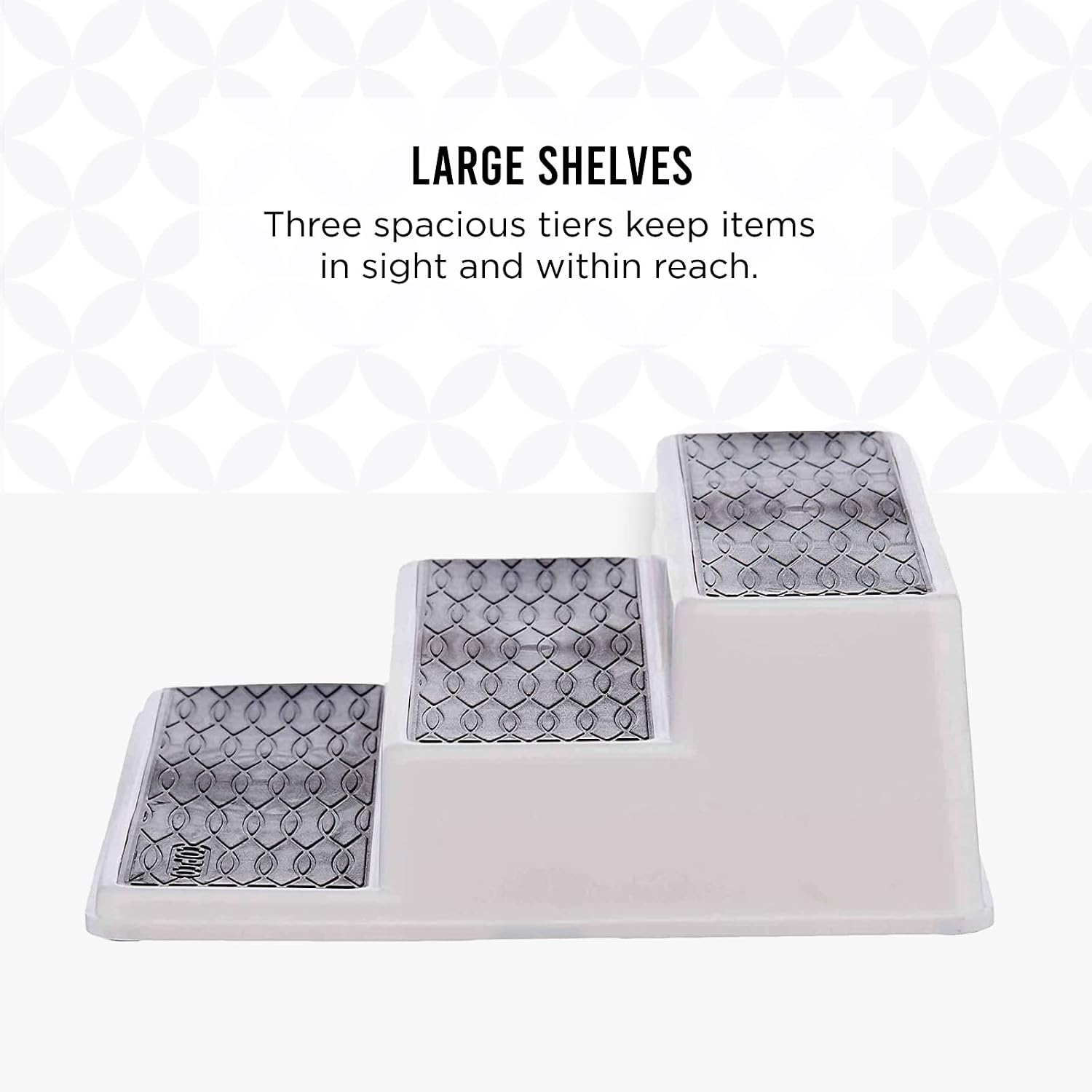
Budget Pick: Copco Two-Tier Turntable (Tiered Cabinet Riser)
The Copco Non-Skid Turntable in its two-tier version is one of the most consistently recommended entries in the tiered-riser category. Wirecutter’s “The Best Spice Racks” (updated 2025) and Apartment Therapy’s 2025 guide “The Best Spice Rack Organizers for Every Type of Kitchen” both highlight tiered risers as the most accessible starting point for cooks upgrading from a flat single-shelf setup. The reason is structural: the stepped riser design means every label faces outward rather than pointing at the ceiling, and the back row is raised to near-eye level when you open the cabinet door.
For a flat single-shelf setup, the back row disappears. A stepped two-tier riser puts the back row at a readable height without pulling anything out. That’s not a small thing when your collection includes a single-varietal pasilla negro powder, a smoked specialty spice, and a house blend sitting side by side in similar-sized jars.
The honest tradeoff: Tiered risers work well when your jars are uniform in height. They start to struggle with a mixed collection — a 4-inch standard jar next to a 6-inch bulk Frontier container creates a visibility problem in the back row that the riser’s step height wasn’t designed to solve. Food52’s “How to Organize Your Spice Cabinet Once and for All” (2024) specifically notes that mixed-height collections benefit from pull-out solutions where cabinet depth is the primary obstacle rather than label height.
Standard spice jar heights for reference: retail jars run 3.5–4.5 inches; bulk-format jars (16 oz Frontier, Watkins) run 5.5–6.5 inches. If your collection mixes these two formats, a tiered riser alone won’t be sufficient.
Best for: Collections under 20 jars, relatively uniform in height, in a standard-depth cabinet. The most economical starting point with zero installation friction.
Copco
$6.78
In stock on Amazon
Check price on AmazonMid-Tier Pick: SpaceAid Two-Tier Bamboo Cabinet Organizer
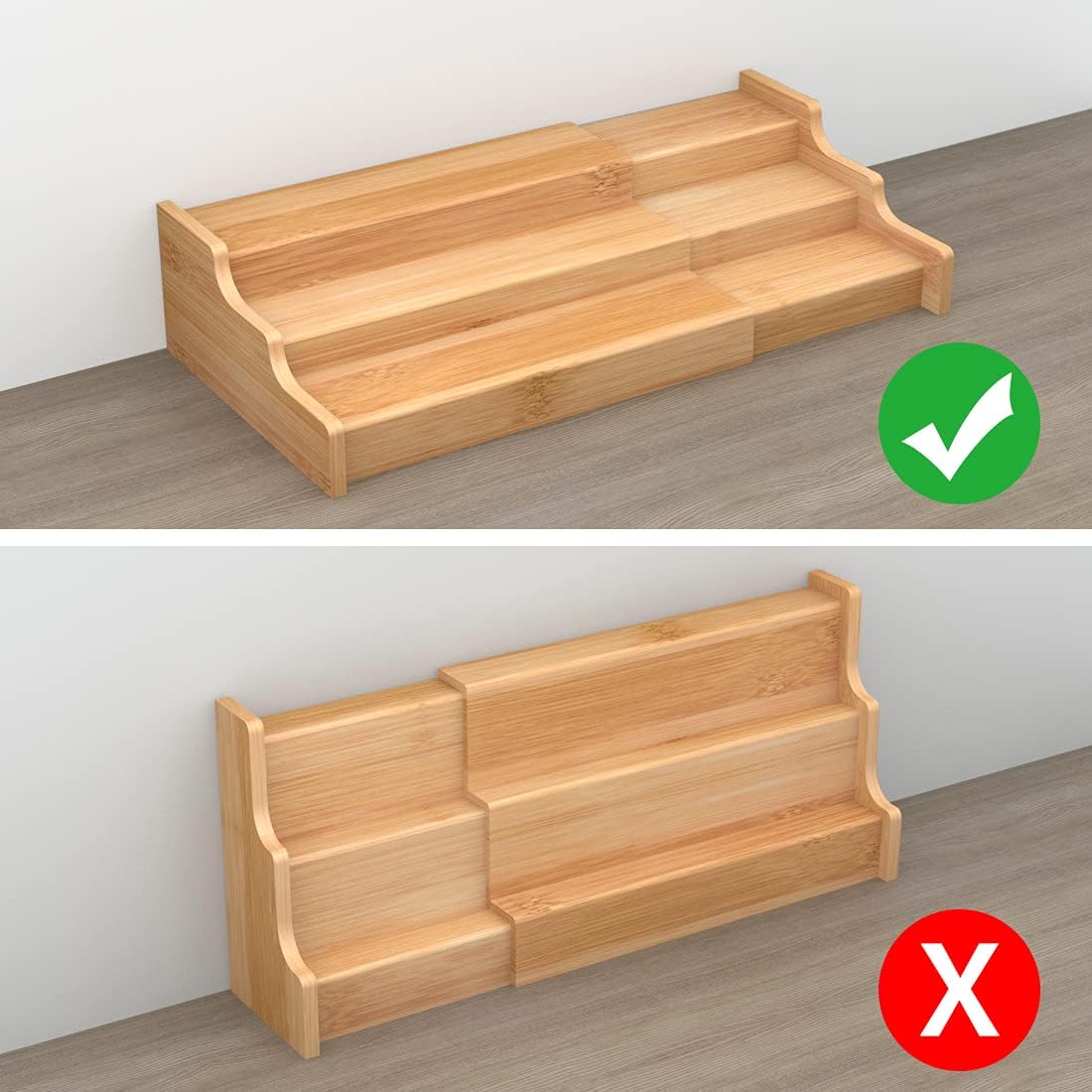
The SpaceAid bamboo pull-out occupies an interesting middle position: it looks warmer and more intentional than chrome wire, and it’s designed as a freestanding unit that slides in and out of a cabinet shelf without requiring hardware installation. For renters or anyone who doesn’t want to drill, that’s a genuine differentiator from the chrome wire pull-out category.
Capacity is a real asset here. Two tiers can accommodate 20-plus standard jars in many cabinets, which makes it a legitimate contender for a mid-size chile collection. The bamboo construction reads well aesthetically if your pantry is visible, which matters more than it probably should but genuinely does matter when you’re opening that cabinet five times during a long cook.
Serious Eats’ “The Best Way to Store Spices” (2024) addresses the decanting question that comes up with any pull-out format: for powdered spices, uniform jars with clear labels dramatically reduce wrong-jar grabs during an active cook. The SpaceAid bamboo system pairs well with a matching jar set for exactly this reason — your powdered ancho, guajillo, and pasilla all sit at the same height, labels facing forward every time you pull the organizer out.
Quality control note worth knowing: Multiple owner reports describe one or two plastic drawer components arriving cracked, attributed to over-tightening during factory box assembly. Inspect the plastic slide components immediately on unboxing rather than discovering the issue after you’ve loaded 25 jars. Customer service response in those cases is described as responsive in aggregated owner feedback.
The honest tradeoff: Bamboo is attractive and functional but it is a softer material than chrome wire or powder-coated steel. In a high-humidity kitchen environment — adjacent to a stove that runs hot during two-hour chili braises — bamboo can warp over time. If your spice storage lives next to significant heat or moisture, chrome wire is the more durable long-run choice.
Best for: Renters or anti-drill cooks with collections of 15–25 jars in standard-depth cabinets who want a no-hardware freestanding solution with a warmer aesthetic.
Spice
$20.99
In stock on Amazon
Check price on AmazonPremium Pick: LYNK Professional Slide-Out Cabinet Organizer
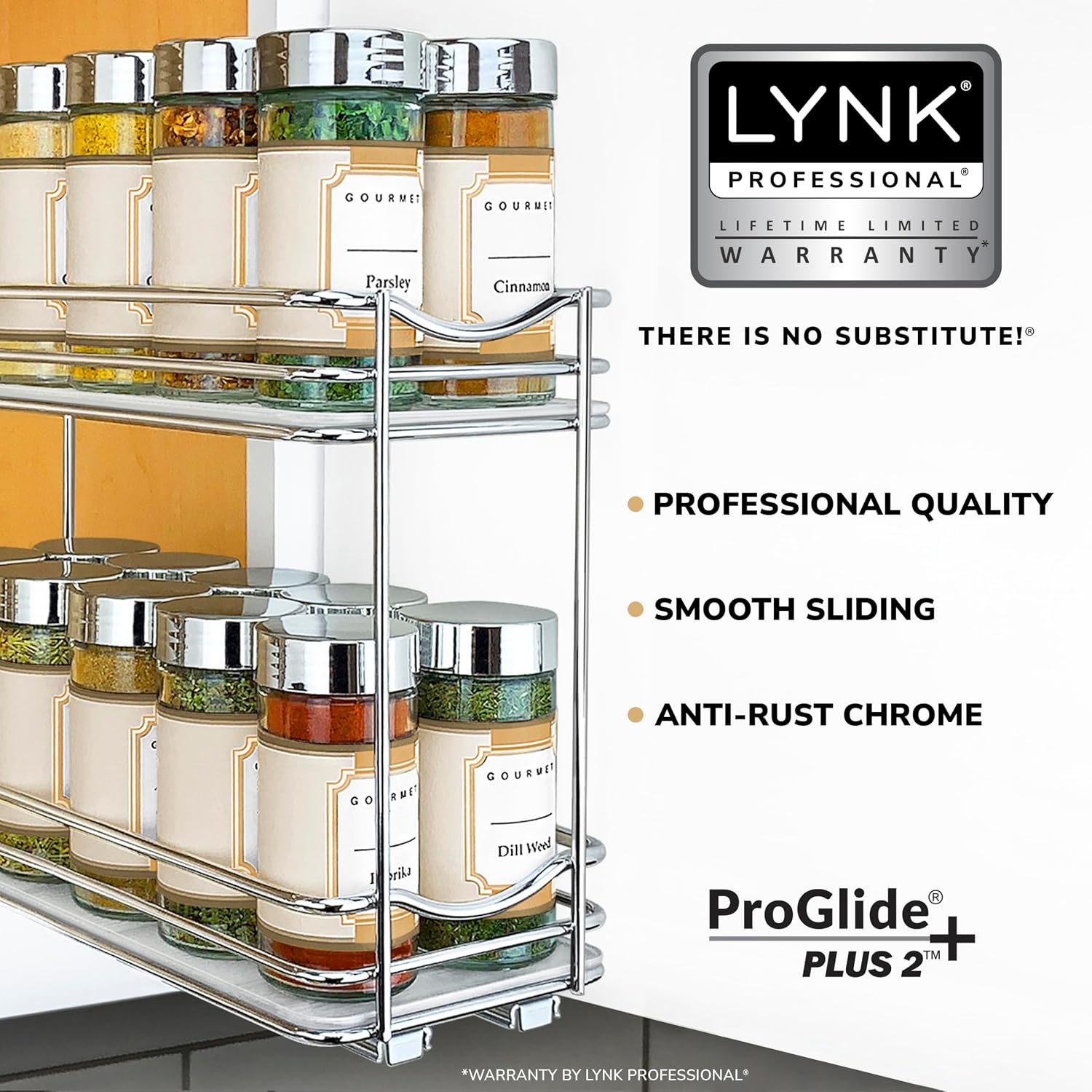
The LYNK Professional Slide-Out Cabinet Organizer is the recommendation for anyone dealing with deep cabinets — the 18-inch or 24-inch-deep cabinets common in older kitchens where spice jars have been staging disappearing acts for years. The core experience that owners describe repeatedly: they had no idea how many spices they were doubling up on until the pull-out was installed and everything came to the front for the first time. That is precisely the chili cook’s problem made literal.
A deep cabinet with 25 jars is functionally a cave; the back third might as well not exist. Pull-out racks solve depth problems that tiered risers cannot address. The LYNK chrome wire design is open enough that labels remain readable when the rack is extended, and the slide mechanism holds up well under near-capacity loads based on owner accounts.
Wirecutter’s “The Best Spice Racks” (updated 2025) frames the pull-out rack category as the most effective solution for deep-cabinet situations where the primary failure mode is inaccessibility rather than label orientation. Serious Eats’ “The Best Way to Store Spices” (2024) adds a useful capacity note: how many jars actually fit depends almost entirely on jar diameter, not just jar count. Standard 2.5-inch-diameter spice jars fit roughly 12–16 per tier on a standard 11-inch-wide pull-out. Mixed with wider 3-inch jars — common in bulk-format or artisan packaging — that drops to 8–10 per tier. Plan for the lower number if your collection is heterogeneous. Two tiers fully loaded with standard jars can realistically house 24–30 jars, which is enough for a competition-grade chile collection.
The honest tradeoff: Pull-out racks require cabinet hardware installation — drilling pilot holes, aligning slides — which is a 30-to-60-minute project that renters and reluctant DIYers will find prohibitive. The long-run payoff in a deep cabinet is high, but the install friction is real and worth accounting for before purchase.
Best for: Homeowners with deep cabinets (18 inches or more), collections over 20 jars, and mixed-height jar formats that would overwhelm a tiered riser.
LYNK
$39.99
In stock on Amazon
Check price on AmazonSupporting Systems Worth Knowing
Jar-and-Label Sets: SpaceAid Spice Jar Set with Labels
This category answers a question specific to the chili audience: what do you do when your spices arrive in non-uniform packaging — a resealable bag from an artisan purveyor, a kraft paper pouch, a bulk-format zip-lock from a dried chile supplier — and you want them all to live in the same organized system?
The SpaceAid jar-and-label set, particularly the version with an expanded label catalog, gets consistent owner praise for one specific reason: the label library is extensive enough to include unusual and specialty spices that don’t appear on standard grocery-store label sets. For a chili cook sourcing Hatch, puya, California Mild, or Anaheim powder, this matters. Cheaper label sets top out at common grocery spices and leave you writing “PUYA” in Sharpie on a blank label that never quite adheres correctly.
Food52’s “How to Organize Your Spice Cabinet Once and for All” (2024) and Serious Eats’ “The Best Way to Store Spices” (2024) both address decanting directly. The shared conclusion: decanting into uniform jars is worth the time investment if your collection is large enough that visual uniformity aids retrieval speed — which, at 20-plus jars, it does. The counterargument is valid for whole dried chiles: large dried pods (ancho, mulato, pasilla negro) don’t fit standard spice jars and are better stored in sealed glass jars with wider mouths, or in their original sealed bags inside an airtight labeled container. Powders: decant. Whole pods: don’t force it.
Magnetic Fridge Mounts: HuggieGems Magnetic Spice Containers
The HuggieGems magnetic spice containers address a different problem than the cabinet solutions above: counter-space pressure during an active cook. If you’re running a five-chile mole-base chili and pulling spices in rapid succession, having your eight most-used jars on the fridge door rather than inside a cabinet genuinely reduces friction per reach.
Owner accounts describe the magnetic hold as sturdy for standard glass spice jars filled with powder, with no sliding reported under normal kitchen conditions. However, the framing that appears consistently in those reports is instructive: owners describe HuggieGems as a counter-space solution during active cooking sessions, not a full-collection organizer. A 20-jar chile collection cannot live on magnetic fridge mounts; the format caps out around 8–12 jars before your fridge door becomes cluttered enough to undermine the visibility benefit you installed them to achieve.
The honest tradeoff: Magnetic mounts are an excellent complement to a cabinet solution, not a replacement. If your most-reached-for chiles — your workhorse ancho, your default cayenne, your cumin — live on the fridge door and the specialty varietals live in a pull-out, that’s a genuinely functional two-tier system. The HuggieGems mounts earn their place as the last-mile solution for the jars you reach for on every single cook.
Frequently Asked Questions
Can tiered cabinet risers accommodate tall bulk spice jars like a 16 oz Frontier or Watkins container?
Generally, no — not comfortably. Standard two-tier risers are designed around 3.5–4.5-inch jar heights. A 16 oz Frontier jar runs 5.5–6.5 inches and will either not clear the upper tier or will block the row behind it. If you’re running any bulk-format containers, a pull-out rack gives you more flexibility because the rows are defined by the slide width rather than a fixed step height.
How many standard-size spice jars does each pull-out rack actually hold in a real cabinet?
In a real 11-inch-wide cabinet, plan for 12–16 standard McCormick-size jars per tier for chrome wire pull-outs. Mixed-diameter collections drop that to 8–10 per tier. The bamboo SpaceAid two-tier runs similarly. Two tiers of pull-out, fully loaded with standard jars, can realistically house 24–30 jars — enough for a competition-grade chile collection.
Is it worth decanting chile powders into uniform jars?
For powders: yes. Uniform jars with clear labels dramatically reduce the wrong-jar grab during an active cook, and airtight glass extends shelf life relative to loosely sealed original packaging. For whole dried chiles: skip the decant. Large pods don’t fit standard spice jars and are better stored in their original sealed packaging inside a labeled airtight container.
How strong are magnetic fridge spice racks — will they hold a full glass jar without sliding?
Based on aggregated owner reports, the magnetic hold on HuggieGems containers is sturdy for standard glass spice jars filled with powder, with no sliding noted under typical kitchen conditions. Magnetic mount products in this category are generally not designed for jars above 4 oz; heavier or larger jars are outside the intended use case.
How do you label jars for single-variety chile powders with names that don’t appear on standard sets?
Two approaches work well. The SpaceAid label set includes enough specialty entries to cover most named varieties — Hatch, puya, California, New Mexico, guajillo, ancho, pasilla. For anything outside the pre-printed catalog, the blank labels in that system accept a fine-tip marker cleanly. A secondary approach used by competition cooks is a label maker set to a small font — it handles long descriptive names like “Rancho Gordo Hatch Green 2025 crop” in a way that handwriting often can’t.
The Decision Rule
Deep cabinet, 15-plus jars: Pull-out rack first, everything else second. The LYNK chrome wire pull-out solves the fundamental visibility-and-access problem that tiered risers cannot fix in a deep cabinet. Pair it with the SpaceAid jar-and-label set to standardize your decanted powders, and move your 8 most-used chiles to HuggieGems mounts on the fridge door during heavy cooking days.
Standard-depth cabinet, under 20 jars in uniform heights: The Copco two-tier riser gets you 80% of the benefit at the lowest cost and zero installation friction.
Renter or anti-drill: SpaceAid bamboo pull-out — inspect the plastic slide components immediately on unboxing, and you’ll have a freestanding solution that doesn’t require a single pilot hole.
The magnetic mounts are never a standalone answer for a serious collection. They’re the last-mile solution for the jars you reach for every single cook — not a replacement for the cabinet work.