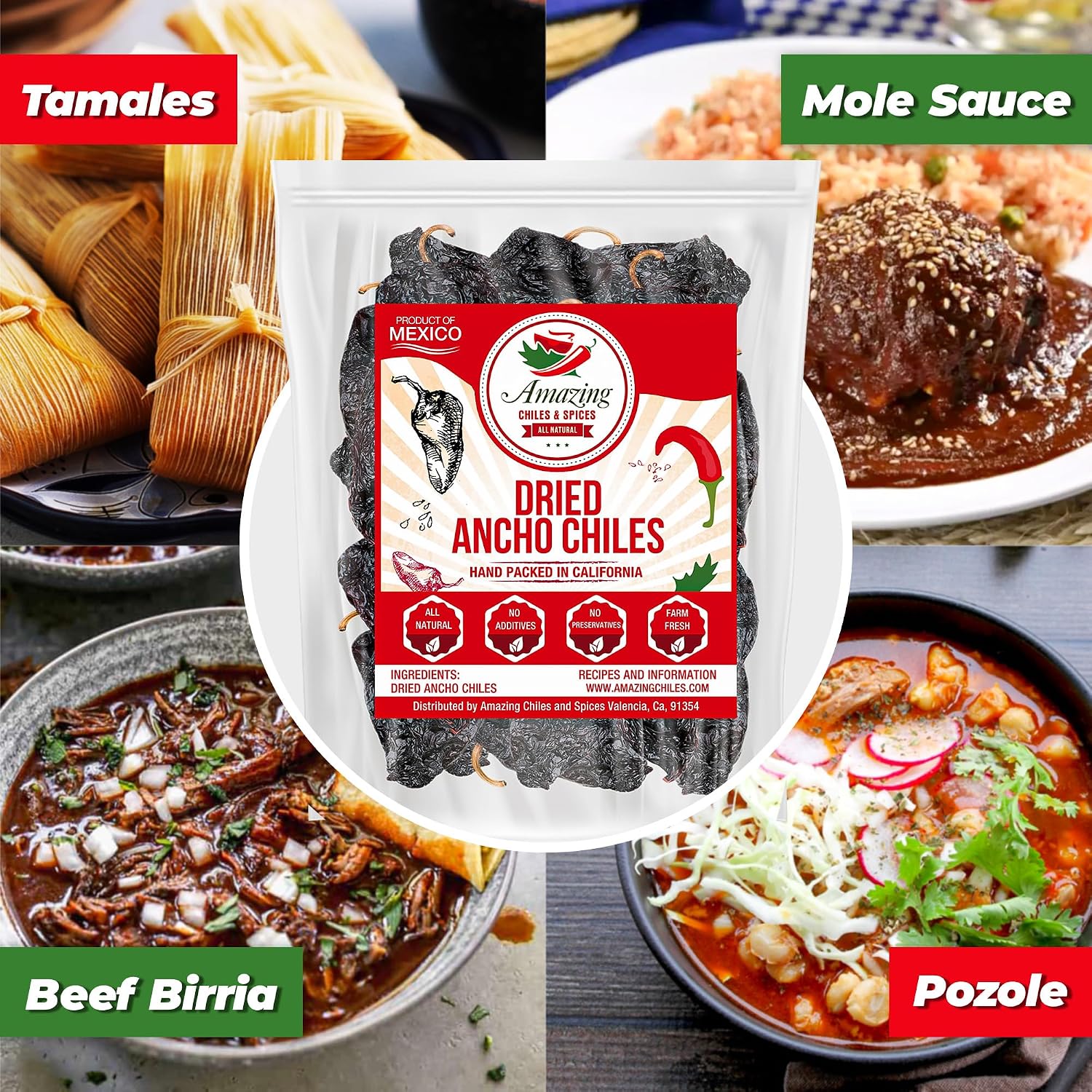
If you’ve ever torn open a bag of dried chiles and been greeted by a sharp, dusty smell and a handful of crumbling, brittle pods — that’s old-crop chile. Whole dried chiles (peppers that have been harvested ripe and slowly dehydrated to preserve their flavor) are one of the most powerful flavor tools a chili cook can have. When they’re fresh from a recent harvest, they smell faintly fruity, bend without snapping, and rehydrate into silky, full-bodied sauce. When they’re old, they taste like dried grass and bring nothing to the bowl. This guide is about learning to tell the difference before you commit to a pound of something you’ll regret — and then building a working pantry across the four varieties that matter most for scratch chili: ancho, guajillo, pasilla, and chipotle morita.
The key quality signal is pliability: a fresh dried chile should feel like a piece of soft, thick leather — pliant enough to fold without cracking. That single sensory test tells you more than color, origin labeling, or price. By the end of this article, you’ll know how to read a product listing for freshness cues, which varieties serve which roles in the pot, and how to push your whole dried chiles past their obvious uses into powder and paste.
| EDITOR'S PICKDried Peppers 6 Pack Bundle - A… | Mid-tierDried Ancho Chiles Peppers 4 oz… | Budget pickChile De Arbol 4oz - Dried Whol… | |
|---|---|---|---|
| Variety | 6 types | Single type | Single type |
| Chile type | Ancho, guajillo, etc. | Ancho | Arbol |
| Weight | 24 oz total | 4 oz | 4 oz |
| Stemless | — | — | ✓ |
| Bag type | — | — | Resealable |
| Price | $29.95 | $7.34 | $6.97 |
| See on Amazon → | See on Amazon → | See on Amazon → |
Why Pliability Is the Freshness Signal That Actually Matters
Dried chiles are a preserved food, but “preserved” doesn’t mean “indefinitely stable.” The aromatic compounds — the fat-soluble capsaicinoids and the volatile fruity esters — begin degrading once the chile is dried and exposed to air and light. A chile pod that was flexible and leathery six months ago can be completely brittle and flavor-depleted a year later if it sat in a warehouse or on a retail shelf without proper packaging.
Serious Eats’ guide to dried chiles notes that the fastest way to evaluate a whole dried chile is to try bending it: it should flex without cracking. A brittle pod is a stale pod, and a stale pod produces weak, one-dimensional sauce. Saveur’s dried chile guide reinforces the same point — color alone is unreliable because some varieties dry to a deep mahogany naturally, and sun-bleached old stock can look similar to current-crop pods on a screen.
What reviewers consistently say about pliable chiles: Across ancho listings, buyer reviews repeatedly describe the best bags as “soft and leathery,” “not brittle at all,” and showing “plump tenderness despite being dried.” For guajillo — the long, smooth-skinned red chile that forms the backbone of many Texas-style red chilis — buyers flag pliability as the dividing line between bags worth reordering and bags to avoid. Pasilla reviewers echo this. The pattern across all three varieties is consistent enough to treat pliability as a reliable quality filter when you can’t physically inspect the pod before buying.
The practical consequence for chili builders: A brittle ancho won’t rehydrate evenly. You’ll get thin sauce with flat, papery flavor — not the deep, raisin-dark richness that makes a proper red chile sauce worth the effort. A pliable ancho rehydrates into thick, mahogany paste in under 30 minutes.
The Four Varieties That Build a Scratch Chili Pantry
Ancho (Dried Poblano)
Ancho is the workhorse — the widest-shouldered, most flavor-layered dried chile on this list. Dried from the poblano pepper at full red ripeness, it delivers chocolate, raisin, and mild earthiness with a low-to-medium heat level (roughly 1,000–2,000 Scoville heat units). Epicurious’s dried chile overview identifies ancho as the most common base chile for mole and as essential to any serious chili Colorado.
For scratch chili builders, the 1 lb ancho format is worth prioritizing over smaller bags once you’re cooking regularly. Reviewers specifically call out listings where stems have been pre-removed and seeds are already loosened — this matters more than it might seem. Deseeding and destemming twelve to fifteen ancho chiles before a blending session is tedious, repetitive work. Pre-prepped pods save 10–15 minutes of hands-on time and produce a cleaner sauce with less seed bitterness.
How many for a batch? See the FAQ section below, but the short answer for a 6-quart pot is 4 to 6 whole ancho chiles rehydrated and blended into sauce — roughly 2 to 3 oz by weight.
Guajillo
Guajillo is the brightness counterpoint to ancho’s depth. Where ancho is earthy and dark, guajillo brings a clean, tannic berry-red acidity that sharpens a blended chile sauce and prevents it from tasting muddy. Food52’s chili pantry guide describes guajillo as the chile that “makes red chili taste red” — there’s a visual and flavor clarity it provides that ancho alone can’t deliver.
Pliability matters here just as much as with ancho. Stiff, cracking guajillo pods produce sauce with a slightly bitter, papery aftertaste. Fresh, leathery guajillo rehydrates to a smooth, bright crimson paste. Reviewers report that the best guajillo bags arrive soft enough to fold lengthwise and smell lightly fruity at bag-open — a positive indicator before you even start cooking.
The blend logic: Many experienced chili builders run a 2:1 or 3:1 ancho-to-guajillo ratio in their base sauce. Ancho provides body and low earthy heat; guajillo adds clarity and color saturation. This is the starting framework — adjust toward more guajillo if your past batches have tasted heavy or muddy.
Pasilla
Pasilla (sometimes labeled “chile negro”) is the variety most home cooks underuse. Chile Pepper Madness’s rehydration guide notes that pasilla brings an earthy, slightly chocolatey depth that’s distinct from ancho — more herbal, less fruit-forward, with a heat level similar to ancho but a longer, more lingering finish. It’s also, as one buyer review notes, rarely found in retail spice stores — which makes sourcing it online both necessary and genuinely worth the effort.
The practical advantage cited most often in pasilla reviews: it grinds cleanly. A dry-toasted pasilla, cooled and run through a spice grinder or a Zassenhaus hand-grinder, produces fine, even powder with minimal seed fragment contamination. This makes pasilla particularly useful for chili builders who want to add dried chile powder mid-cook without rehydrating — dust in a tablespoon of ground pasilla 20 minutes before the finish line and you’ll add depth without additional liquid.
Chipotle Morita
Chipotle morita is a smoked, dried ripe jalapeño — smaller and darker than the more common chipotle meco, with a fruitier, more complex smoke character. The most useful sensory description across buyer reviews is almost poetic: dried figs and apricots behind deep smoky pepper. That’s not hyperbole — morita, at its best, carries genuine fruit complexity underneath the smoke, which makes it different in use from chipotles in adobo sauce (which taste more of vinegar and tomato paste than of the chile itself).
One reviewer of chipotle morita raised a practical tip worth repeating: if your morita pods arrive slightly too moist to grind cleanly, a brief 10-minute rest in a low oven (200–225°F) or a dry skillet over low heat will reduce moisture enough to make them grindable without torching the volatile aromatics. This is worth knowing before you jam a sticky morita into a spice grinder and end up with paste instead of powder.
Use in chili: One or two morita chiles per batch, rehydrated alongside your ancho and guajillo, adds smoky background complexity without the liquid-smoke harshness that chipotles in adobo can introduce at high volumes.
By the Numbers
| Chile | Heat Level (SHU) | Primary Flavor Notes | Chiles per 6-Qt Batch |
|---|---|---|---|
| Ancho | 1,000–2,000 | Chocolate, raisin, earth | 4–6 whole pods |
| Guajillo | 2,500–5,000 | Berry, bright, tannic | 2–4 whole pods |
| Pasilla | 1,000–2,500 | Earthy, herbal, chocolate | 2–3 whole pods |
| Chipotle Morita | 2,500–8,000 | Smoke, dried fruit, pepper | 1–2 whole pods |
SHU ranges sourced from the Epicurious dried chile guide and Chile Pepper Madness varietal index.
How to Shop for Fresh Dried Chiles Online
When you can’t bend the pod yourself, you’re reading for proxies. Here’s the decision framework:
Read the 3-star reviews first. One-star reviews often reflect shipping damage; five-star reviews are selection-biased. Three-star reviews are where buyers describe receiving brittle pods or seeds falling out in a concerning rather than helpful way. If multiple 3-star reviewers mention brittleness or “dried out,” skip the listing.
Look for harvest date or crop-year language. Some specialty suppliers — Rancho Gordo is the most commonly cited — label their dried chiles with crop year. Current-crop means harvested within the last 12 to 18 months. Avoid any listing where the seller doesn’t indicate freshness and where reviews reference “stale,” “no smell,” or “dusty.”
Packaging matters for shelf life. Resealable mylar or foil bags preserve aromatics significantly longer than paper or loosely sealed poly bags. Once you open a bag, store it in an airtight container away from heat and light.
Frequently Asked Questions
How do you rehydrate whole dried chiles for a chili sauce, and how long does it take?
Remove stems and seeds (or buy pre-prepped pods), then dry-toast them in a skillet over medium heat for 30 to 60 seconds per side — just until fragrant, not until they smoke heavily. Transfer to a bowl, cover with just-boiled water, and weigh down with a small plate. Steep for 20 to 30 minutes. The chiles will soften from leathery to fully pliable and slightly swollen. Drain (reserving a cup of the soaking liquid for your blender), and blend to a smooth paste. Chile Pepper Madness’s rehydration guide recommends against using rolling-boil water for the steep — it can make the skin bitter.
What does “leathery” mean when describing dried chile quality, and why does it matter?
Leathery means the pod retains enough residual moisture and intact cell structure to flex without fracturing — like a thick piece of dried fruit rather than a potato chip. It matters because leathery chiles rehydrate evenly into smooth sauce, while brittle chiles rehydrate unevenly, leaving papery fragments and producing thinner, less complex flavor. Pliability is the fastest freshness indicator you have.
Can you grind whole dried chiles into powder at home, and what equipment do you need?
Yes — and home-ground chile powder is noticeably more aromatic than pre-ground commercial product. Toast the dried chiles briefly in a dry skillet, cool completely, tear into smaller pieces, and run through a dedicated spice grinder (a blade-style coffee grinder reserved for spices works, as does a Zassenhaus or Peugeot hand-grinder for smaller batches). If the pods are too moist to grind cleanly — a common issue with chipotle morita — dry them briefly at 200°F before grinding. Pasilla is particularly noted by reviewers for grinding into fine, clean powder with minimal coarse fragments.
How many whole dried ancho chiles does a typical 6-quart chili recipe require?
Four to six whole ancho chiles is the working range for a 6-quart batch — roughly 2 to 3 oz by weight. This produces a sauce that’s deeply flavored without overwhelming the other elements. If you’re building a blended sauce with guajillo and pasilla alongside the ancho, lean toward four anchos and supplement with the other varieties. Competition cooks and high-concentration chile-forward recipes sometimes push to eight pods, but that’s a strong flavor statement that can read as bitter if your chiles aren’t fresh.
How long do whole dried chiles stay fresh in pantry storage after opening the bag?
Stored in an airtight container in a cool, dark location (a pantry or cabinet away from the stove), whole dried chiles hold their aromatic quality for 6 to 12 months after opening. Refrigeration extends this — the low humidity and cold temperature slow oxidation of the volatile aromatic compounds. Freezing whole dried chiles in a sealed bag is viable for longer storage, up to 18 months, with minimal quality loss. The tell that they’ve turned: no smell when you open the container, and pods that were pliable at purchase have become brittle.
The If/Then Decision Rule
If you’re building a scratch chili sauce for the first time, start with ancho only — a single-variety sauce is easier to calibrate, and ancho’s forgiving flavor profile covers a wide range of technique errors. Get comfortable with the rehydrate-and-blend process before you’re managing four varieties at once.
If you’re already comfortable with a single-chile base and your chili tastes good but flat or one-note, add guajillo at a 2:1 ancho-to-guajillo ratio in your next batch. That’s the most common practitioner upgrade, and the brightness shift is immediately obvious.
If your batches are dialed in and you’re hunting for complexity rather than correction, introduce pasilla or morita one at a time — not both in the same experiment. Add one new chile to your established base, hold everything else constant, and taste the delta. That’s the only way to actually learn what each variety contributes rather than chasing a moving target.
The bowl gets better when the sourcing gets intentional. Pliability is where that intention starts.