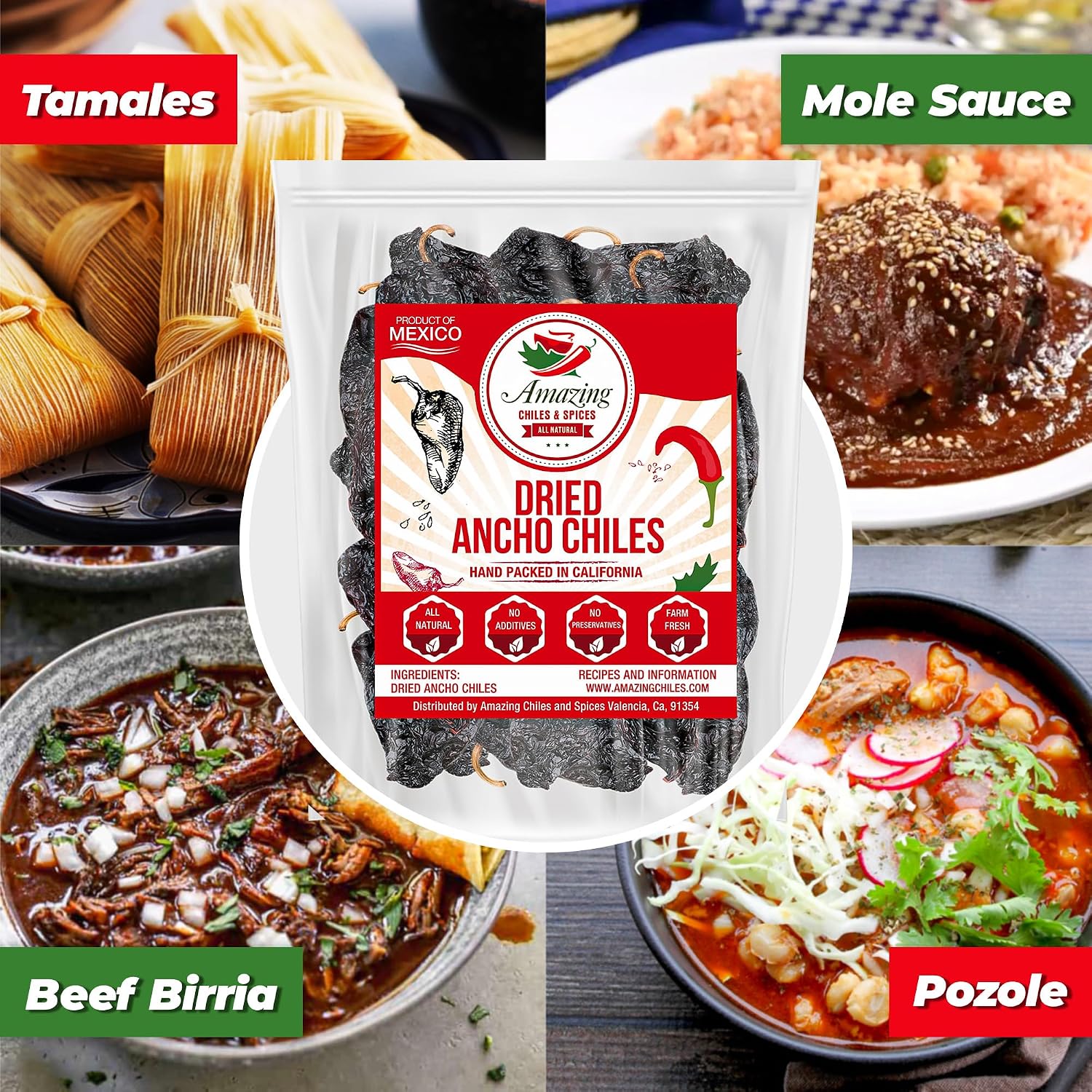
If you’ve ever shaken a jar of pre-ground chili powder into a pot and felt like something was missing from the finished bowl — some depth, some dimension, some quality you couldn’t quite name — whole dried chiles are almost certainly the answer. A whole dried chile is exactly what it sounds like: a chile pepper that’s been harvested ripe and then dried, leaving an intensely concentrated pod full of natural sugars, oils, and compounds that no powder can fully replicate. The three varieties that anchor most serious chili recipes are ancho (a dried poblano, mild and chocolatey), guajillo (a dried mirasol, bright and berry-forward), and pasilla (a dried chilaca, earthy and raisin-dark). Used together in a 6-quart pot, they build a flavor profile that is more than the sum of its parts. This guide walks you through quality selection, the rehydration process, blending into a smooth puree, and layering each variety so nothing gets lost in the long simmer.
How to Tell If Your Whole Dried Chiles Are Worth Cooking With
This is where the gap between “grocery store bag” and “sourced intentionally” becomes measurable. Reviewers of premium dried ancho chiles consistently describe the sensory signals worth paying for: “sweet, chocolate note, fruity hint” and pods that are “not brittle, perfectly dried.” That last phrase is doing real work. A brittle ancho that shatters when you bend it is an old ancho — the volatile aromatic oils that carry flavor have already degraded.
Here’s the physical checklist before you open a single pod:
- Flexibility test. A fresh-enough chile should bend without snapping. Guajillo owners in particular call out pliability as the primary quality signal — reviewers specifically use the words “slightly supple, not dried to a crisp” and “leathery” (in the good sense) to distinguish well-sourced pods from desiccated ones. A guajillo that cracks like parchment is past its useful life for puree work.
- Color. Anchos should be deep mahogany to near-black, not faded brown. Guajillos should show a brick-red to burgundy hue with some sheen. Pasillas should be dark, almost black-purple — reviewers of well-sourced pasilla pods praise “plump tenderness” and note zero broken pieces as the mark of careful post-harvest handling.
- Smell. Open the bag and take a direct impression. There should be a concentrated, almost sweet dried-fruit smell. A flat or dusty smell is a warning.
- Harvest date. Per Bon Appétit’s guide to using dried chiles, current-crop dried chiles bought from specialty suppliers will often carry a harvest year on the packaging. Old-crop pods — anything more than 18–24 months from harvest — will deliver muted flavor regardless of variety.
Chiles sourced from specialty importers and sold through artisan spice channels consistently outperform supermarket bags on every one of these signals. That rural buyer who swore off canned enchilada sauce forever after getting access to quality whole pods for the first time? That story keeps appearing in reviews because it’s real: the quality differential isn’t subtle.
The Rehydration Process, Step by Step
Rehydration is the translation step — it converts a shelf-stable dried pod into something a blender can turn into liquid velvet. The goal is fully softened flesh with no raw, fibrous texture remaining.
1. Toast first — briefly. Set a dry cast-iron or heavy skillet over medium heat. Working one or two pods at a time, press each flat against the surface with a spatula for about 15–20 seconds per side. You’re looking for the chile to become slightly more pliable and to release a faint toasty, smoky aroma. You are not trying to char it. Serious Eats’ deep-dive on chili technique notes that over-toasting — until the skin begins to blister or blacken — introduces bitterness that carries straight through into your puree.
2. Stem, seed (partially), and tear. Remove the stem and shake or scrape out most of the seeds. You don’t need to remove every seed — a few seeds left in contribute minor texture variation and some cooks prefer it — but the large seed clusters will add unwanted graininess to a smooth puree. Tear or cut each pod into roughly 2-inch pieces to speed soaking.
3. Soak in hot (not boiling) water. Place the torn pieces in a bowl and cover with water heated to about 160–180°F — just below a simmer. Boiling water can leach out water-soluble flavor compounds and cook the chiles unevenly. Weigh the chiles down with a small plate or bowl; they float. Soak ancho and pasilla for 20–25 minutes, guajillo for 15–20 minutes (their thinner skin rehydrates faster). The flesh should feel completely soft when pinched.
4. Reserve the soaking liquid — but taste it first. This is one of the real practitioner decision points. The soaking liquid contains color, some flavor compounds, and — depending on the age and variety of your chiles — varying levels of tannin bitterness. Guajillo soaking liquid tends to run cleaner and more usable than ancho or pasilla water, which can carry a bitter edge. Taste a small spoonful before adding any to your pot. If it tastes pleasantly earthy and complex, add it. If it tastes flat-bitter, discard it and use a neutral stock instead. Epicurious’ guide on rehydrating dried chiles recommends always tasting the soaking liquid before committing it to a dish — it’s the one step most beginner recipes skip.
Building the Three-Variety Puree and Layering It Into the Pot
Once your chiles are soft and drained (liquid reserved or set aside), blend them into a puree with enough liquid to get the blender moving — start with half a cup of stock or strained soaking liquid. Blend for a full 90 seconds on high. The result should be deep red-brown, velvety, and completely smooth. If it isn’t, run it through a medium-mesh strainer.
Why blend all three separately? You don’t have to — but here’s the tradeoff. Blending the three varieties together is faster and produces a unified, complex base. Blending them separately lets you control the ratio in the pot and dial in the flavor profile. Here’s how the three varieties perform differently in the bowl:
| Variety | Flavor profile | Heat level (Scoville) | Best role in the pot |
|---|---|---|---|
| Ancho | Sweet, chocolate, dried fruit | 1,000–2,000 SHU | Body and sweetness; the base layer |
| Guajillo | Bright, berry-forward, slightly tannic | 2,500–5,000 SHU | Lift and color; add mid-cook |
| Pasilla | Earthy, raisin, dark chocolate | 1,000–2,500 SHU | Depth and finish; add late |
Saveur’s chile pepper guide describes this flavor triad — ancho’s sweetness, guajillo’s brightness, pasilla’s earthiness — as the classic foundation of central Mexican red sauce tradition, which is exactly where competition-circuit chili’s “red” category draws its roots.
Layering in the pot: Add the ancho puree early, after browning your meat and building your aromatics, so it has time to cook into the fat and lose any raw edge. Add guajillo puree about 30 minutes in — its bright acidity benefits from some heat but can flatten if it cooks too long. Add pasilla puree in the last 20–30 minutes. This sequence mirrors the approach Texas Monthly has documented in serious Texas-style chili, where the philosophy is often no tomatoes, no beans, no pre-blended powder — just meat, lard or tallow, and a carefully sequenced chile puree. Even if your chili includes beans or tomato, that sequencing logic still applies.
By the Numbers: Chile Quantities for a 6-Quart Pot
A commonly cited starting ratio for a chile-forward 6-quart batch:
- 6–8 ancho chiles (roughly 60–80g dried weight)
- 4–6 guajillos (roughly 30–45g dried weight)
- 3–4 pasillas (roughly 30–40g dried weight)
That yields approximately 2–2.5 cups of combined puree — enough to flavor 3–4 lbs of meat without overwhelming the other elements. Scale up if you’re running a pure chile-only Texas-style batch with no filler; scale back if tomato paste or canned tomatoes are also in the pot.
Frequently Asked Questions
How do you know if whole dried chiles are fresh enough to use? The bend test is the most reliable field check: a pod that snaps rather than flexes is too old. Beyond that, look for intact color (no fading), some visible surface sheen, and a concentrated aromatic smell when the bag is opened. Chili Pepper Madness’s overview of guajillo quality notes that the pod should feel pliable — “leathery” is the word serious cooks use — not rigid. If you’re buying from a specialty source, a harvest date on the packaging is the gold standard.
Do you need to remove all the seeds before rehydrating? No. Remove the bulk of the seeds and the large interior veins (which hold significant heat), but a few remaining seeds won’t damage the puree. The practical goal is to eliminate the major seed clusters that would create textural grit in a smooth puree. If you’re heat-sensitive, be more thorough — the seeds and veins together account for most of the capsaicin concentration.
Can you use the soaking liquid in the chili, and does it taste bitter? Sometimes, and it depends. Taste it before using it — this step is non-negotiable. Guajillo soaking water is usually mild and usable. Ancho and pasilla soaking liquid can lean bitter, especially if the chiles are older or were soaked in very hot water. When in doubt, replace it with a good beef or chicken stock. You lose a small amount of color and extraction, but you gain full control over the flavor profile.
How many whole dried chiles do you need for a 6-quart pot? The numbers in the table above are a tested starting point: 13–18 total pods across three varieties for a standard 3–4 lb meat-based batch. If you’re running a pure Texas-style no-bean, no-tomato chili, move toward the high end. If you’re adding significant tomato volume, start at the low end and adjust after tasting the puree before it goes in.
How long do whole dried chiles stay good once opened? Stored in an airtight container away from light and heat, whole dried chiles hold their useful flavor for 9–12 months after opening. Vacuum-sealed or in a sealed glass jar, you can push toward 18 months, though degradation of volatile aromatics begins well before the chiles become unsafe. The same flexibility test applies to pods you’ve had for a while: if they’ve gone brittle, they’ve gone flat.