Single-Variety Dried Chiles: A Vetted Directory for Scratch Chili With Freshness Notes
If you’ve ever made chili with a generic “chili powder” blend from the grocery spice aisle, you already know it works — but you might have wondered why some bowls taste deep and complex while yours tastes flat and one-dimensional. The answer is almost always the chile itself. A dried chile is simply a fresh pepper that’s been dried until most of its moisture evaporates, concentrating its flavor compounds into something richer and more layered than any fresh pepper can offer. The difference between buying a single-variety dried chile — one specific type, grown in a specific region, dried in a specific way — versus buying a pre-ground blend is the difference between grinding your own spices and using pre-ground ones. You control what goes in. You know what you’re tasting. And when something tastes wrong, you can diagnose it.
This guide covers the eight dried chile varieties that matter most for scratch chili, with sourcing notes, freshness verification tips, and clear decision rules for choosing between them. By the end, you’ll know which varieties to reach for based on the flavor profile you’re building — not just which names you’ve heard mentioned.
| EDITOR'S PICK1lb California Dried Whole Chile | Mid-tier1lb Guajillo Stemless Chile | Budget pickPasilla Chiles Dried 4 oz - Sta… | |
|---|---|---|---|
| Variety | Anaheim | Guajillo | Pasilla |
| Weight | 1 lb | 1 lb | 4 oz |
| Stemless | — | ✓ | — |
| Heat level | — | — | Mild |
| Package size | 1 Pound (Pack of 1) | 1 Pound (Pack of 1) | 4 Ounce (Pack of 1) |
| Price | $14.97 | $14.97 | $6.97 |
| See on Amazon → | See on Amazon → | See on Amazon → |
Why Freshness Is the Variable Most Cooks Underestimate
Before the variety directory, one rule that changes everything: dried does not mean immortal. A dried chile is a shelf-stable ingredient, but that shelf stability has limits that most grocery stores don’t advertise. Serious Eats’ guide to dried chiles notes that whole dried chiles are best used within one year of harvest, and that properly stored chiles should be pliable and leathery — not brittle, not papery, not snapping like a cracker when you bend them.
The problem is that most grocery store chiles carry no harvest date. You’re buying on faith, and the supply chain for commodity dried chiles routinely moves product that is eighteen to thirty-six months post-harvest. Old-crop chiles haven’t spoiled in the food-safety sense, but their essential oils — the compounds responsible for fruity, smoky, and earthy top notes — have oxidized. What’s left is heat and a muted, papery ghost of what the variety is supposed to taste like.
How to verify freshness before you cook:
- Bend test: A fresh-crop chile bends without snapping. Old-crop breaks.
- Smell test: Press your thumb into the interior flesh and smell. Fresh chiles smell fruity, earthy, or chocolatey depending on variety. Old chiles smell like cardboard or nothing at all.
- Color: Vibrant mahogany, deep burgundy, or brick red. Faded orange-brown is a warning sign.
- Source disclosure: Rancho Gordo lists harvest seasons on many of their dried chile products; Burlap & Barrel and similar small-batch importers often note crop year in product copy. If a vendor can’t tell you when it was harvested, that’s informative.
By the numbers:
- Best use window for whole dried chiles: 6–12 months post-harvest
- Typical grocery store pipeline lag: 12–24 months before the chile reaches your cart
- Estimated essential oil degradation in improperly stored chiles after 18 months: significant enough that Bon Appétit’s guide on dried chile usage recommends storing in a cool, dark place and replacing annually
The Core Eight: Variety-by-Variety Decision Guide
Ancho (Dried Poblano)
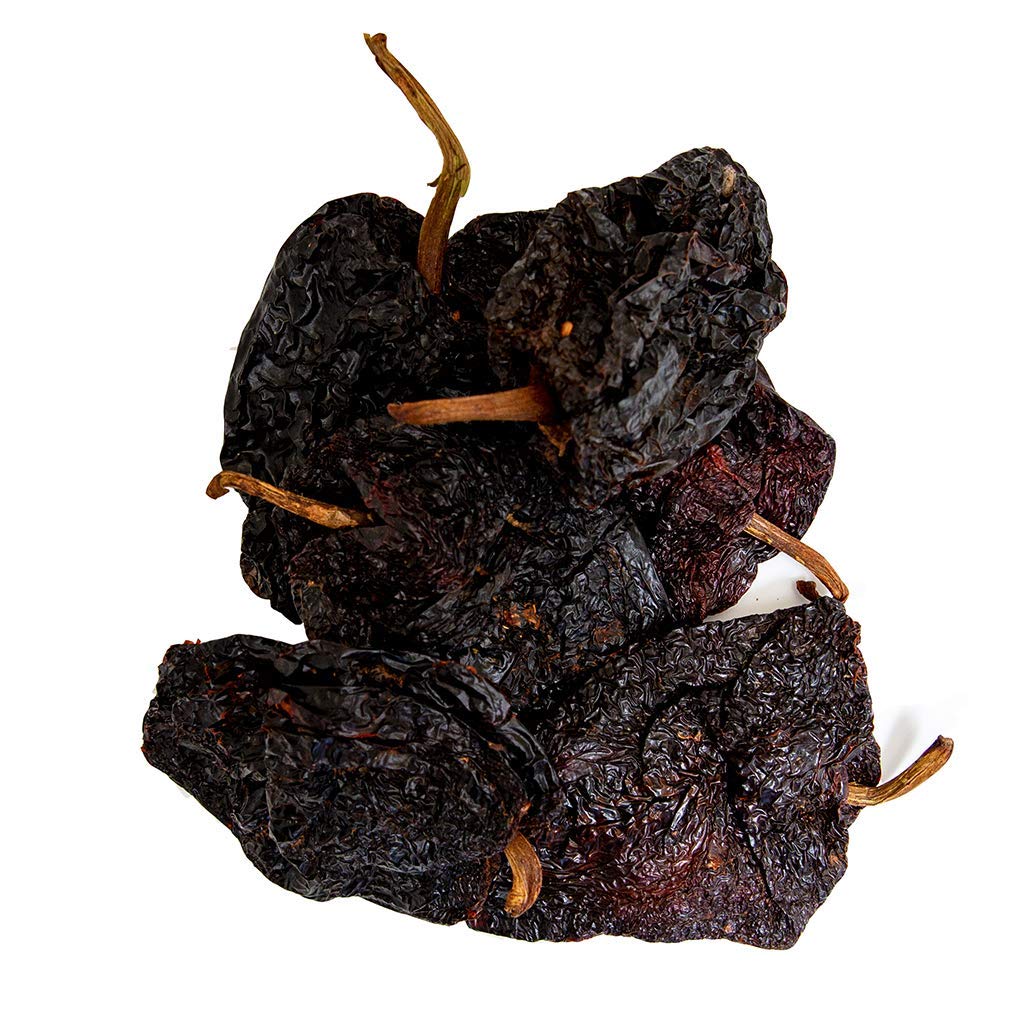
Flavor profile: Dark fruit, dried plum, mild chocolate undertone. Low-medium heat (1,000–2,000 Scoville units). Broad, almost triangular silhouette with wrinkled, near-black skin.
What it does in chili: Ancho is the foundational building block of red chili. Its flavor is sweet and rounded with enough body to anchor a sauce without dominating. Saveur’s field guide to dried chiles describes it as the most versatile of the Mexican dried chiles for home cooks. If you’re making one variety of dried chile do most of the work in a batch, ancho is the safe and correct choice.
Sourcing note: Ancho is the most widely available single-variety dried chile in the U.S. grocery market — which also means it’s the most likely to be old-crop. Check your source’s harvest disclosure. Vendors like Rancho Gordo, Penzeys, and the single-origin importers at Burlap & Barrel all carry ancho with better crop transparency than commodity bins.
If X, then Y: If you’re building your first single-variety chile base and want the most predictable, universally praised flavor foundation — ancho is where you start.
Guajillo
Flavor profile: Bright, tannic, slightly berry-like with a clean heat that registers mid-palate. Medium heat (2,500–5,000 SHU). Smooth, elongated, dark red skin.
What it does in chili: Guajillo sharpens and brightens. Where ancho rounds, guajillo cuts. Chili Pepper Madness notes guajillo as one of the most commonly used chiles in Mexican cooking precisely because its clean acidity lifts heavier, fattier sauces. In a chili blend, guajillo functions like acidity does in cooking — it makes other flavors more distinct.
If X, then Y: If your chili reads muddy or one-note and you’re looking for something to add lift without adding significant heat — add guajillo to your blend alongside ancho. A 60/40 ancho-to-guajillo ratio is a reliable starting point.
Mulato
Flavor profile: Chocolate, licorice, and dried cherry with more smoke than ancho and noticeably more complexity. Low-medium heat (2,500–3,000 SHU). Darker than ancho — almost black — with a similar wrinkled profile.
What it does in chili: Mulato is the deep note in the chord. It’s less common in American grocery stores than ancho, which means it’s also more likely to be genuinely fresh when sourced from a specialty importer. Serious Eats’ dried chile guide highlights mulato as criminally underused by home cooks who assume ancho covers the same ground. It doesn’t — mulato’s chocolate and licorice register is distinctly different.
If X, then Y: If you’ve mastered an ancho base and want to push toward a darker, more complex bowl without adding heat — swap 30–40% of your ancho for mulato and rebuild from there.
Pasilla (Chile Negro)
Flavor profile: Herbal, raisin, and dried fruit with a subtle earthiness. Medium heat (1,000–2,000 SHU). Long, thin, nearly black pod.
What it does in chili: Pasilla adds herbal depth that neither ancho nor mulato provides. It’s a “supporting” chile in most blends — rarely the lead, but missed when absent. Saveur’s field guide notes that pasilla is frequently combined with ancho and mulato in classic Mexican mole sauces, and the same logic applies to scratch chili: the three together create a layered profile no single variety achieves alone.
Naming caution: In California, “pasilla” is sometimes used to refer to the fresh poblano pepper. When buying dried, confirm you’re purchasing the dried pasilla negro (the long, thin, nearly black dried chile), not a mislabeled dried poblano.
Cascabel
Flavor profile: Nutty, smoky, slightly acidic. Medium heat (1,500–2,500 SHU). Small, round, rattles when shaken (seeds loose inside).
What it does in chili: Cascabel is a texture and depth contributor. Its nuttiness doesn’t show up clearly in most blends but becomes apparent in simpler preparations where fewer varieties compete. Bon Appétit’s dried chile guide recommends it for those building more minimalist chili recipes — three or fewer chile types — where each variety’s character needs to carry more weight.
If X, then Y: If you’re cooking a Texas-style, beef-forward red chili without beans and want a smoky-nutty note without reaching for chipotle — cascabel earns a place in the blend.
Chipotle (Dried Smoked Jalapeño)
Flavor profile: Smoke-forward, bacon-adjacent, medium heat (2,500–8,000 SHU depending on processing). Reddish-brown, wrinkled, leathery.
What it does in chili: Chipotle is the most commonly overused dried chile in home chili cooking, and also one of the most powerful. Texas Monthly’s reporting on Texas chili tradition notes that smoke-forward profiles can easily dominate a bowl if chipotle quantities aren’t carefully controlled. At low inclusion rates (one pod per 2–3 lbs of meat), chipotle adds a background smokiness that reads as complexity. At high rates, it tastes like liquid smoke.
Sourcing note: Chipotle Morita (smaller, darker, more fruit-forward) and Chipotle Meco (larger, grayer, more intense smoke) are different products. Most grocery store “chipotle” is Morita. Know which you’re buying.
New Mexico (Hatch-Style Red)
Flavor profile: Clean, mild to medium heat, earthy with slight sweetness and minimal fruitiness. 500–2,500 SHU depending on strain. Long, flat, brick red.
What it does in chili: New Mexico chiles are the foundation of Southwestern-style red chili — the style that relies on chile character rather than tomato or cumin for its primary flavor. Chili Pepper Madness profiles this variety as the defining ingredient in New Mexico red chile sauce, where its clean, earthy profile provides the base for everything else. In competition-style chili, it frequently appears as the primary volume chile because its mild heat allows large quantities without overwhelming the bowl.
Freshness note: New Mexico dried chiles are highly regional. Hatch-grown varieties, processed and dried during the fall harvest (August–October), peak when sourced within six months of that window. Buying in spring from a vendor who cannot disclose crop year is a reliability gamble.
Árbol
Flavor profile: Bright, grassy heat with a clean, sharp finish. High heat (15,000–30,000 SHU). Small, thin, bright red pod.
What it does in chili: Árbol is your heat dial, not your flavor contributor. Its grassy brightness can add dimension at very low quantities (one to three pods per large batch), but its primary function is calibrating final heat level. Because it’s small and dries thoroughly, árbol retains potency longer than larger, fleshier varieties — making it one of the few dried chiles where old-crop is a lower-stakes problem.
If X, then Y: If your blend is flavorful but lacks heat — add árbol one pod at a time, not by the handful.
Building a Sourcing Shelf: What to Have on Hand
The most effective approach isn’t buying every variety for every batch. It’s maintaining a working inventory of three to five varieties purchased from crop-disclosed sources and replaced annually.
A starting shelf for scratch chili:
| Variety | Primary role | Minimum useful quantity |
|---|---|---|
| Ancho | Base, sweetness, body | 4 oz |
| Guajillo | Brightness, acidity | 2 oz |
| Mulato or Pasilla | Depth, complexity | 2 oz |
| Árbol | Heat calibration | 1 oz |
Rancho Gordo, Burlap & Barrel, and Diaspora Co. all offer single-variety dried chiles with meaningful sourcing transparency. For competition-circuit cooks building a more precise spice shelf, Chili Pepper Madness’s variety profiles are a reliable cross-reference for Scoville ranges and regional origin notes.
The difference between a flat bowl and a layered one isn’t usually technique — it’s ingredient quality and freshness. Knowing which variety does which job, and sourcing it from a vendor who can tell you when it was harvested, is the highest-leverage single upgrade most scratch chili cooks can make.